 English
 Español
Content
- 1 The Cuff Is Where a Winter Jacket Fails First
- 2 Choosing Ribbed Cuffs and Hems by Structure: 1x1, 2x2, or Hollow Rib
- 3 Ribbed Hems: Silhouette, Fill Control, and Drawcord Channels
- 4 Ribbed Cuffs and Hems: Elastane Content and Cold-Weather Recovery
- 5 Ribbed Cuffs and Hems: Tolerance, Shrinkage, and Sewing Windows
- 6 A Specification Checklist for Ribbed Cuffs and Hems
- 7 Frequently Asked Questions
A down jacket holds its warmth at two points: the wrist and the hip. When a 700 fill-power shell leaks cold air through a cuff that has lost eight millimetres of recovery, the wearer blames the down, not the trim. Choosing ribbed cuffs and hems for down jackets and winter outerwear is therefore a materials decision with measurable consequences, because opening diameter, elastic recovery, elastane content, and shrinkage all surface in wear tests long before the shell fabric does.
The Cuff Is Where a Winter Jacket Fails First
Rib knit cuffs fail more wear tests on winter outerwear than any other trim because they carry the highest stretch demand and the highest abrasion exposure in the garment at the same time.
A cuff opens and closes every time a glove goes on or a hand reaches into a pocket. A jacket worn ninety days a season sees roughly two thousand wrist flex cycles a year, and each one stretches the rib between 40 and 60 percent of its resting width. Once recovery drops under 90 percent the opening relaxes, air moves along the forearm, and down clusters begin migrating toward the seam line where the rib meets the shell.
The specification is usually missing from the tech pack. It should state, at minimum:
- Finished opening measured flat and doubled, normally 50 to 65 mm for adult unisex sizing
- Minimum elastic recovery after five extension cycles, with 94 percent as a realistic target
- Cuff depth of 60 to 80 mm so the rib folds once and still covers the wrist bone
- Elastane type and percentage, plus the heat-setting temperature used to stabilise it
- Seam position and stitch type at the join, since this is where down escapes first
Seamless and tubular constructions remove one failure point entirely, because there is no side seam to rub against a glove strap or to open under fill pressure. That single change accounts for most of the difference between a cuff that lasts three seasons and one that lasts one.
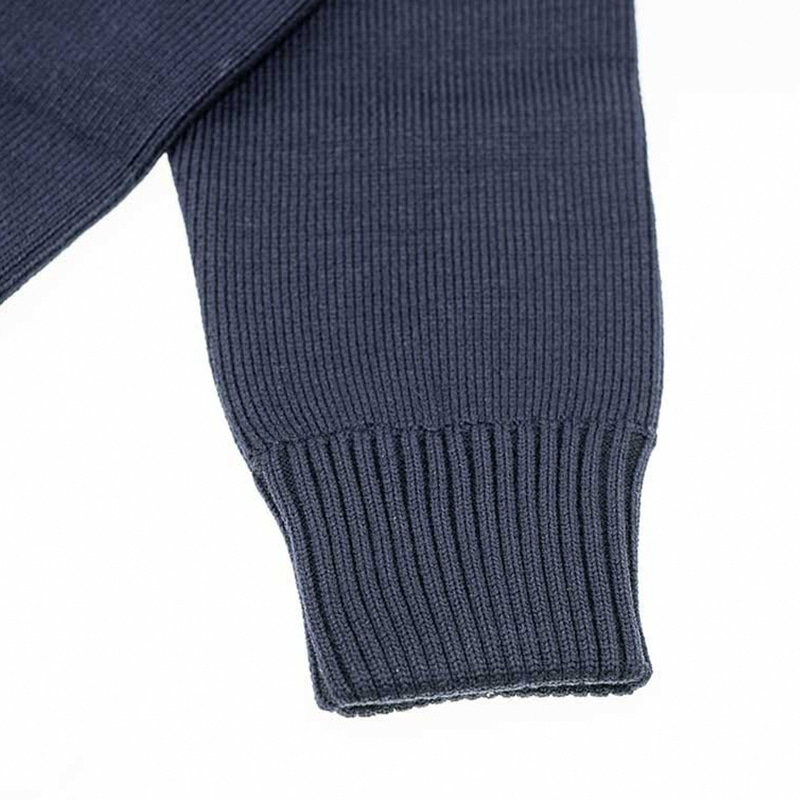
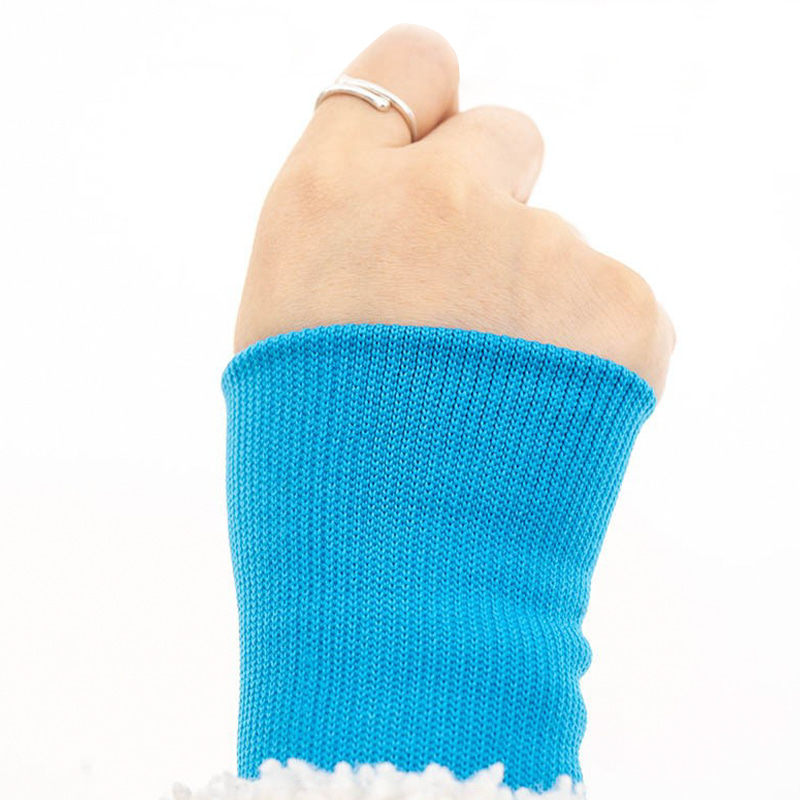 Seamless 2x2 Ribbed Stretch CuffsSeamless acrylic-spandex sleeve cuffs with 2x2 ribbing, offering stretch, recovery, and a smooth finish for garment wrist openings.View Product →
Choosing Ribbed Cuffs and Hems by Structure: 1x1, 2x2, or Hollow Rib
1x1 rib is the default for down jacket cuffs because it stretches furthest and recovers fastest, while 2x2 rib belongs on hems and heavier cuffs where bulk and structural memory matter more than elongation.
The knitting logic is simple. A 1x1 structure alternates one knit and one purl wale, which gives the fabric room to open and close across the full width of the tube. A 2x2 structure pairs the wales, so the fabric is firmer, thicker, and less willing to stretch. On a lightweight down jacket that difference is invisible on the sample and obvious after ten washes.
| Structure | Stretch range | Recovery after 5 cycles | Bulk at cuff | Best placement |
| 1x1 rib | 90-140% | 94-96% | Low | Sleeve cuffs on down jackets and vests |
| 2x2 rib | 60-90% | 92-94% | High | Hems, thick cuffs, bomber silhouettes |
| Hollow rib | 100-150% | 93-95% | Low to medium | Low-bulk cuffs and fitted women's patterns |
| Jacquard rib | 60-100% | 88-92% | Medium | Branded cuff and hem trims |
| Flat knit | 20-40% | 70-80% | Low | Not recommended for functional cuffs |
Hollow rib earns its place on fitted patterns and on women's down jackets where a standard 1x1 cuff feels heavy. The hollow core traps air inside the yarn, so the same thermal feel arrives in a thinner tube. Jacquard rib is the right answer when a brand mark has to sit on the cuff, but the floats behind the pattern reduce recovery by two to four points, so the elastane content needs to go up rather than stay at the base recipe.
The mechanics behind those numbers are worth reading once: the features and advantages of ribbed fabrics explains how needle arrangement changes stretch direction and recovery, which is the variable most often left out of a cuff tech pack.
Ribbed Hems: Silhouette, Fill Control, and Drawcord Channels
A down jacket hem has to hold a straight silhouette, keep fill from migrating to the bottom edge, and carry a drawcord without collapsing, which is why 2x2 thick rib dominates this position.
Hem depth typically runs 50 to 70 mm on a hip-length jacket. Go below 45 mm and the rib rolls upward after washing; go above 80 mm and the jacket shortens visually and the fill chamber above the hem distorts. A plain 2x2 trim material gives the flattest, cleanest edge and suits cleaner commercial patterns, while a heavier thick rib is the correct choice for a bomber-style drop where the hem is meant to look substantial.
Drawcord channels change the requirement. The knit must be dense enough that a cord running through it does not stretch the tube out of shape, and the eyelet placement must sit on a purl wale rather than a knit wale so the hole does not ladder. Where the channel is a separate component, a cotton ribbed webbing waistband solves the problem without compromising the hem knit.
Recovery at the hem matters less than at the cuff, but it still needs to clear 90 percent. A hem that stays stretched after a wash shows as a flared bottom edge that ruins the silhouette of an otherwise well-patterned jacket.
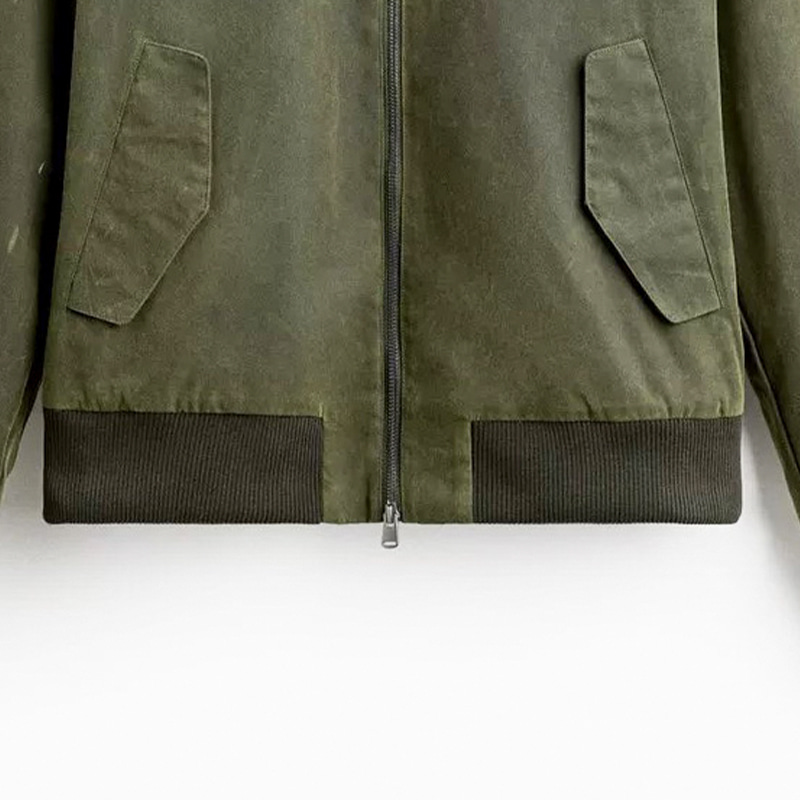
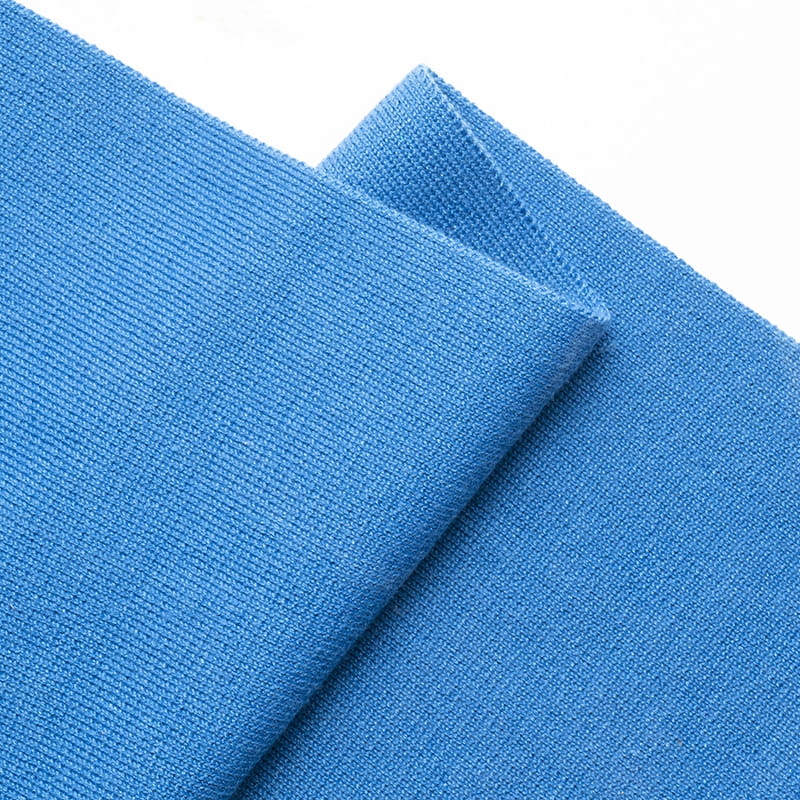 2x2 Ribbed Knit Hem TrimAcrylic-spandex ribbed hem trim with 2x2 structure, designed for elastic edge finishing and shape retention on garments.View Product →
Ribbed Cuffs and Hems: Elastane Content and Cold-Weather Recovery
Between three and six percent bare elastane covers almost every down jacket cuff, and below three percent recovery falls away noticeably after around ten home washes.
Bare elastane is cheaper and gives a crisper hand; wrapped elastane survives heat setting and chlorine better but adds cost and a slightly softer stretch. For a jacket that will be washed at 30 degrees and tumble dried on low, bare elastane at four percent with a properly controlled heat-setting step is enough. The heat set is what fixes the memory, and a mill that skips or shortens it will show 88 percent recovery on a recipe that should deliver 94.
Cold itself does not damage elastane, but it exposes poor recovery instantly. A cuff at 92 percent feels fine at room temperature and feels loose at minus five, because the yarn stiffens and the fabric loses the small amount of residual tension that was hiding the gap. Hollow rib constructions help here, since the low bulk lets the cuff sit closer to the wrist without pressure, and the extra air layer inside the yarn offsets the thinner profile.
 Soft Hollow Rib 3D Jacquard FabricAcrylic-spandex jacquard rib fabric with hollow air-pocket structure and 3D texture, suited for breathable, elastic apparel designs.View Product →
Ribbed Cuffs and Hems: Tolerance, Shrinkage, and Sewing Windows
Most puckered cuffs come from shrinkage mismatch between the rib and the shell fabric, not from a defect in the rib knit itself.
A polyester ripstop shell may shrink under one percent in a home wash while a cotton-blend rib cuff shrinks three to five percent in length. Attach the two without allowing for that gap and the seam pulls into visible waves within two washes. The fix is procedural rather than expensive:
- Relax the rib rolls for 24 hours in the cutting room before spreading, then re-measure the width
- Request shrinkage data from the mill and confirm it with an in-house wash trial at the care-label temperature
- Sew a full sew-off on the production shell, not on a substitute fabric, and check the seam after pressing
- Approve only after three wash and dry cycles, measuring opening diameter and hem depth each time
Cut tolerances of plus or minus 2 mm on cuff width and plus or minus 3 mm on cuff length are workable with computer flat knitting but not with hand flat machines at volume. Overlock with differential feed set slightly above 1.0 keeps the rib from being stretched into the seam, and an 8 to 10 mm seam allowance leaves enough material for a second pass if the first join puckers.
A Specification Checklist for Ribbed Cuffs and Hems
Approve a cuff or hem only when every line below is written into the tech pack and verified on a sewn sample, not on a flat swatch.
- Structure named explicitly: 1x1, 2x2, hollow, or jacquard, with the gauge stated
- Finished opening and hem depth with a tolerance band, measured flat and doubled
- Elastane percentage plus the heat-setting condition used to lock recovery in
- Shrinkage figure after one wash, tested on the actual shell and rib combination
- Seam type, stitch density, and needle size at the join
- Colour fastness and pilling result for the abrasion zone at wrist and hip
Frequently Asked Questions
Should a down jacket cuff use 1x1 or 2x2 rib?
Use 1x1 rib for the cuff. It stretches further, recovers faster, and sits flatter under a glove. Reserve 2x2 rib for the hem and for thicker bomber-style cuffs where structure matters more than elongation.
How much elastane should a winter cuff rib contain?
Three to six percent bare elastane covers most down jackets. Below three percent, recovery drops under 90 percent after roughly ten home washes, which shows up as a gap at the wrist opening.
Why does a ribbed hem flare after washing?
Either the rib was cut before it relaxed, or the shrinkage of the rib and the shell were never matched. A hem that stays stretched has usually lost its heat-set memory or was knitted with too little elastane for the fabric weight.
Can ribbed cuffs be used on lightweight down jackets?
Yes, and hollow rib is the usual choice. The hollow yarn gives warmth at a lower bulk, so a lighter jacket keeps a close wrist without the heavy feel of a standard 2x2 tube.