 English
 Español
Content
- 1 What the numbers in 1x1, 2x2, and 3x3 mean
- 2 1x1 rib knits: fine, balanced trim for close-fitting edges
- 3 2x2 rib knits: thicker structure with strong recovery
- 4 3x3 rib knits: bold texture, not a typical trim choice
- 5 Comparing 1x1, 2x2, and 3x3 rib knits
- 6 How to choose the right rib trim for your production
- 7 Partnering with a speciality rib knit manufacturer
You have three rib knit samples in front of you. They all look like ribbed fabric, but the moment you stretch them, the difference between 1x1, 2x2, and 3x3 becomes obvious. For trim selection, the practical conclusion is straightforward: 1x1 works best for fine, close-fitting edges such as collars and lightweight cuff openings; 2x2 gives you the thickness and strong recovery needed for hems and jacket cuffs; and 3x3 offers a bold visual texture that is better used for decorative panels or body knit rather than functional trim.
This distinction matters because trim needs to match the fabric weight, the construction of the garment, and the amount of stretch and recovery the edge will experience over its life. Choosing the wrong structure can cause gaping, rippling, or an edge that simply does not hold its shape.
What the numbers in 1x1, 2x2, and 3x3 mean
A rib knit is built by alternating knit and purl columns. The numbers describe how many knitted columns and how many purled columns repeat in the pattern. A 1x1 rib alternates one knit column with one purl column. A 2x2 uses two knit columns and two purl columns. A 3x3 uses three and three.
The wider the repeat, the more pronounced the raised lines. But the stretch properties also change. A 1x1 rib has a compact, fine rib; a 2x2 rib is denser, with more space to compress and recover; a 3x3 rib has large, chunky ridges that feel more decorative than functional.
1x1 rib knits: fine, balanced trim for close-fitting edges
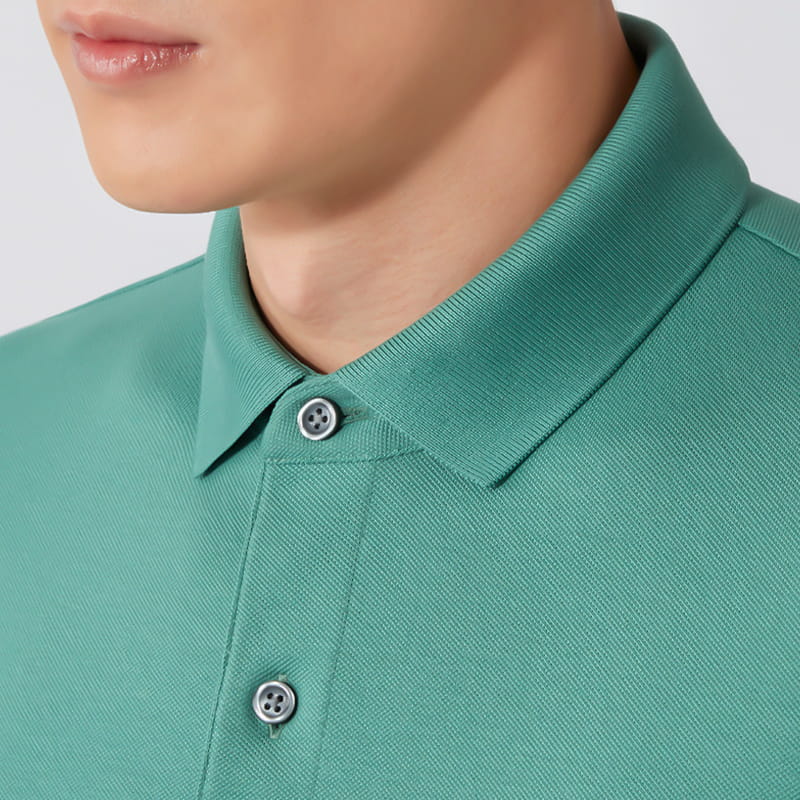
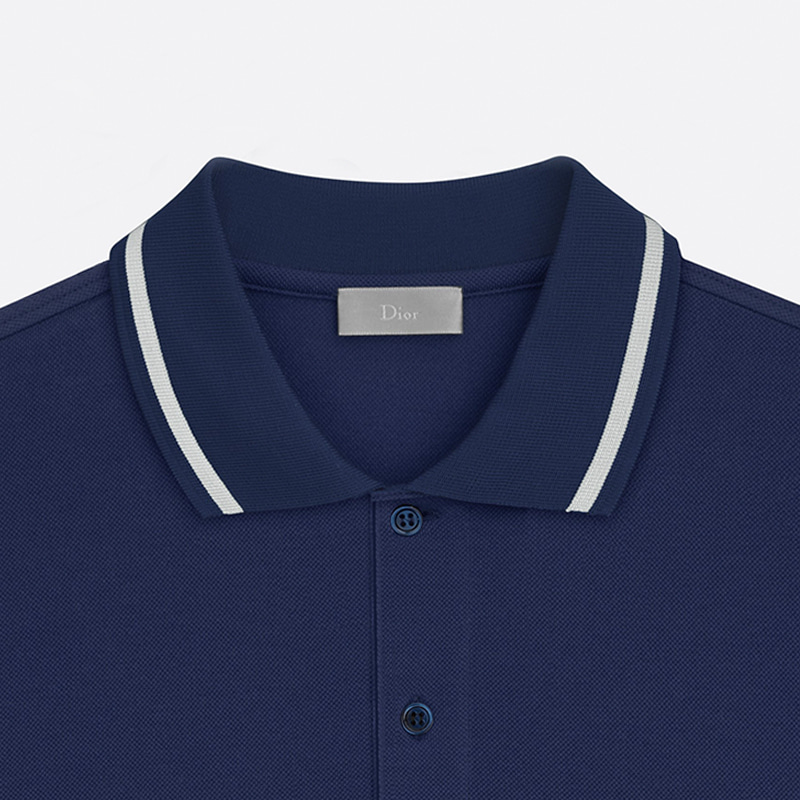
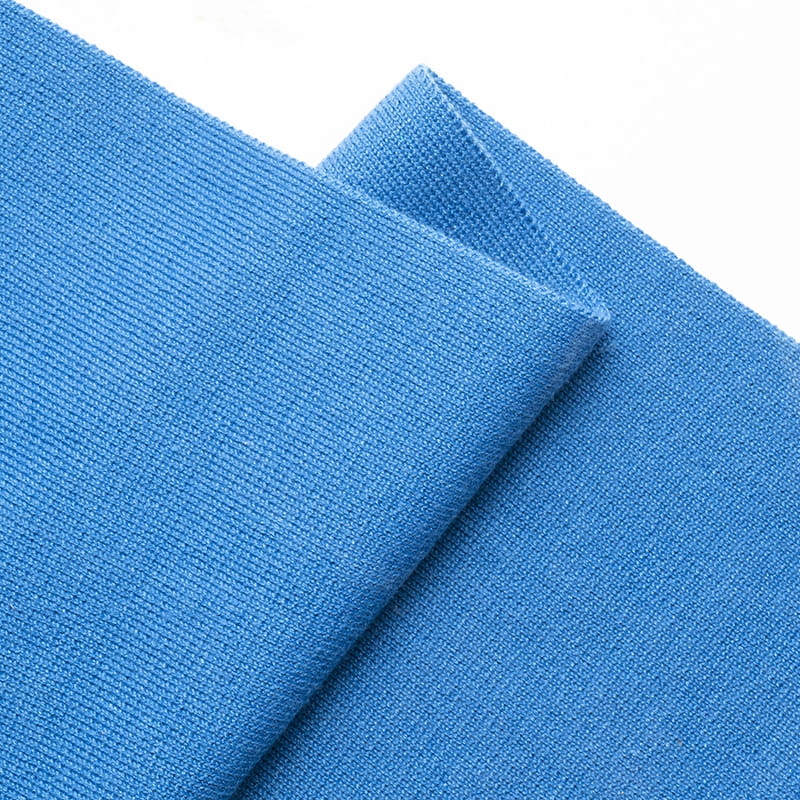
1x1 rib is the most common choice for necklines and lightweight cuffs. It has a moderate stretch, a clean vertical appearance, and it hugs the body without bulging.
 Black 1x1 Polyester Rib Knit Fabric with Spandex for SportswearThis smooth 1x1 polyester ribbing with spandex offers easy care and moderate stretch, making it a practical choice for necklines and lightweight cuffs that need a clean edge without bulk.View Product →
This smooth 1x1 polyester version is a practical option for sportswear or garments that need easy care. It gives you a fine, uniform edge with enough stretch to pull over a head or wrist comfortably, while the polyester content helps the trim hold its shape and resist shrinking.
When a trim has to be delicate and unobtrusive, 1x1 is the safer default. It also tends to be more economical because the denser repeat means more stitches per inch can still be produced efficiently.
2x2 rib knits: thicker structure with strong recovery
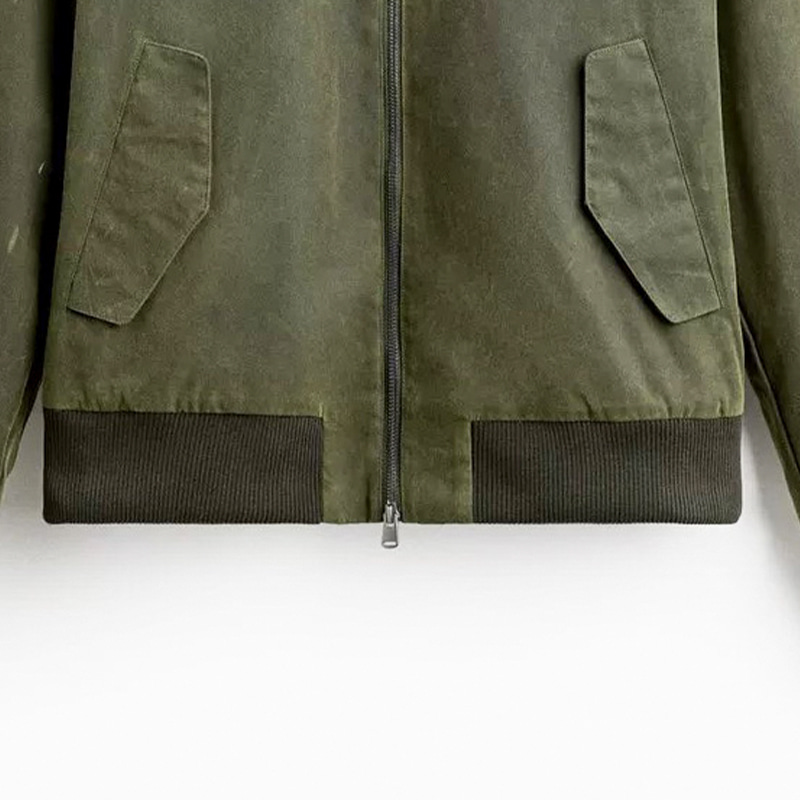
2x2 rib is the workhorse for hems and cuffs that face repeated use. The wider rib creates a thicker, more substantial edge that can snap back tightly, making it ideal for cuffed trousers, baseball jackets, and knit cuffs on sweater jackets.
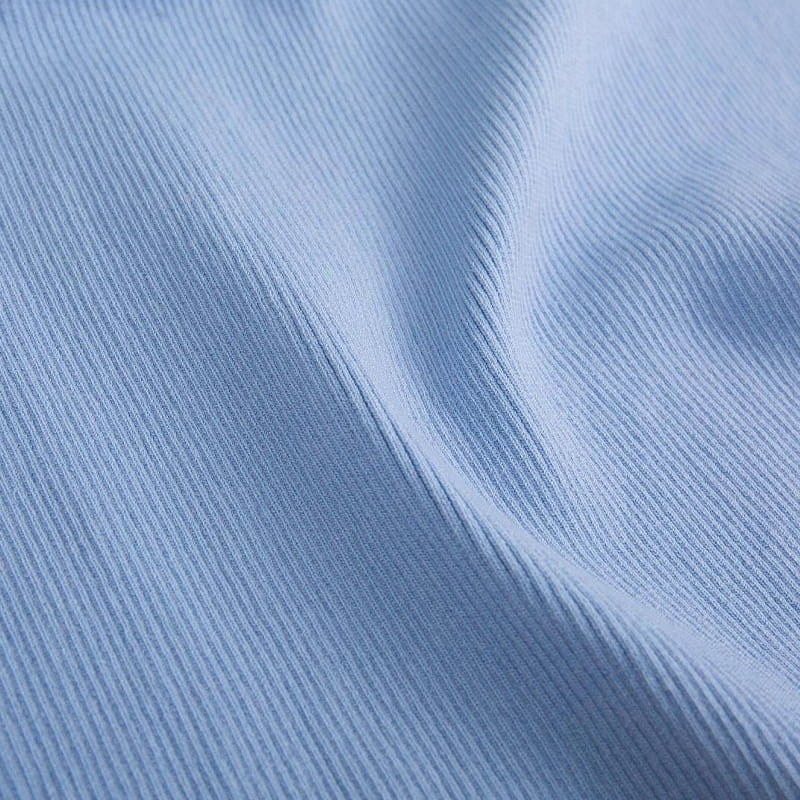 2x2 Polyester Rib Knit Fabric with Spandex for Durable CuffsWith a thicker, pillowy structure, this 2x2 polyester rib knit delivers strong recovery for hems and cuffs that face repeated pulling, ideal for jackets and trousers.View Product →
If you compare a 1x1 and a 2x2 swatch of the same yarn weight, the 2x2 is visibly heavier and more pillowy. That extra bulk is what gives it the strong recovery needed for openings that are pulled and released many times a day.
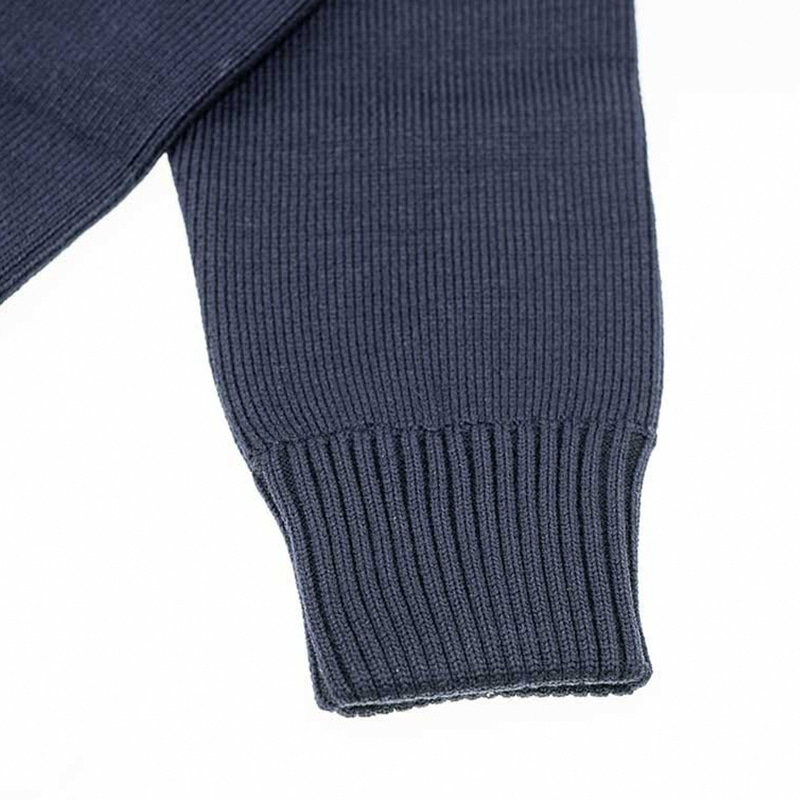 Tubular 2x2 Wool Rib Knit Cuffs for Sweater JacketsThese tubular wool-blend cuffs provide warmth and a traditional feel, while the seamless 2x2 rib construction ensures a clean silhouette and lasting length on sweater jackets.View Product →
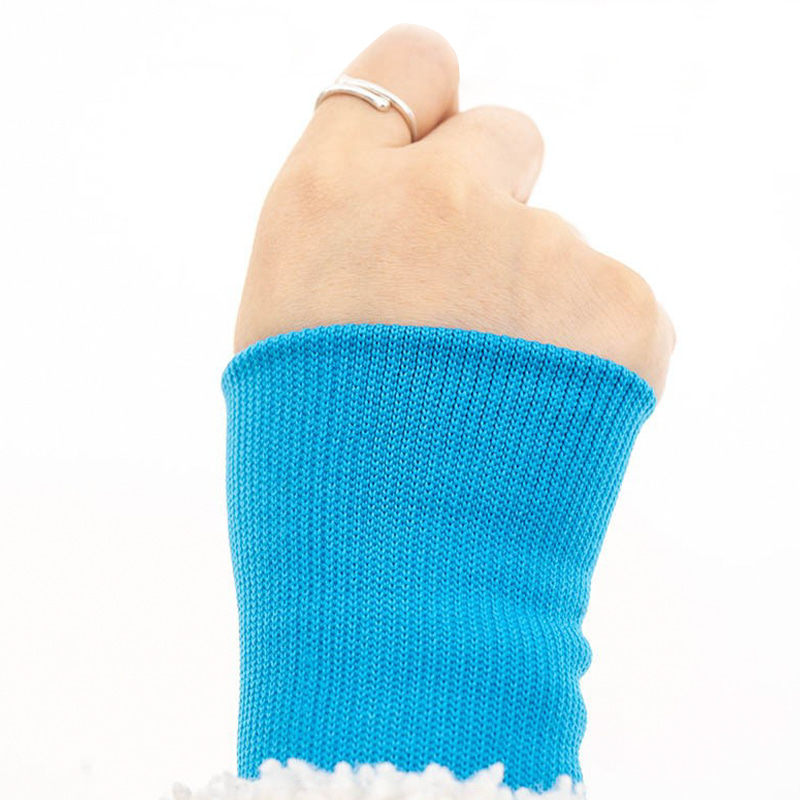
For cuffs, a tubular 2x2 construction avoids the seam line altogether. This is a key advantage on jackets and sweaters where a bulky seam can ruin the silhouette. The wool blend also adds warmth and a more traditional hand feel, while the rib structure ensures the cuff maintains its length when the wearer pushes their sleeve up or down.
2x2 has one design trade-off: it can look too chunky on lightweight knitwear. If the body fabric is thin, a 2x2 hem may stand out and even pull down the garment. In those cases, a 1x1 or a reduced gauge 2x2 is more appropriate.
3x3 rib knits: bold texture, not a typical trim choice
3x3 rib uses three knit columns and three purl columns. The result is a very wide rib with pronounced vertical ridges. This structure is often chosen for the front panels of chunky knits, for scarves, or for garments where the rib itself is part of the design.
When it comes to trim selection, 3x3 has a lower ability to provide a tight, snug fit at edges compared with 1x1 or 2x2. The large repeat does not collapse as tightly, so a 3x3 collar or hem is more likely to gape or look wavy. It also uses more yarn per area, which raises the cost and weight of the trim.
That does not mean 3x3 has no place in trim. It can be used successfully on relaxed cardigan front bands or decorative knit bands where a soft, wide edge is desired. For functional hems and cuffs, however, you should expect to go back to 1x1 or 2x2.
Comparing 1x1, 2x2, and 3x3 rib knits
| Characteristic | 1x1 | 2x2 | 3x3 |
|---|---|---|---|
| Structure | One knit / one purl column | Two knit / two purl columns | Three knit / three purl columns |
| Edge appearance | Fine, clean, subtle | Thick, pillowy, defined | Bold, chunky, decorative |
| Stretch | Moderate | High | Moderate to low |
| Recovery | Good, reliable | Excellent, tight | Lower, more prone to gape |
| Thickness | Thin | Thick | Very thick |
| Typical trim use | Polo collars, light cuffs, t-shirt necklines | Jacket hems, sweater cuffs, baseball jacket trims | Decorative bands, relaxed cardigan edges |
| Best paired with | Light to mid-weight fabrics | Mid to heavy-weight fabrics | Chunky knit body fabric |
| Risk | May look too thin on heavy fabrics | Can overwhelm light fabrics | Gaping, extra weight, higher cost |
How to choose the right rib trim for your production
Your decision should be based on practical factors, not just on which sample looks nice. Use the following checklist to evaluate the appropriate structure.
- Fabric weight and stretch: If the main body fabric stretches 20% or more, a trim with comparable stretch and recovery is needed to prevent gaping. A 2x2 usually handles this better than a 1x1, but the fabric thickness also has to be considered.
- Edge position: Collars and necklines benefit from a 1x1 because it is lighter and less bulky. Hems and cuffs that need to hold shape and body are normally better with a 2x2.
- Visual style: If the trim is a design element with broad, visible ribs, 3x3 may be what you want. Reserve it for pieces where fit is not the priority.
- Durability and care: Since trims are often washed, dried, and repeatedly stretched, the recovery and dimensional stability of the fabric matter. When you review a speciality supplier's recommendations, you can learn more about the features and advantages of ribbed fabrics that apply to your specific end use.
- Cost and lead time: Wider rib structures require more yarn and more knitting time. A 2x2 or 3x3 trim will cost more per unit than a 1x1. If the trim is a small part of a large order, the cost difference may be negligible, but on a cost-sensitive programme it can affect the pricing.
Another critical point is how the trim reacts to processing. The exact dyeing method, the yarn type, and the finish can all change the hand feel and stretch. For example, the Anding dyeing process used at our factory enhances the beauty and feel of fabrics without altering the rib structure. This is particularly helpful when you need a specific colour and a soft hand in the same trim.
Partnering with a speciality rib knit manufacturer
If you are sourcing trims for a range that includes both lightweight shirts and heavy jackets, you do not have to specify rib structures alone. Working with a manufacturer that understands production tolerances can help you avoid the most common trim problems: curling, twisting, and inconsistent recovery after washing.
At Jiaxing Zhapu Jilida Garment Accessories, we have been manufacturing custom rib knit products for overseas garment brands since 2002. Our knitting equipment includes imported German computerised flat machines and domestic flat machines, which allows us to produce everything from fine 1x1 cuffs to thick 2x2 hems and even jacquard rib fabrics. We also maintain our own warehouse and production floor, giving us close control over yarn, production, and quality inspection.
If you need a partner to develop the right rib knit trims for your garments, explore our custom rib knit trims offer at rib-knit.com. The earlier you bring us into the design process, the easier it is to match the trim structure to the body fabric and the final wash and wear expectations.