 English
 Español
Content
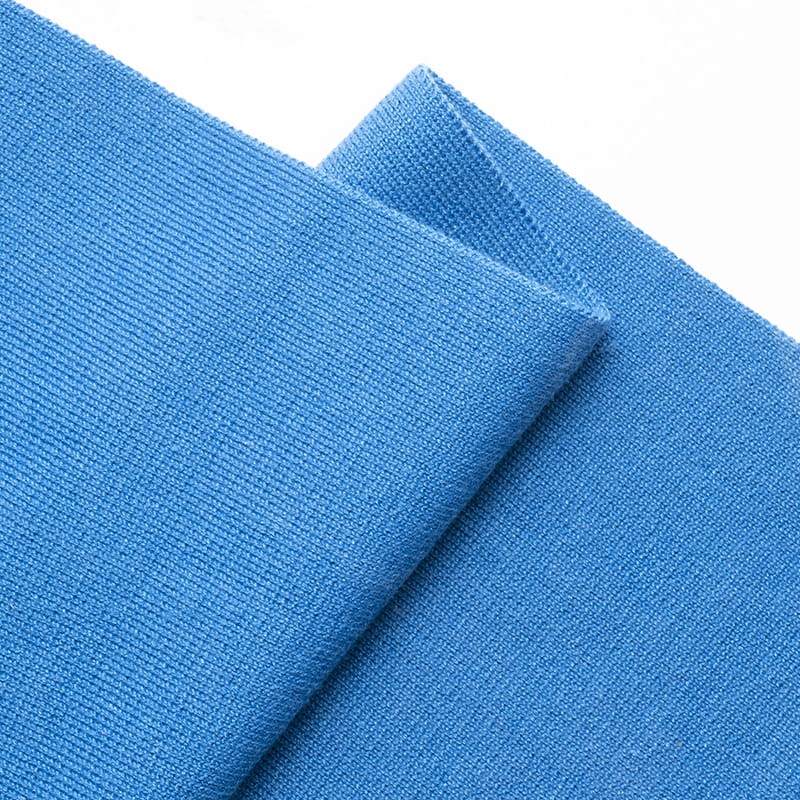
You are standing in front of a roll of rib knit fabric, holding a sample in both hands. The fabric stretches easily across the width, and when you let go, it snaps back without much delay. That sample has passed the first hand test. But once it is cut into a collar, sewn, and worn for a full season, the same material can show a different story. A sleeve cuff can become loose, the neckline can lose its shape, or a panel at the back of a shirt can bag. In nearly all these cases, the cause is not poor sewing or bad finishing. It is the spandex content inside the rib knit fabric.
Spandex, also known as elastane, is the elastic filament that gives a rib knit its power of recovery. The amount used in a rib knit changes how far the fabric goes before it meets resistance, and how much of its original shape it returns after that load is removed. The critical point is this: spandex content is not a number that can be copied from one fabric to another. It is a functional specification that has to be chosen for the exact garment part you are making.
How Spandex Works Inside a Rib Knit Structure
A rib knit is a structure where the loops are arranged in alternating front-back columns. Even without spandex, a rib knit is more elastic than a plain jersey because the loops can open up and close like a spring. The spandex filament is usually fed into the structure as a plated or covered yarn. In a typical rib knit, the spandex sits in the center of the yarn bundle, so the covering fiber determines the hand feel while the spandex carries the elastic force.
This placement means that the spandex is not just adding stretch. It is acting as a control mechanism. When the loops open under tension, the spandex filament begins to extend, and when the tension is released, the filament returns to its relaxed length. In a 1x1 rib knit, the loops have a small, compact shape, and a low spandex content of 3 to 5 percent can already give a clean, fast recovery. A 2x2 rib knit, by comparison, has larger repeating units, so the same spandex content may feel less elastic because the force is distributed across a wider structure.
The yarn size is another part of that mechanism. A rib knit with a fine 20D or 30D spandex filament gives a delicate stretch that is suitable for face-framing collars and lightweight trims. A thicker 40D or 70D filament produces a more active, stronger recovery, which is why a cuff or waistband can hold its dimension across many years of use without looking baggy. The spandex content combined with this filament size is what we call "stretch grade," and it is the real source of the fabric behavior you see on a production sample.
What Actually Defines Recovery in a Rib Knit?
When a buyer asks "Is this rib fabric going to stretch out?", the honest answer needs to come from data. Recovery is usually measured in two dimensions. First, how much does the fabric stretch relative to its original width? Second, how much permanent growth remains after the load is released and the fabric has rested? In practice, a simple test can be done at a sampling table. Cut a 10 cm wide strip, mark two points 5 cm apart, and pull gently until the fabric reaches a chosen extension. Hold for 30 seconds, then release. A good rib knit with 5 to 10 percent spandex should come back to within 1 to 3 mm of the original 5 cm gauge. That is a residual deformation of roughly 2 to 5 percent, which is acceptable for a casual garment.
This type of data becomes especially useful when you are comparing two materials that look similar. One fabric may feel stretchy in your hands, but after 20 cycles its recovery may drop from 98 percent to 89 percent. The other, with a slightly higher spandex content or a better yarn wrapping, may stay at 96 percent. The second one is the better candidate for a collar or a waistband, even if the price is higher.
The table below gives a practical guide for choosing where a rib knit with a given spandex content is best used.
| Spandex Content | Stretch Range | Typical Recovery | Best Use |
|---|---|---|---|
| 3-5% | 20-40% | 90-95% after 10 cycles | Light trims, tubular hems, facing bands |
| 5-10% | 40-70% | 95-98% after 10 cycles | Polo collars, shirt panels, casual bottoms |
| 15-25% | 100-200% | 95-99% with low residual deformation | Sportswear, seamless knit panels, waistbands |
Above 25 percent, the spandex starts to dominate the fabric's hand. The polyester or cotton content can no longer control the drape, and the fabric becomes more rubbery. Most rib knit trims and panels stay between 5 and 20 percent, while a high-flex cuff can go a little higher if the construction is reinforced. For sportswear and high-stretch panels, a durable elastic rib fabric with a moderate spandex content and a resistant surface is a reliable choice. A 1x1 polyester stretch knit with an appropriate spandex range can deliver both motion clearance and long-term recovery.
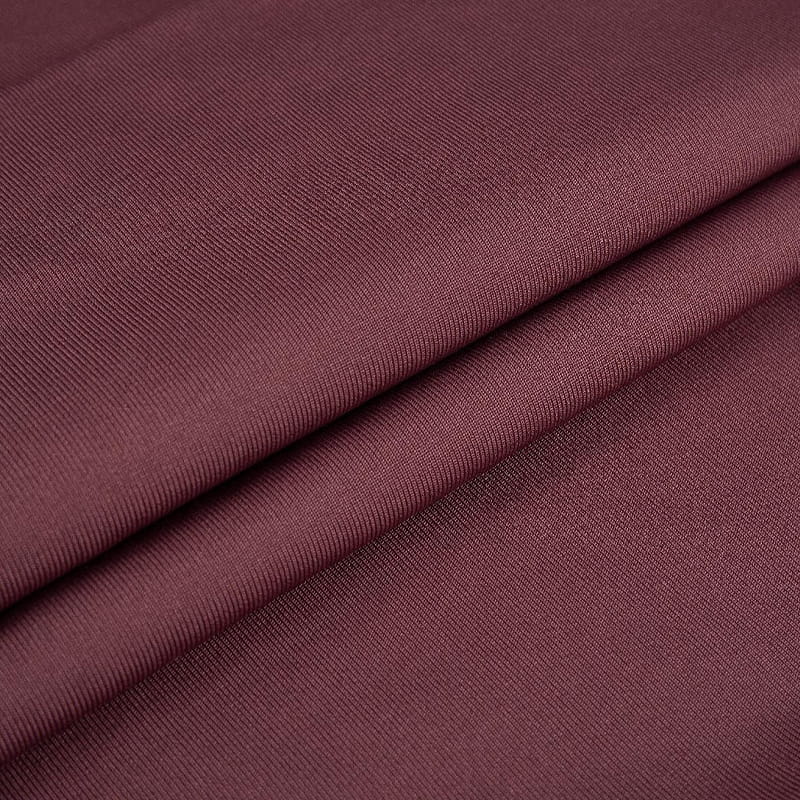 1x1 Polyester Ribbed Fabric with 4% Spandex for SportswearThis 1x1 polyester ribbed fabric combines 96% polyester and 4% spandex, offering elasticity, durability, and breathability for sportswear. It balances stretch and recovery, making it ideal for active garments requiring reliable fit.View Product →
1x1 vs 2x2 Rib: How the Same Spandex Content Behaves Differently
The gauge and yarn structure of a rib knit also affect the way spandex works. In a 1x1 rib, every column alternates between a front loop and a back loop. This regular, tight sequence gives a fabric that stretches quickly and recovers quickly, with a low risk of uneven distortion. A 5 percent spandex content in a 1x1 rib is usually enough to provide a clean elastic performance for a classic polo collar or seam seal at the cuff.
In a 2x2 rib, two front columns are paired with two back columns. This arrangement creates a wider repeat and a more stable surface, so a 2x2 rib often has better dimensional stability and a heavier hand feel. The spandex in a 2x2 knit is across a thicker area, which is why the same weight of spandex in a 2x2 often produces a smaller amount of stretch than in a 1x1. For a designer who wants a collar to stay crisp, a 2x2 with 5 to 8 percent spandex is often preferred, while for a shoulder strap that needs to follow body movement, a 1x1 with the same content can be more responsive.
When you are sourcing rib fabric, the 1x1 ribbed fabric category is a good starting point for trims and edges, while the 2x2 option gives a more structured elastic for garments that need a stable frame. A 2x2 stretch polyester rib knit fabric is commonly used for casual apparel that needs a structured but movably elastic fabric. The slightly thicker surface is an advantage when the fabric is used as the main body of a garment.
 2x2 Polyester Ribbed Knit Fabric with 3% Spandex for ApparelThis 2x2 polyester ribbed knit fabric features 97% polyester and 3% spandex, providing structure and stretch. Its smooth surface and durability suit casual apparel and garments needing a stable yet elastic base.View Product →
How Spandex Content Affects Each Garment Part
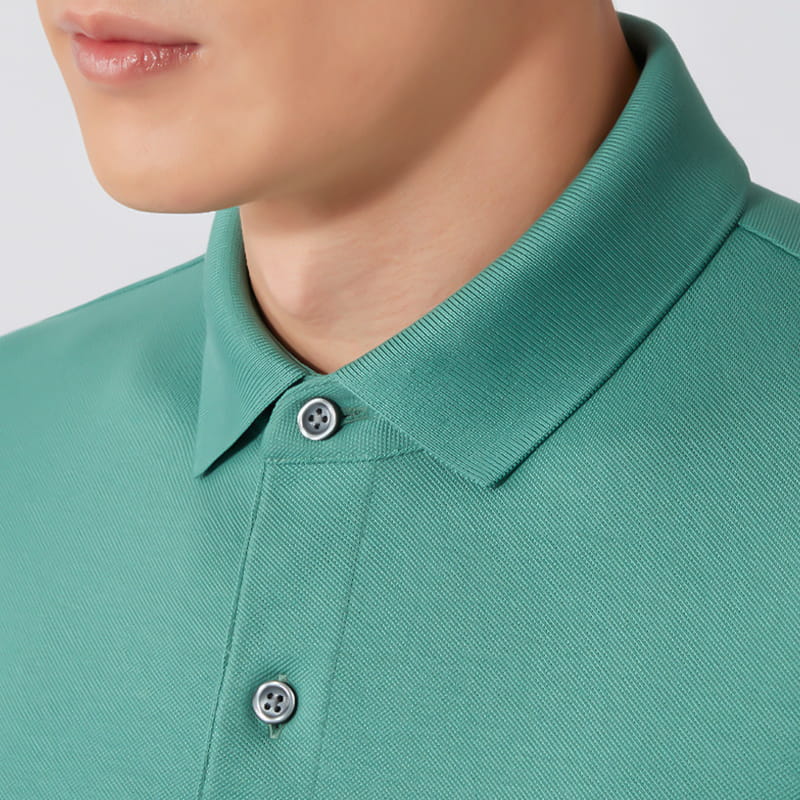
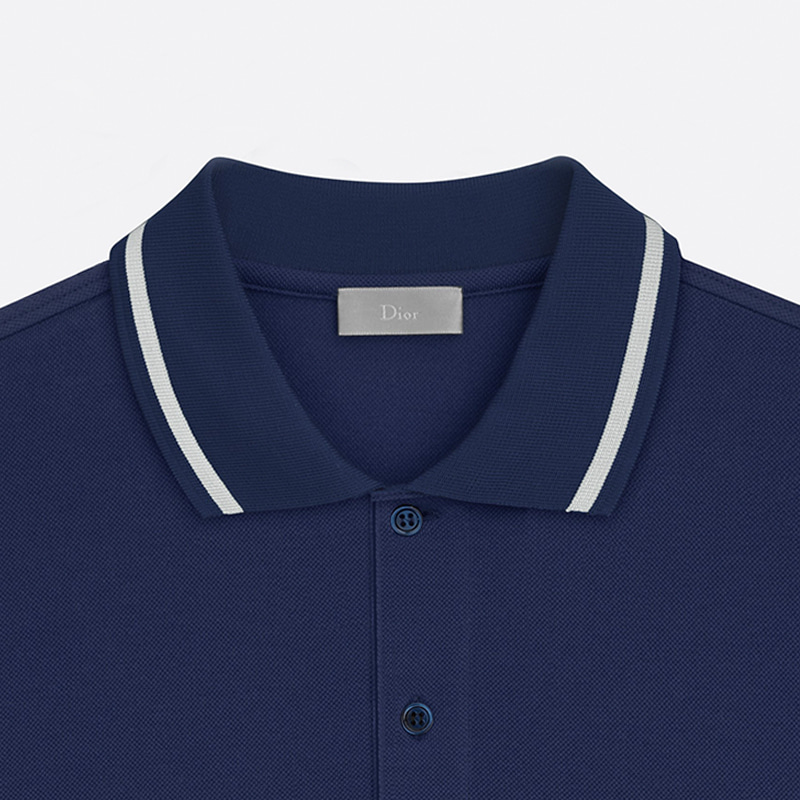
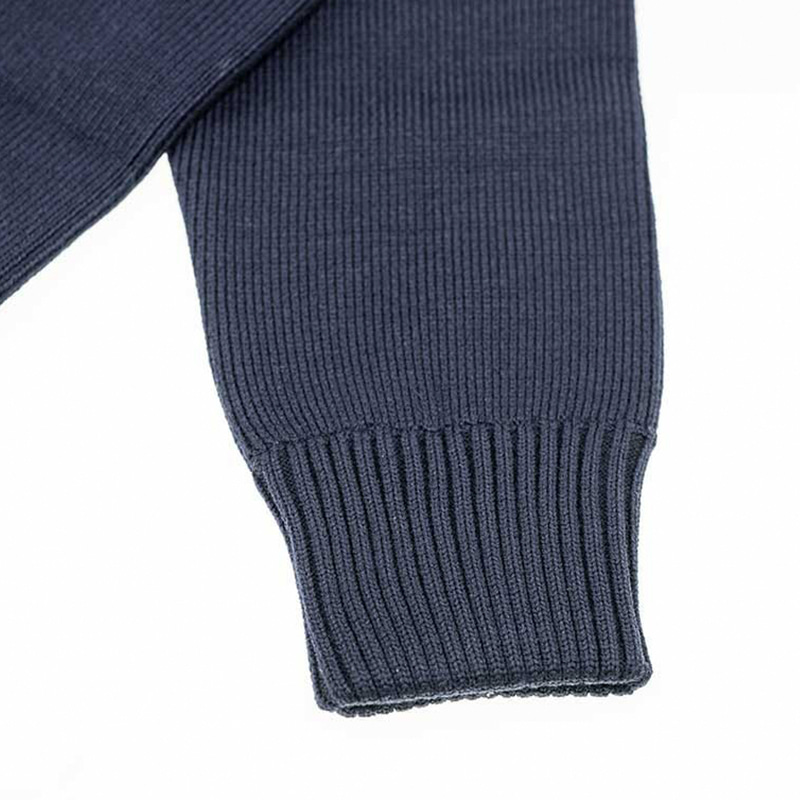
The right spandex content should be chosen per part, not for the whole collection. For a ribbed collar on a polo shirt, a spandex range of 5 to 8 percent gives a soft but stable band around the neck. A higher content above 12 percent begins to pull on the neckline and can distort the shape of the garment. For a cuff on a jacket or sweater, the material must grip the wrist and maintain that grip over years of use, so 8 to 15 percent is common, and the spandex must be well covered to avoid abrasion against the skin.
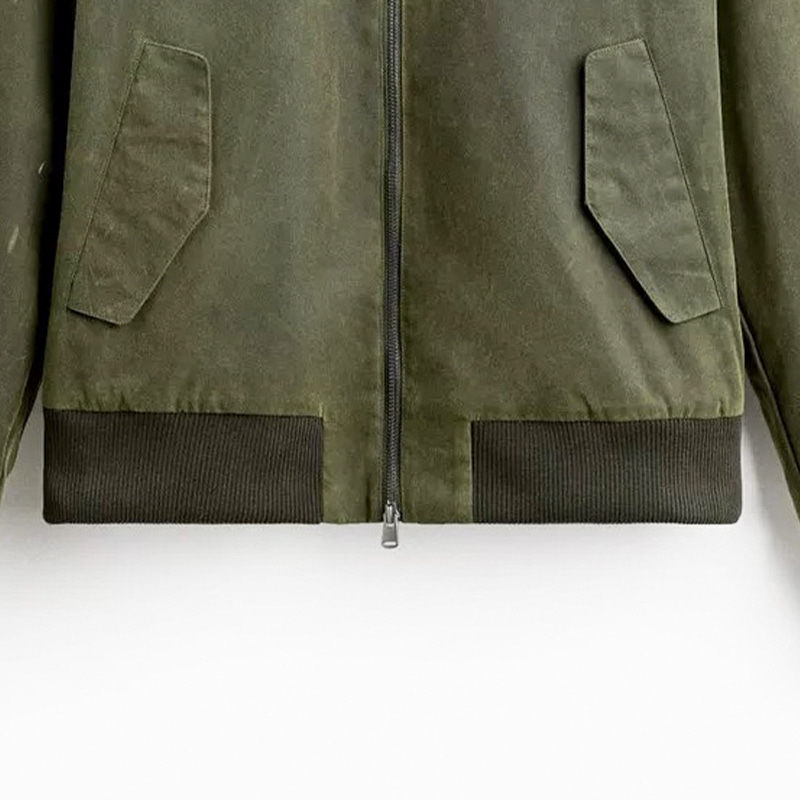
For a rib knit hem at the bottom of a garment, the elastic recovery is important, but the final appearance matters more. A hem that stretches too much, even if it recovers, can look sloppy after a wash. A 2x2 knit hem with 3 to 7 percent spandex is often chosen because it balances structure and recovery. For a seamless cuff, the elastic must be high because there is no additional seam support, so a higher spandex content of 10 to 20 percent is reasonable. A seamless ribbed cuff is one of the clearest examples of how the spandex content and the knit structure have to work together. Without a seam to distribute the stretch, the fabric must supply the entire hold, so the spandex percentage and loop geometry become the functional specifications.
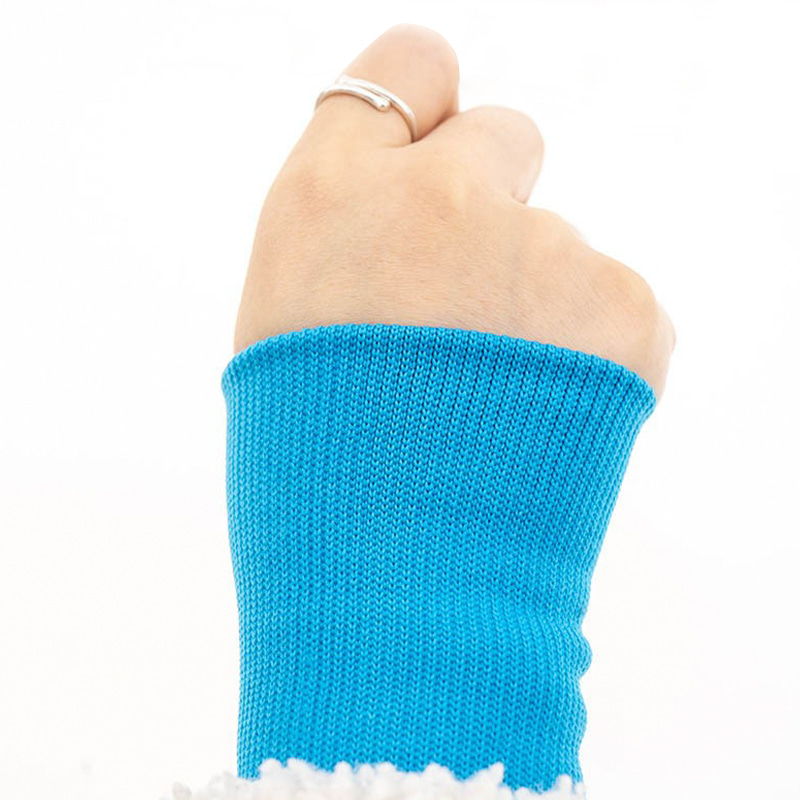 Seamless Ribbed Cuffs with Acrylic and Spandex BlendThese seamless ribbed cuffs use 90% acrylic and 10% spandex, delivering softness, warmth, and secure stretch. The seamless design ensures comfort and durability for sleeve finishes, suitable for various clothing styles.View Product →
How to Verify Recovery Before Placing an Order
Buying rib knit fabric by price per kilogram ignores the most important questions. First, ask the supplier for the spandex content as a percentage of total weight and the fiber composition of the spandex cover. Second, request a sample from a production lot, not a showroom swatch, because the laboratory sample is often produced with more care than the bulk. Third, test the fabric under a recognized method. ASTM D3107 is the common standard for stretch fabrics, while GB/T 24254 covers elastic recovery under domestic standards. A good supplier will provide the test result in millimeters of permanent extension, not just a descriptive word like "good recovery."
There are also hidden risk points that can change the performance. The spandex filament can be damaged in the construction process if the knitting tension is too high, or in the dyeing process if the temperature and chemical agent are not adjusted to the spandex. A rib knit with a beautiful surface can still lose up to half its recovery power after the first high-temperature dyeing. If the finished product is going to be washed in chlorinated water, ask the dyestuff and finishing specialist to recommend a chlorine-resistant spandex.
You can also detect differences at the sample stage. Pull a 5 cm length, hold it for a few seconds, and look at the gauge edges. A fabric with poor recovery will leave a slight bulge or canary shake at the cut edge. Over 10 or 20 cycles, that subtle difference becomes a visible gap in the sleeve or the collar. For a deeper understanding of the factors that make rib knit fabrics perform differently, the site's article on features and advantages of ribbed fabrics explains the same mechanisms from a broader production perspective.
Spandex content is the first parameter to specify when you define a rib knit, but it is not the last. The knitting gauge, the fineness of the spandex filament, the direction of the knit, and the finishing process all have equal weight. When you are sourcing rib fabric for a full garment line, the supplier has to show you the designed spandex percentage for each fabric type and the measured recovery data from a production sample. This is the only way to avoid the gap between a promising sampling table and an unstable production run.