 English
 Español
Content
- 0.1 1. Introduction: The Critical Role of Cuff Performance in Garment Quality
- 0.2 2. Defining the Tubular Knitted Ribbed Cuff
- 0.3 3. Comparison One: Tubular Knitted Cuff vs. Flat Knitted Cuff
- 0.4 4. Comparison Two: 1x1 Tubular Rib vs. 2x2 Tubular Rib
- 0.5 5. Material Composition and Fiber Blends for Tubular Cuffs
- 0.6 6. Post-Finishing Requirements for Tubular Knitted Ribbed Cuffs
- 0.7 7. Ensuring Dimensional Stability During Shaping
- 0.8 8. Quality Testing for Tubular Knitted Ribbed Cuffs
- 0.9 9. Applications Across Garment Categories
- 0.10 10. Quality Standards and Certifications
- 0.11 11. Common Cuff Defects and Prevention
- 0.12 12. Conclusion: Matching the Tubular Cuff to the Garment and the Brand
- 1 5 Frequently Asked Questions (FAQs)
- 2 References
1. Introduction: The Critical Role of Cuff Performance in Garment Quality
The cuff is one of the most functionally demanding components of any garment. It is stretched every time the wearer pushes up their sleeves or pulls the garment over their hands. It is exposed to repeated abrasion from desks, tabletops, and other surfaces. It is washed and dried dozens of times over the life of the garment. A cuff that loses its elasticity, frays at the edge, or becomes wavy and misshapen ruins the entire garment regardless of how expensive the main fabric is.
Tubular knitted ribbed cuffs represent a specialized construction method that offers distinct advantages over standard flat knitted cuffs. Rather than being knit as an open width fabric that is cut and sewn, tubular cuffs are knit as a seamless tube on circular knitting machines. The resulting cuff has no side seam, providing a cleaner appearance, more consistent elasticity around the entire circumference, and superior comfort against the skin.
This article provides a comprehensive technical comparison of tubular knitted ribbed cuffs versus flat knitted cuffs. We will examine manufacturing methods, elasticity, edge finish, durability, post-finishing requirements, material compositions, and application suitability. For garment manufacturers and procurement professionals, this guide serves as a reference for selecting the appropriate cuff construction for different garment types, performance requirements, and brand positioning.
2. Defining the Tubular Knitted Ribbed Cuff
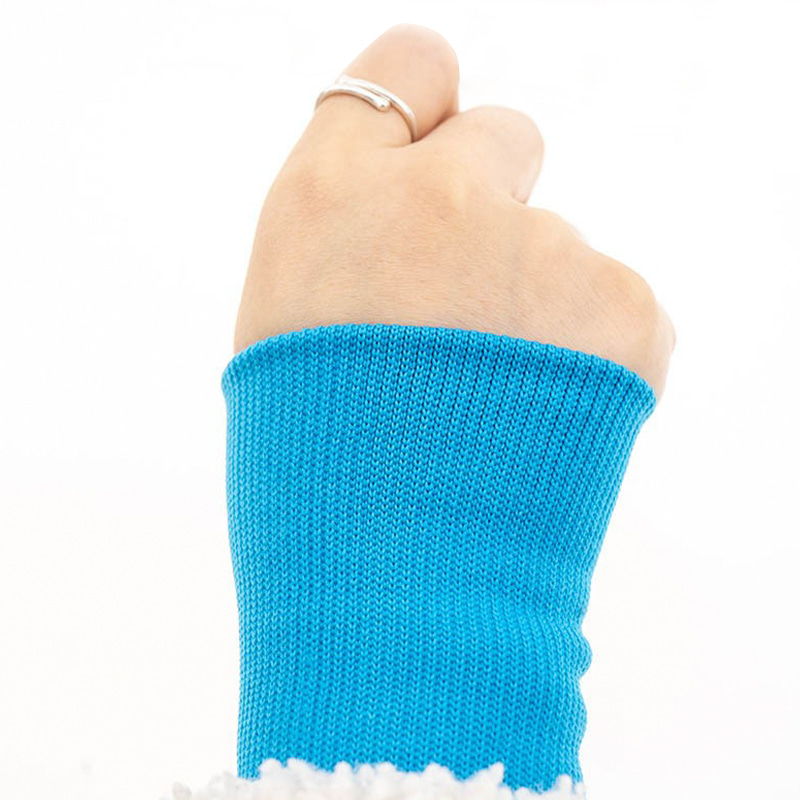
A tubular knitted ribbed cuff is a seamless, circular knit fabric component attached to the sleeve opening or hem of a garment. Unlike flat knit cuffs that are produced as open width fabric, cut to length, and sewn into a loop, tubular cuffs are knit directly as a continuous tube on circular knitting machines.
The defining feature of a tubular cuff is the absence of a side seam. The fabric forms a complete circle with no interruption in the knit structure. This seamless construction provides several important advantages. The elasticity is uniform around the entire circumference. There is no bulky seam to irritate the wrist. The appearance is cleaner and more professional. The cuff is less likely to twist or become misaligned during laundering.
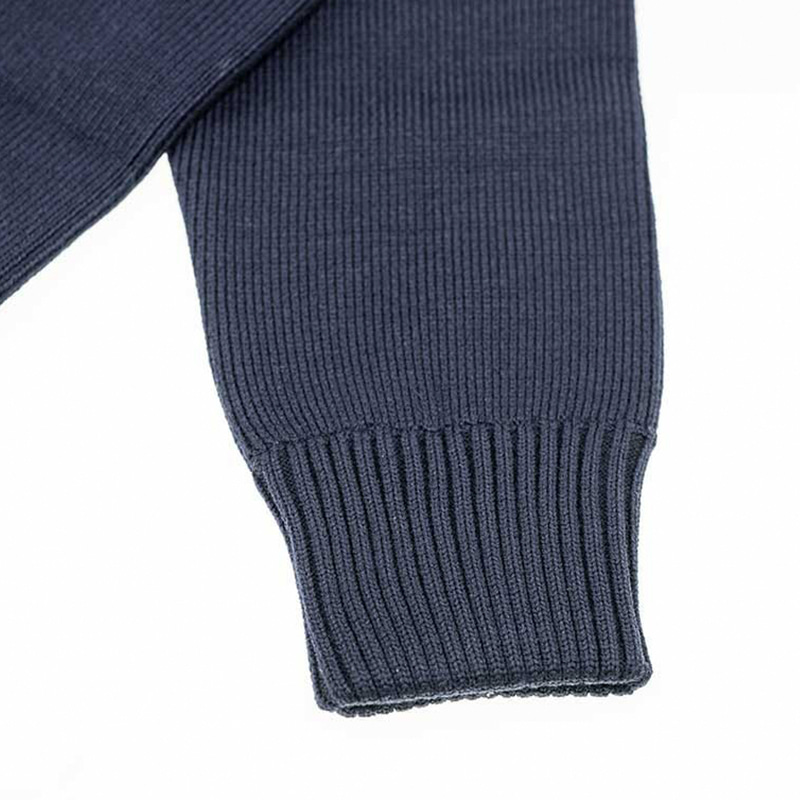
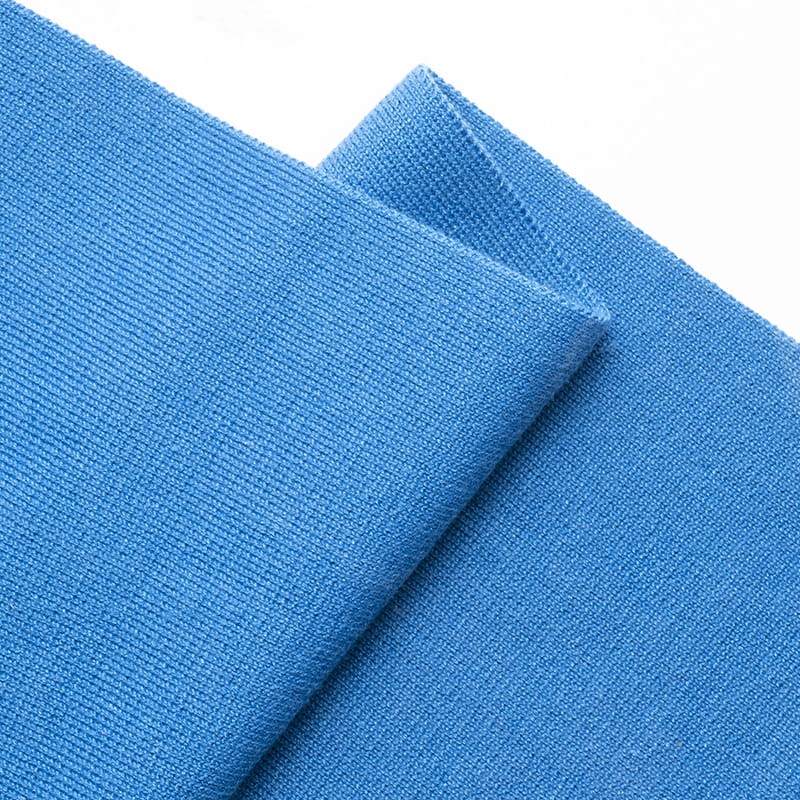
Tubular cuffs are typically knit in rib structures such as 1x1 or 2x2. The ribbed knit pattern provides the natural elasticity required for cuff function. The fabric is produced as a long tube, which is then cut into individual cuff lengths. Each cuff is already a complete loop, requiring no sewing of the side seam.
The materials used for tubular knitted ribbed cuffs vary by application. Cotton offers natural softness, breathability, and comfort against the skin. Polyester offers durability, color retention, and moisture wicking. Acrylic offers wool-like warmth at lower cost. Spandex or elastane is often added to enhance elasticity and recovery. Blends such as cotton-polyester-spandex combine the advantages of multiple fibers.
When you select a Tubular Knitted Ribbed Cuff, you are choosing a component that offers superior seamlessness, consistent elasticity, and a clean, professional appearance suitable for down jackets, coats, sportswear, and casual wear.
3. Comparison One: Tubular Knitted Cuff vs. Flat Knitted Cuff
The fundamental difference between tubular knitted cuffs and flat knitted cuffs lies in the manufacturing method and resulting structure. This difference affects appearance, elasticity, durability, and cost.
Tubular knitted cuffs are produced on circular knitting machines. The fabric is knit as a continuous tube with no seam. The cuff is cut directly from the tube, so each cuff is already a complete loop. The edge of the tubular cuff is naturally finished by the knitting process. There is no raw edge that requires folding or covering. The seamless construction provides uniform stretch around the entire circumference.
Flat knitted cuffs are produced as open width fabric on flat or circular knitting machines. The fabric is knit as a flat sheet, then cut to length. The cut piece is folded in half lengthwise and sewn into a loop. The side seam is sewn closed. The raw edge at the cuff opening is created by the fold, which is then topstitched to secure it. The folded edge and side seam create bulk and potential points of irritation.
The table below compares tubular knitted cuffs and flat knitted cuffs across key parameters.
| Parameter | Tubular Knitted Cuff | Flat Knitted Cuff |
|---|---|---|
| Seam Construction | No side seam | One side seam |
| Edge Finish | Naturally finished by knitting | Folded and topstitched |
| Elasticity Uniformity | Consistent around entire circumference | May vary near side seam |
| Comfort Against Skin | Smooth, no irritation | Bulky seam may cause irritation |
| Appearance | Clean, seamless | Visible side seam and topstitching |
| Manufacturing Complexity | Higher, specialized circular machines | Lower, standard equipment |
| Twisting Resistance | Excellent | Moderate |
| Cost per Unit | Higher | Lower |
| Best Application | Premium garments, down jackets, sportswear | Standard garments, high volume |
For down jackets, coats, and sportswear where both appearance and comfort are priorities, tubular knitted cuffs are the superior choice. For standard production where cost is the primary driver, flat knitted cuffs may be appropriate.
4. Comparison Two: 1x1 Tubular Rib vs. 2x2 Tubular Rib
Within tubular knitted cuffs, the rib structure can be 1x1 or 2x2. Each offers different performance characteristics suited to different garment types.
1x1 tubular rib alternates one knit stitch and one purl stitch. The resulting structure has fine, closely spaced vertical wales. The fabric is relatively thin and has very high elasticity. 1x1 tubular cuffs are suitable for lightweight garments such as t-shirts, light sweaters, and summer jackets. The fine rib texture is more discreet and less bulky. The high elasticity makes it easy to pass over the hand.
2x2 tubular rib alternates two knit stitches and two purl stitches. The resulting structure has wider, more pronounced vertical wales. The fabric is thicker and heavier than 1x1 rib. Elasticity is good but slightly lower. 2x2 tubular cuffs are preferred for heavier garments such as down jackets, heavy sweaters, and outerwear. The thicker cuff provides more structure and durability. The more substantial appearance is appropriate for heavier fabrics.
The table below compares 1x1 and 2x2 tubular knitted ribbed cuffs.
| Parameter | 1x1 Tubular Rib Cuff | 2x2 Tubular Rib Cuff |
|---|---|---|
| Knit Pattern | Alternating one knit, one purl | Alternating two knit, two purl |
| Appearance | Fine, closely spaced wales | Wider, more pronounced wales |
| Thickness | Thin, lightweight | Thicker, heavier |
| Elasticity | Very high | High |
| Recovery | Excellent | Very good |
| Best Application | Lightweight garments, t-shirts, summer | Down jackets, coats, heavy sweaters |
For a down jacket where a substantial, durable cuff is needed to keep warm air inside the sleeve, 2x2 tubular rib is preferred. For a lightweight summer top where a minimal, soft cuff is desired, 1x1 tubular rib is appropriate.
5. Material Composition and Fiber Blends for Tubular Cuffs
The performance of tubular knitted ribbed cuffs depends heavily on the fiber blend. Different applications require different combinations of elasticity, durability, softness, and moisture management.
Cotton is the standard for many applications. Cotton offers natural softness, breathability, and comfort against the skin. It is hypoallergenic and accepts dyes well. However, cotton has lower elasticity and recovery than synthetic fibers. Pure cotton cuffs may stretch out over time and lose their shape. Cotton is often blended with spandex for improved recovery.
Polyester offers superior durability, color retention, and moisture wicking. Polyester does not absorb water, so it dries quickly and resists shrinking. Polyester cuffs maintain their elasticity and recovery through many wash cycles. The hand feel is less natural than cotton but can be engineered to be quite soft. Polyester is the preferred choice for activewear and performance garments.
Acrylic offers a wool-like hand feel at lower cost. Acrylic is warm, soft, and lightweight. It resists moths and mildew. However, acrylic has lower abrasion resistance than polyester and may pill over time. Acrylic is often used for sweater cuffs and cold weather accessories.
Spandex or elastane is essential for cuff applications where repeated stretching occurs. Spandex content typically ranges from 3 to 8 percent. Even a small percentage of spandex significantly improves the ability of the cuff to stretch over the hand and return to shape. For cuffs that will be stretched daily, spandex is not optional; it is required.
The table below summarizes material options for tubular knitted ribbed cuffs.
| Material | Elasticity | Recovery | Durability | Softness | Best Application |
|---|---|---|---|---|---|
| 100% Cotton | Moderate | Moderate | Good | Excellent | Lightweight casual |
| 100% Polyester | Good | Good | Excellent | Moderate | Activewear, performance |
| Cotton-Polyester | Moderate | Moderate | Very good | Good | Balanced general use |
| Cotton-Spandex | Very good | Excellent | Good | Excellent | Premium garments, t-shirts |
| Polyester-Spandex | Excellent | Excellent | Excellent | Moderate | Down jackets, heavy use |
When selecting a tubular cuff material, consider the end use. A down jacket cuff that will be stretched each time the garment is put on benefits from spandex content. A lightweight summer top where softness is the priority may use pure cotton or cotton-polyester.
6. Post-Finishing Requirements for Tubular Knitted Ribbed Cuffs
After weaving, tubular knitted ribbed cuffs require post-finishing to achieve their final properties. The finishing process is essential for dimensional stability, shape memory, appearance, and durability.
Pre-shrinking is a critical first step. The fabric is mechanically or chemically treated to pre-shrink it before cutting and sewing. This reduces dimensional changes during subsequent washing by the consumer. For ribbed cuffs, pre-shrinking helps minimize shrinkage of the finished product during use, maintaining cuff size stability. Pre-shrinking is especially important for cotton and cotton-blend cuffs.
Shaping is the key step for dimensional stability and shape memory. The fabric is heat treated at high temperatures to maintain a specific size and shape. Through precise shaping processes, the elasticity, stretchability, and appearance of the ribbed cuffs are fixed. The shaping temperature, time, and tension must be carefully controlled based on the material and intended performance. Proper shaping ensures the cuffs maintain good morphological stability during subsequent processing and use.
Dyeing not only gives the ribbed cuffs rich colors but also enhances the color fastness and anti-aging properties of the fabric through specific dyeing processes. High-quality dyeing treatment enhances the visual effect of the ribbed cuffs and extends their service life. For polyester and polyester blends, high temperature dyeing processes lock the color into the fiber.
Softening treatment aims to improve the feel of the fabric, making it softer and more comfortable against the skin. For ribbed cuffs, softening enhances the comfort of wearing and reduces friction on the wrist. The amount of softener must be carefully controlled to avoid affecting elasticity.
Anti-wrinkle treatment enhances the anti-wrinkle properties of the fabric through chemical or physical methods, making it less likely to wrinkle during use and maintaining a flat appearance. This is particularly important for cuffs used on down jackets and coats that are expected to look crisp.
The table below summarizes post-finishing requirements for tubular knitted ribbed cuffs.
| Finishing Process | Purpose | Critical Parameters |
|---|---|---|
| Pre-Shrinking | Reduce dimensional changes during washing | Mechanical or chemical method |
| Shaping | Fix size, shape, elasticity | Temperature, time, tension |
| Dyeing | Add color, enhance color fastness | Dye type, temperature, pH |
| Softening | Improve hand feel, comfort | Softener type and amount |
| Anti-Wrinkle | Maintain flat appearance | Chemical or physical method |
Manufacturers with advanced shaping equipment and precise process control, such as high-temperature shaping machines, can ensure that the cuffs maintain their dimensional stability and shape memory through the life of the garment.
7. Ensuring Dimensional Stability During Shaping
Ensuring dimensional stability and shape memory during the shaping process is critical for tubular knitted ribbed cuffs. Several key steps and technical points are involved.
Selecting the right shaping equipment is the foundation. Advanced shaping equipment, such as high-temperature shaping machines, can accurately control temperature and humidity to ensure even heat treatment during the shaping process. Uniform heat distribution prevents uneven shrinkage or distortion.
Optimizing process parameters is essential. According to the material, structure, and expected performance of the ribbed cuffs, the shaping temperature, time, and tension must be optimized. Too high a temperature may cause fabric damage. Too low a temperature may not achieve the ideal shaping effect. For cotton-spandex blends, lower temperatures are used to avoid damaging the spandex. For polyester, higher temperatures are required to set the shape.
Using shaping aids enhances performance. Appropriate shaping aids, such as resin finishing agents and cross-linking agents, can enhance the dimensional stability and shape memory of the ribbed cuffs. These aids form chemical bonds between fabric fibers, improving the bonding force between fibers. However, excessive additives may cause the fabric to feel harder and reduce breathability, so the amount of additives must be accurately controlled.
Optimizing fabric structure starts with yarn selection. Yarns with good elasticity, wear resistance, and wrinkle resistance, such as high elastic fiber and blended fiber, can improve the shape memory and dimensional stability of ribbed cuffs. A reasonable knit structure design, such as bidirectional rib structures, can enhance the elasticity and stability of ribbed cuffs.
Strictly controlling environmental factors during shaping is also important. During the shaping process, fluctuations in temperature and humidity may adversely affect dimensional stability and shape memory. Therefore, the temperature and humidity in the shaping machine must be strictly controlled. Maintaining air circulation helps evenly distribute heat and humidity.
The synergy of finishing processes creates the best results. The combination of pre-shrinking and shaping reduces dimensional changes during subsequent washing. High-quality dyeing and softening not only enhance the visual effect and feel of the ribbed cuffs but also enhance their shape memory and durability.
8. Quality Testing for Tubular Knitted Ribbed Cuffs
Quality testing ensures that tubular knitted ribbed cuffs meet performance specifications before they are shipped to garment manufacturers.
Elasticity and recovery testing measures the ability of the cuff to stretch and return to its original dimensions. The cuff is stretched to a specified percentage of its original length and held. The force required to achieve the stretch is measured. Then the cuff is released, and the remaining elongation is measured after a specified recovery time. For a quality cuff, recovery of 90 percent or higher is desirable.
Abrasion resistance testing measures how well the cuff withstands rubbing against surfaces. The cuff is rubbed against a standard abrasive material for a specified number of cycles. The number of cycles to failure indicates abrasion resistance. For jacket cuffs that may contact desks and other surfaces, high abrasion resistance is essential.
Color fastness testing measures resistance to fading from washing and light. For washing, the cuff is laundered with a standard detergent at a specified temperature, and color change and color transfer to adjacent fabrics are evaluated. For light, the cuff is exposed to a xenon arc lamp that simulates sunlight, and color change is evaluated.
Shrinkage testing measures dimensional changes after laundering. The cuff is measured before and after washing. Shrinkage of less than 3 percent in both the length and width directions is acceptable. Shrinkage of 5 percent or more will affect the fit and appearance.
Suppliers with certifications such as OEKO-TEX, GRS, GOTS, and BCI provide additional assurance of quality and compliance. Test reports from SGS and Japan Kaken provide independent verification of performance claims.
9. Applications Across Garment Categories
Tubular knitted ribbed cuffs serve different garment categories, each with specific requirements.
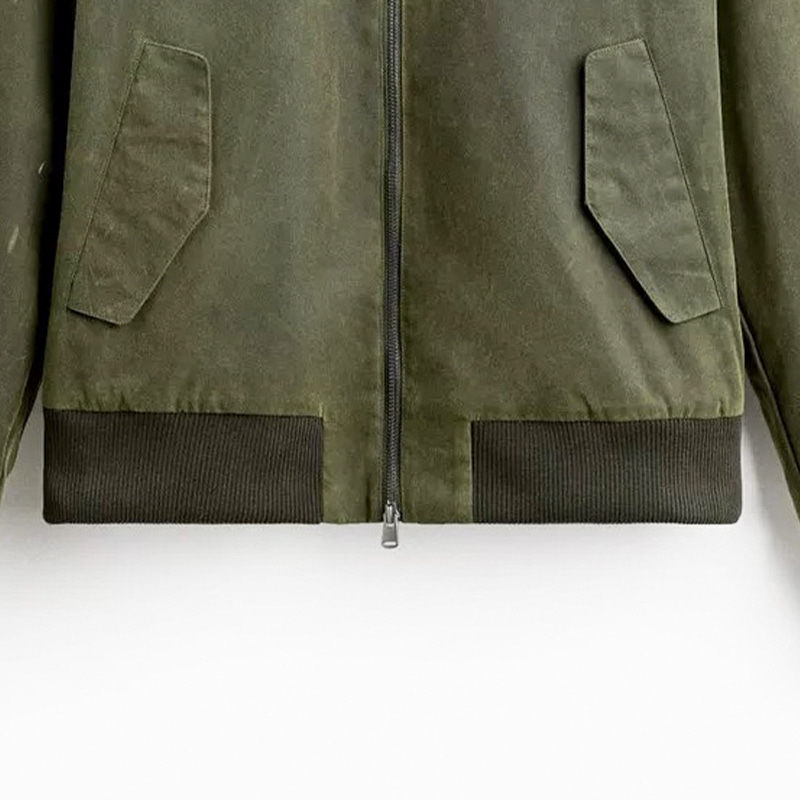
In down jackets and coats, ribbed cuffs are essential for keeping warm air inside the sleeve. The cuff must fit snugly around the wrist without being too tight. The material should be durable to withstand repeated use and washing. Polyester-spandex or cotton-polyester-spandex blends with 2x2 rib construction are common. The tubular seamless construction prevents cold air from entering through a side seam.
In sportswear and activewear, ribbed cuffs must manage moisture and maintain performance through intense activity. The cuff should fit securely without restricting movement. Polyester-spandex with moisture wicking properties is preferred. The seamless construction provides a smooth, chafe-free fit against the skin during repetitive arm movements.
In casual wear and t-shirts, ribbed cuffs provide a finished look and comfortable fit. The cuff should be soft against the skin. 1x1 cotton-spandex rib is common. The seamless construction eliminates the bulky seam that can irritate the wrist.
In sweaters and knitwear, ribbed cuffs provide structure and prevent the sleeve from stretching out. The cuff should have good recovery to maintain its shape. Acrylic or cotton-acrylic blends are common. Wider cuffs of 5 to 8 cm are typical for sweater styles.
10. Quality Standards and Certifications
For export to international markets, tubular knitted ribbed cuffs should meet recognized quality and safety standards.
OEKO-TEX Standard 100 is the most important certification for textile components. It certifies that the product does not contain harmful substances above regulated limits. For cuffs that contact the skin, OEKO-TEX certification is highly recommended and is often required by major brands such as A&F, H&M, and Uniqlo.
GRS (Global Recycled Standard) certifies products containing recycled materials. For brands with sustainability commitments, GRS certified cuffs provide assurance that recycled content claims are accurate.
GOTS (Global Organic Textile Standard) certifies products made from organic fibers. GOTS certified cuffs must contain at least 70 percent certified organic fibers and meet strict environmental and social criteria.
BCI (Better Cotton Initiative) certification indicates that the cotton used was sourced from farms practicing sustainable growing methods.
SGS and Japan Kaken testing provide independent verification of product quality and safety. These third-party test reports are valuable for international buyers.
When sourcing tubular knitted ribbed cuffs, request documentation of all relevant certifications. A reputable supplier will provide these certificates.
11. Common Cuff Defects and Prevention
Understanding common cuff defects helps buyers specify quality requirements and inspect incoming products.
Cuff curling occurs when the cuff edge rolls inward or outward. Curling is caused by incorrect stitch balance, improper finishing, or low spandex content. Prevention requires proper knit structure selection and finishing. Tubular cuffs naturally resist curling better than flat folded cuffs because there is no folded edge.
Cuff twisting occurs when the cuff seam does not align with the sleeve seam. Twisting is caused by torsional stress in the knit structure or uneven attachment. Prevention requires balanced knitting and proper handling during sewing. Tubular cuffs, having no side seam, are less prone to twisting than flat knitted cuffs.
Wavy cuffs occur when the cuff fabric is stretched during sewing and then relaxes, creating a wavy, puckered appearance. Prevention requires proper tension control and feeding during attachment.
Shrinkage distortion occurs when the cuff shrinks more than the sleeve fabric during laundering, causing the cuff to pucker or distort. Prevention requires pre-shrinking both components before assembly and matching shrinkage rates.
When inspecting tubular knitted ribbed cuffs, lay the garment flat on a table. The cuff should lie flat without gaps, waves, or twists. The edge should be straight and even. The cuff should stretch smoothly without excessive force.
12. Conclusion: Matching the Tubular Cuff to the Garment and the Brand
The selection of the right tubular knitted ribbed cuff requires careful consideration of the garment type, the performance requirements, and the brand positioning.
For down jackets and coats where warmth retention is critical, select 2x2 polyester-spandex tubular cuffs with higher spandex content of 5 to 8 percent. The excellent elasticity and recovery maintain a snug fit through years of use. The seamless construction eliminates the bulky side seam and prevents cold air from entering.
For sportswear and activewear, select 1x1 or 2x2 polyester-spandex tubular cuffs with moisture wicking properties. The quick drying and durable performance meet the demands of intense activity. The seamless construction provides a smooth, chafe-free fit during repetitive arm movements.
For t-shirts and casual tops, select 1x1 cotton-spandex tubular cuffs. The soft hand feel and good elasticity provide comfort and fit. The seamless construction eliminates wrist irritation from bulky seams.
For sweaters and knitwear, select 2x2 cotton-acrylic or cotton-polyester tubular cuffs. The wider cuff provides structure and prevents sleeve stretching. The seamless construction ensures uniform appearance around the entire circumference.
For premium and fashion garments where appearance and comfort are priorities, tubular knitted ribbed cuffs offer a clear competitive advantage over flat knitted cuffs. The seamless construction signals quality and attention to detail that consumers notice.
By understanding the technical differences and performance characteristics presented in this article, garment manufacturers and procurement professionals can confidently select the right tubular knitted ribbed cuff for each product line, ensuring fit, durability, and consumer satisfaction.
5 Frequently Asked Questions (FAQs)
Q1: What is the difference between a tubular knitted ribbed cuff and a flat knitted cuff?
A: A tubular knitted ribbed cuff is knit as a seamless tube on circular knitting machines. It has no side seam, provides uniform elasticity around the entire circumference, and has a naturally finished edge. A flat knitted cuff is knit as open width fabric, cut to length, folded in half, and sewn into a loop. It has one side seam and a folded edge that requires topstitching. Tubular cuffs offer superior comfort, appearance, and twisting resistance but are more expensive to produce.
Q2: What is the difference between 1x1 and 2x2 tubular rib cuffs?
A: 1x1 tubular rib alternates one knit stitch and one purl stitch, creating fine, closely spaced wales. It is thinner, more elastic, and suitable for lightweight garments such as t-shirts. 2x2 tubular rib alternates two knit stitches and two purl stitches, creating wider, more pronounced wales. It is thicker, heavier, and suitable for heavier garments such as down jackets, coats, and heavy sweaters.
Q3: How much spandex is needed for a tubular cuff to maintain its shape on a down jacket?
A: For down jackets and outerwear where the cuff will be stretched frequently, spandex content of 5 to 8 percent is recommended. T-shirt cuffs can use 3 to 5 percent spandex. Sweatshirt and jacket cuffs should use 5 to 8 percent spandex. Heavy outerwear cuffs may use 8 to 10 percent spandex. Even a small percentage of spandex significantly improves recovery and prevents the cuff from becoming baggy over time.
Q4: Why are post-finishing processes important for tubular knitted ribbed cuffs?
A: Post-finishing processes such as pre-shrinking, shaping, and softening are essential for dimensional stability and shape memory. Pre-shrinking reduces shrinkage during laundering. Shaping fixes the size, shape, and elasticity through controlled heat treatment. Softening improves hand feel and comfort against the skin. Without proper finishing, cuffs may shrink, lose their shape, become wavy, or feel uncomfortable against the wrist.
Q5: What certifications should I look for in tubular knitted ribbed cuffs for export to major brands?
A: For export to major brands such as A&F, H&M, and Uniqlo, OEKO-TEX Standard 100 is the most important certification. It certifies that the product does not contain harmful substances. For products with recycled content, GRS certification is required. For organic cotton, GOTS certification is required. For sustainable cotton sourcing, BCI certification is relevant. Third-party testing from SGS or Japan Kaken provides additional quality assurance. Request documentation of all relevant certifications from your supplier.
References
- Jiaxing Zhapu Jilida Garment Accessories Co., Ltd. (2024). Tubular Knitted Ribbed Cuff Technical Specifications.
- Jiaxing Zhapu Jilida Garment Accessories Co., Ltd. (2024). Ribbed Cuffs Industry Knowledge Post-Finishing and Shaping Processes.
- ASTM International. (2019). ASTM D4964 Standard Test Method for Tension and Elongation of Elastic Fabrics.
- OEKO TEX Association. (2024). OEKO TEX Standard 100 Certified Product List.
- International Organization for Standardization. (2020). ISO 105 C10 Textiles Tests for color fastness Part C10.
- Global Recycled Standard. (2021). GRS Certification Requirements.
- Jiaxing Zhapu Jilida Garment Accessories Co., Ltd. (2024). Production Capacity and Quality Control Standards.
- American Association of Textile Chemists and Colorists. (2021). AATCC Test Method 124 Appearance of Fabrics after Repeated Home Laundering.
- Textile Exchange. (2023). Organic Cotton Market Report.
- Jiaxing Zhapu Jilida Garment Accessories Co., Ltd. (2024). Seamless Cuff Manufacturing Process.