 English
 Español
Content
In garment production, the most common trim complaints do not come from bad yarn or loose stitching. They come from treating a ribbed collar, a ribbed cuff, and a ribbed hem as if they were the same piece of ribbing cut to different widths. They are not the same part. A collar has to hold a fold line and frame the neckline while remaining the most visible part of a top. A cuff has to stretch open wide enough for a hand to pass through and then recover, thousands of times over the life of the garment. A hem has to lie flat against the hip, carrying the weight of the lower edge without rolling or sagging. Each trim is engineered for a different stress point, and that difference changes the rib structure, yarn choice, and production method before the first sample is knitted.
The short version: collars are built for shape retention, cuffs for elastic recovery, and hems for stability and drape. The rest of this article explains why that simple rule should be on every spec sheet, and what it means when you order ribbed trims in bulk.
Each Ribbed Trim Performs a Different Job
Ribbed collars frame the neck opening and carry a large share of the garment's visual quality. A collar that curls after the first wash makes an otherwise good polo shirt look cheap. In construction terms, the collar is the only trim that is deliberately folded and permanently set into a fold line. The rib has to hold that fold, keep the two halves balanced, and recover its shape every time the garment comes out of the wash. Because the collar sits against the skin near the face, the yarn blend matters for comfort as well as structure.
Ribbed cuffs close the sleeve at the wrist and face a completely different mechanical demand. The cuff is stretched every time the wearer pulls the sleeve over the hand, then released. That repeated cycle is the true test; a cuff that does not recover will stretch out permanently within a few months. In knitwear, cuff recovery is also a warmth issue, because a loose cuff lets cold air travel up the sleeve. The construction therefore emphasizes elasticity and snap rather than flat shape retention.
Ribbed hems finish the bottom edge of the garment and have to carry the weight of the whole hemline. A hem does not open and close like a cuff, and it is not folded in the same way as a collar, but it must stay flat while the body bends, stretches, and sits. A hem that rides up or develops a wavy edge changes the silhouette of the garment as soon as the wearer moves. The priority here is balanced stretch and stable width, so the hem does not draw in the garment unevenly or bag out over time.
| Trim | Primary Function | Main Stress | Typical Rib Structure | Common Failure |
|---|---|---|---|---|
| Collar | Frame neckline; hold fold and peak shape | Repeated folding and laundering | 1x1, often folded or shaped | Curling, loss of peak definition |
| Cuff | Close sleeve; allow hand passage; retain warmth | Repeated stretching over the hand | 2x2 tubular or open-width | Permanent stretch, weak recovery |
| Hem | Finish bottom edge; hold a flat line | Gravity, body movement, laundering | 1x1 or 2x2 flat trim | Rolling, sagging, wavy edge |
Construction Differences: Folded Collars, Tubular Cuffs, Flat Hems
Collar construction starts at the fold line
Collars are normally knitted wider than the finished neckband, then folded over and stitched. The fold line is the weak point: if the two faces of the rib are not balanced, the collar will wing open or curl inward. In a double-peak polo collar, the two peaks also have to sit symmetrically across the fold, so the construction is checked at the knitting stage rather than corrected in cutting. Lighter tops generally use a finer 1x1 rib, because a heavy 2x2 collar adds bulk that presses against the neck and looks out of proportion on a casual shirt.
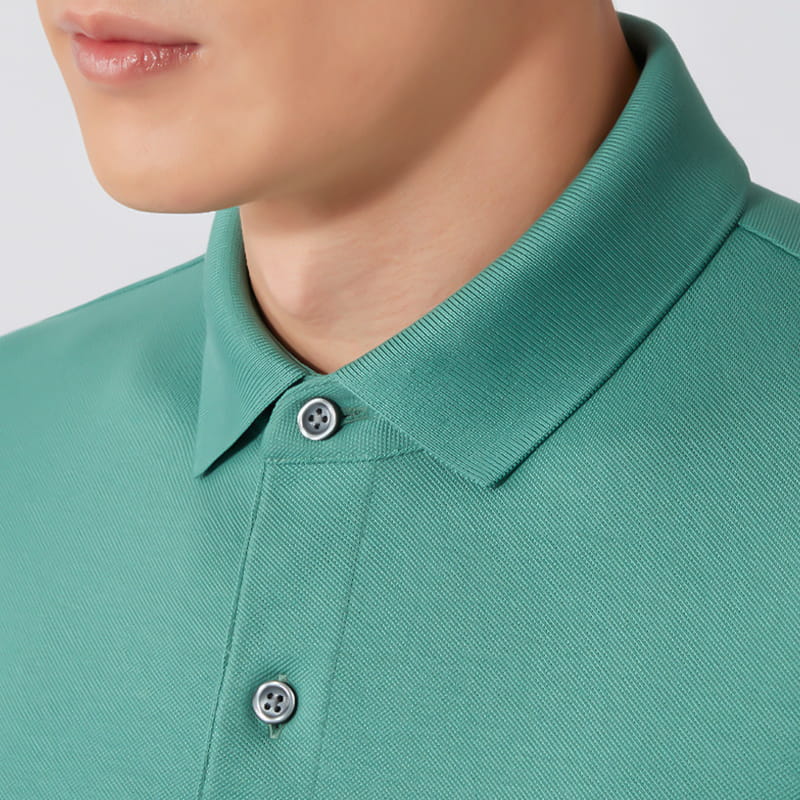
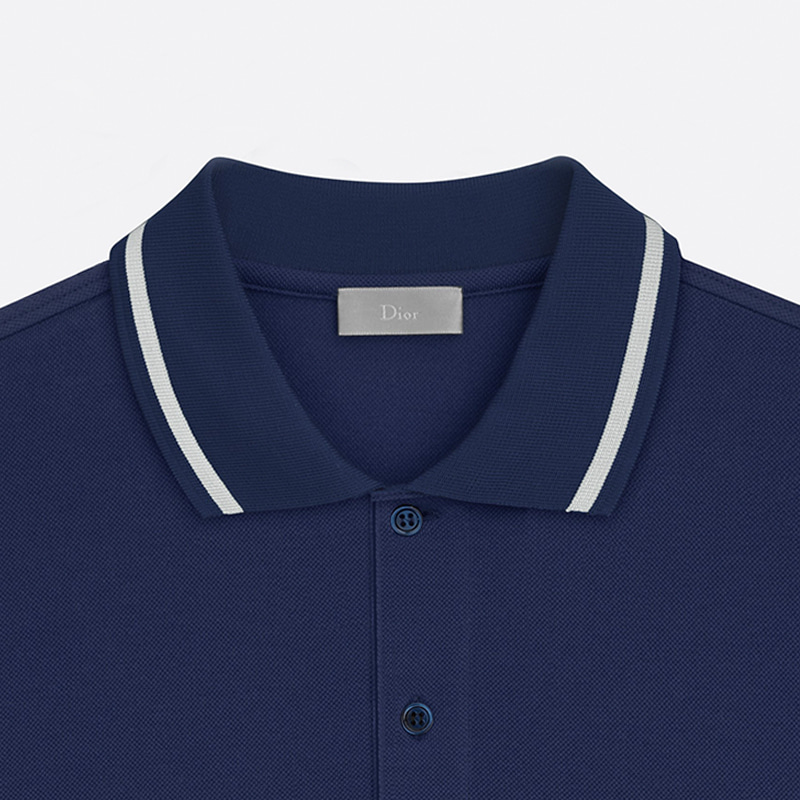 Cotton-Spandex 1x1 Ribbed Double Peak Polo CollarThis 97% cotton and 3% spandex 1x1 ribbed collar offers balanced stretch and shape retention. Its double-peak construction addresses the symmetry issue mentioned in the preceding discussion, making it a practical choice for lightweight polo shirts.View Product →
Cuff construction is a test of recovery
Cuffs are made either as a seamless tube or as an open-width band that is sewn into a loop. A seamless tubular cuff has no side seam, which removes the irritation point at the wrist and eliminates a seam that can break or twist after washing. Open-width cuffs are easier to adjust to a specific sleeve circumference during sewing, but every seam is a potential failure point. For wool sweaters and heavier jackets, 2x2 tubular cuffs are a standard choice because the deeper rib holds warmth and recovers better under the repeated stretch of dressing. Tubular 2x2 wool rib knit cuffs are favored in production because they withstand regular washing without losing their grip.
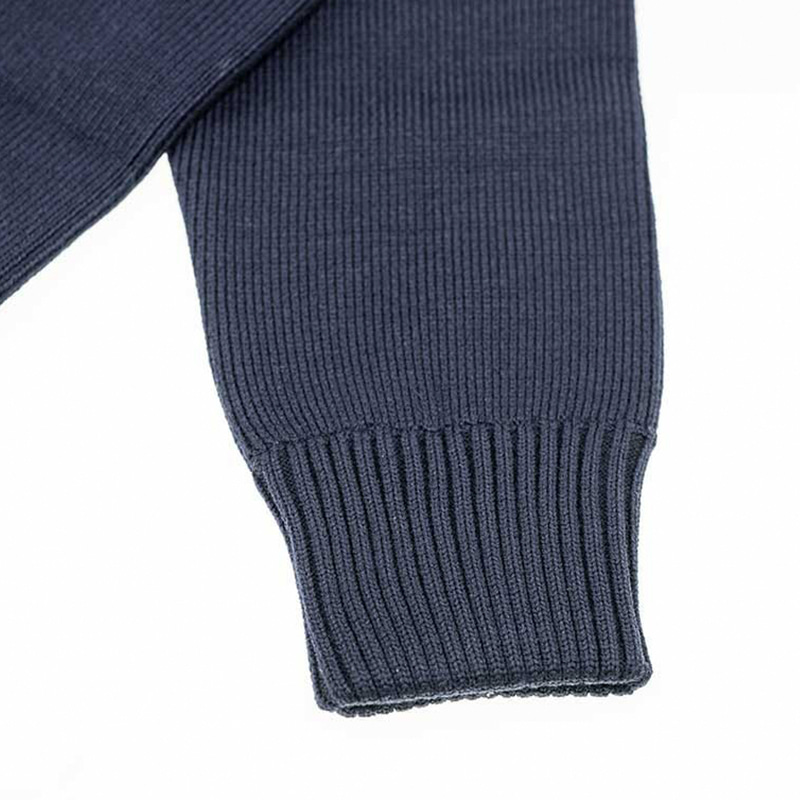
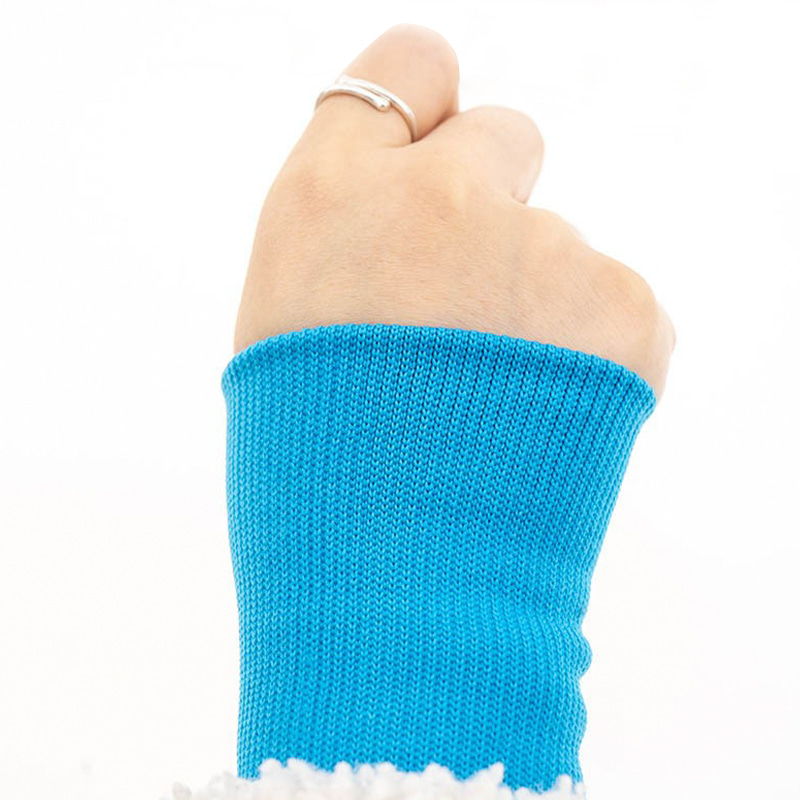 Seamless 2x2 Acrylic-Spandex Ribbed Knit CuffsThese cuffs use a seamless tubular knit with 90% acrylic and 10% spandex, providing warmth, elasticity, and comfort. The seamless structure directly answers the side-seam failure concerns raised earlier, ideal for sweaters and jackets.View Product →
Hem construction is about a straight, quiet edge
Hems are usually applied as flat, open-width rib trim along the bottom edge, either folded once and topstitched or sewn as a visible exterior band. The rib needs balanced stretch across its width; when that balance is off, the hem puckers along the seam or develops a wavy edge. For lightweight knit tops, fine 1x1 rib trim keeps the bottom edge nearly invisible and lets the fabric drape naturally. For structured pieces such as a baseball jacket, a thicker 2x2 rib hem adds weight and holds the silhouette open at the hip. The same logic applies on a smaller scale to sleeve openings and pocket edges, where a hem-style trim is used.
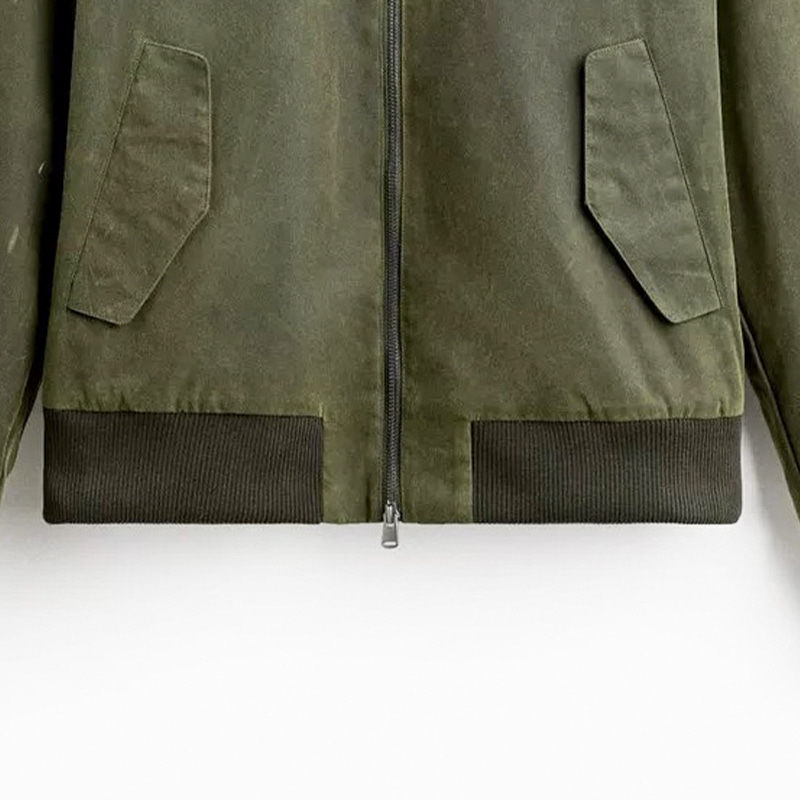
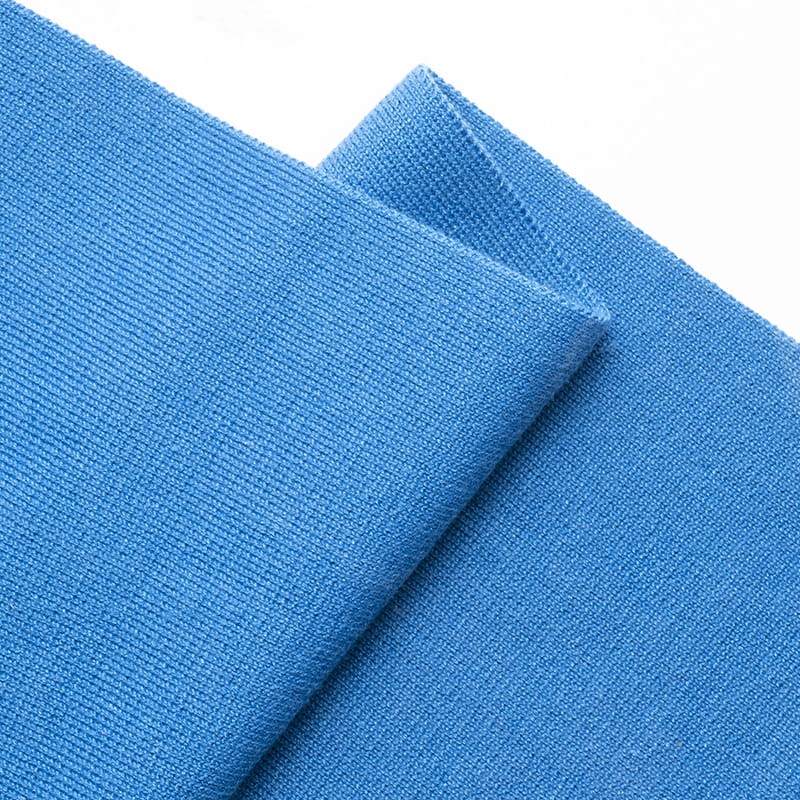 2x2 Acrylic-Spandex Ribbed Hem Trim MaterialThis 2x2 ribbed hem trim combines 97% acrylic with 3% spandex for durability and elastic recovery. Its balanced stretch helps prevent puckering and wavy edges, making it suitable for hems on sweatshirts, sweatpants, and dresses.View Product →
1x1 or 2x2: Rib Structure Changes the Result
The face of a ribbed trim is defined by its structure. A 1x1 rib alternates one knit column with one purl column, producing a fine, light, flat texture. It stretches well and lies close to the body, which is why it appears on collars and hems of T-shirts, polo shirts, and lightweight knit tops. A 2x2 rib alternates two knit columns with two purl columns. The texture is deeper and thicker, the fabric is more durable, and the structure traps more air, which makes it the typical choice for cuffs and hem bands on sweaters, sweatshirts, and jackets.
Yarn composition adjusts the behavior further. Spandex raises the elastic recovery of a cuff; cotton softens the touch of a collar against the neck; polyester increases durability and reduces bagging after repeated washing; wool adds warmth for winter styles. These trade-offs are not guesswork. Stitch density, yarn count, and blend determine the features and advantages of ribbed fabrics, and each variable changes how a trim behaves at the collar, cuff, or hem.
- 1x1 rib: lighter, flatter, suited to fine collars and subtle hems, less bulk at the seam.
- 2x2 rib: thicker, warmer, more structural, suited to cuffs and outerwear hems.
- Blend choice: spandex for recovery, cotton for comfort, polyester for durability, wool for warmth.
What to Specify When Ordering Ribbed Collars, Cuffs, and Hems
Because the functions differ, the specification sheet should differ as well. A complete trim order needs a few key details:
- Finished width and length: for a collar, width controls the neckband height; for a cuff, the loop circumference controls the grip of the sleeve; for a hem, width controls how much of the edge is covered.
- Fold and shaping: collars may be flat and folded later or knitted in shaped form; hems may be single-layer or folded; cuffs may be tubular or open-width.
- Rib structure and stretch ratio: state 1x1 or 2x2 and the expected stretch ratio, because the same structure can be knitted at different tightness levels.
- Yarn content and blend: cotton, polyester, wool, acrylic, and spandex each bring different properties to the trim.
- Shrinkage and colorfastness: a collar that shrinks differently from the body fabric will ripple, and a cuff that fades will be noticed every time the sleeve is rolled up.
- Compliance and sustainability: restricted substance lists, recycled content targets, and audit requirements should be confirmed at sourcing, not after sampling.
Buyers often separate these trims across different suppliers to save a few cents per unit. The hidden cost is color mismatch, tension difference, and inconsistent shrinkage between the collar, cuff, and hem of the same garment. Ordering all three from one manufacturer who produces them on the same equipment avoids those mismatches and shortens the sampling cycle.
Match the Trim to the Garment's Job
The correct trim is the one that matches its position in the garment. A collar needs a structure that survives folding; a cuff needs a structure that recovers from stretching; a hem needs a structure that stays flat at the bottom edge. The construction that works in one position should not be carried over to another without reviewing what the trim will be asked to do.
At Jiaxing Zhapu Jilida Garment Accessories Co., Ltd., ribbed collars, cuffs, and hems are knitted in the same facility as our ribbed fabrics, so the production team is familiar with the differences in fold behavior, recovery, and seam stability. If you are working through a trim specification for a polo shirt, a sweater, or a jacket, send us your construction details and measurements. We can recommend the structure, blend, and finish that match the real stress points of your garment, and confirm the spec with a sample before you commit to bulk production.