 English
 Español
Content
- 1 How Rib Knit and Single Jersey Are Constructed
- 2 Why Single Jersey Falls Short for Neckbands and Cuffs
- 3 Rib Knit vs Single Jersey: Side-by-Side Comparison
- 4 Neckbands Need Stability; Cuffs Need Repeated Recovery
- 5 What to Specify When Buying Cuffs and Neckbands
- 6 Sourcing Durable Rib Knit Trim: A Practical Note
- 7 The Bottom Line
When you put a neckband or cuff under tension, the trim has to do two things at once: stretch enough to go over a head or hand, then return quickly to its original width. If it rolls, waves, or grows baggy, the entire garment looks off. That is why the rib knit versus single jersey decision is not just a texture preference.
For durable neckbands and cuffs, rib knit is the right choice. Single jersey works well for body panels and lightweight bindings, but it lacks the edge stability and recovery that functional trim needs. You can use a jersey strip for a temporary finish, but for a trim that has to hold its shape wash after wash, rib knit is more dependable.
How Rib Knit and Single Jersey Are Constructed
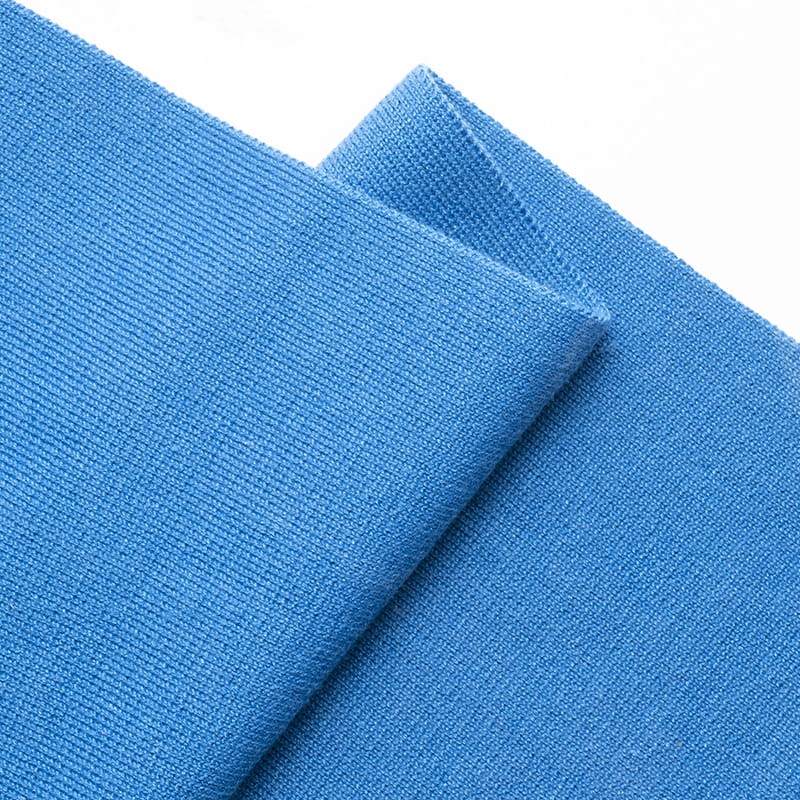
Rib knit is formed by alternating knit and purl stitches in the same course. This produces vertical columns of stitches on both sides of the fabric. In a 1x1 rib, the knit and purl columns are the same width, giving a fine, elastic structure. In a 2x2 rib, two knit columns alternate with two purl columns, producing a denser, more substantial surface that holds its shape better under heavier loads.
Because the face and back of a ribbed fabric are balanced, a cut edge does not curl the way a single jersey edge does. This may sound like a small detail, but it becomes very important when an operator has to feed a strip into a collar band or cuff seam without stretching it unevenly.
Single jersey, by contrast, is knitted with all the loops drawn to one side on the face and all the reverse loops on the back. It is soft, lightweight, and inexpensive. However, the tension between the face and back causes cut edges to curl toward the front. When a narrow strip is used as a neckband, that curl can make the finished seam wavy or uneven.
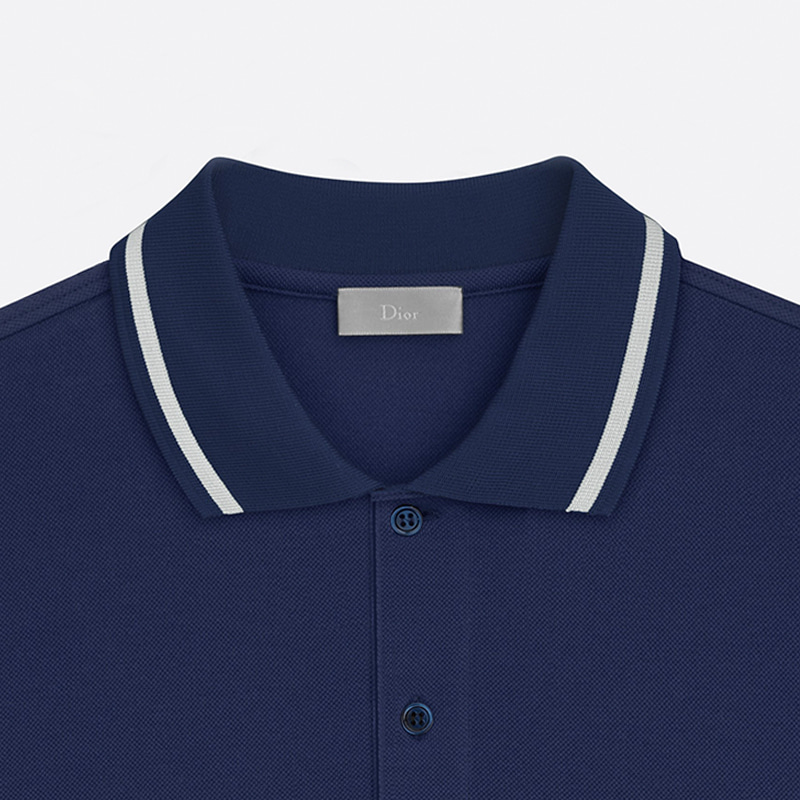
For a polo shirt neckband, you want a trim that can be folded, stitched, and still sit flat against the collar stand. A single jersey strip often rolls under the fold, while a ribbed collar holds its shape and creates a cleaner front line.
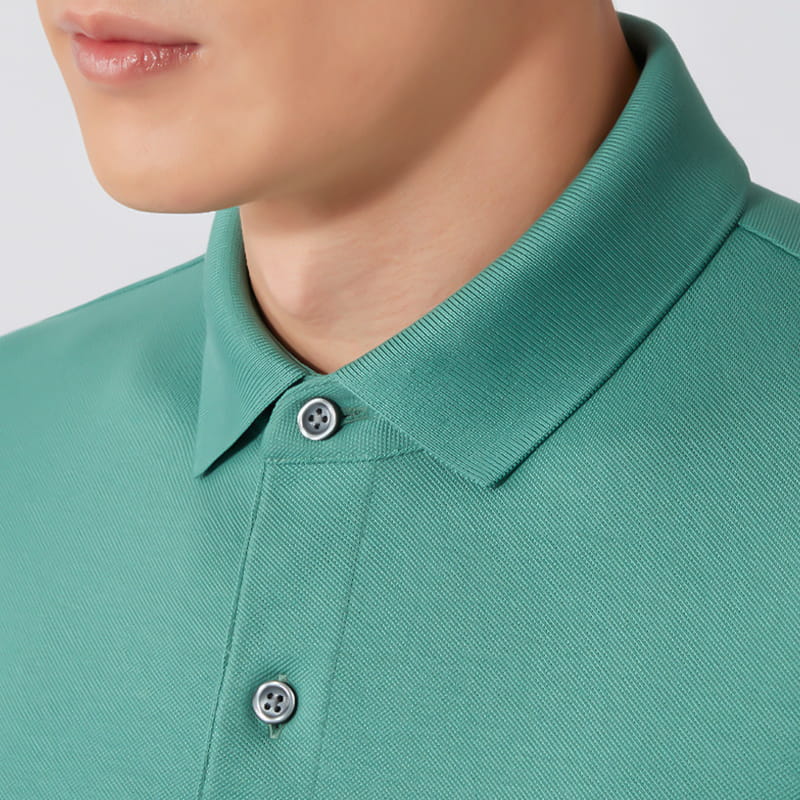 Ribbed Knit Collar for Men's Polo ShirtsMade of 97% polyester and 3% spandex with a 1x1 ribbed design, this collar resists curling and keeps its shape, offering a clean, flat finish for polo necklines.View Product →
Why Single Jersey Falls Short for Neckbands and Cuffs
When you cut a neckband or cuff from single jersey, three problems appear quickly: edge curl, poor recovery, and distortion after washing.
- Edge curl: The cut edge rolls to the technical face. This makes it difficult for sewing operators to keep the band uniform, especially on curved necklines.
- Poor recovery: A cuff or collar must expand to let the wearer pull it on, then contract back to fit. Single jersey gives reasonable stretch but does not snap back consistently, especially after repeated stretching.
- Dimensional instability: Cotton and cotton-blend jersey can grow in length during washing and drying. A neckband that has grown starts to sag, while a cuff widens and no longer seals the sleeve.
Rib knit avoids most of these issues because the alternating stitch structure balances the tension across the fabric. When spandex or another elastic yarn is added, a ribbed cuff can recover quickly even after being stretched to a much wider opening.
Rib Knit vs Single Jersey: Side-by-Side Comparison
This table summarises the differences that matter when you are evaluating trim for neckbands and cuffs.
| Property | Rib Knit | Single Jersey |
|---|---|---|
| Stitch structure | Alternating knit and purl columns | All knit loops on face, all purl loops on back |
| Edge behavior | Lies flat after cutting | Curls toward the face |
| Stretch and recovery | High crosswise stretch, strong snap-back | Moderate stretch, weaker recovery |
| Shape retention | Holds neck and cuff openings | Tends to stretch and sag |
| Thickness | More body, stable trim | Thinner, softer handle |
| Best use | Neckbands, cuffs, hems, plackets | Garment body, pocketing, facings |
If you need a trim that will be sewn into a high-tension opening and still keep its shape, the structure of rib knit gives you a clear production advantage.
Neckbands Need Stability; Cuffs Need Repeated Recovery
A neckband and a cuff are not loaded in exactly the same way. A neckband is stretched when the head passes through, but then it can sit under the chin or around the collar stand without much movement for the rest of the day. What matters most is that it does not stretch out from the weight of the fabric and that its edge does not show a ripple after sewing.
A cuff, by contrast, is stretched every time the wearer pulls the sleeve on and off. It also absorbs friction from watch straps, buttons, and rough handling during laundering. The recovery of the cuff after this repeated movement is the most important quality. A ribbed cuff made with a resilient yarn such as polyester plus spandex or wool plus spandex will return more completely than a jersey cuff.
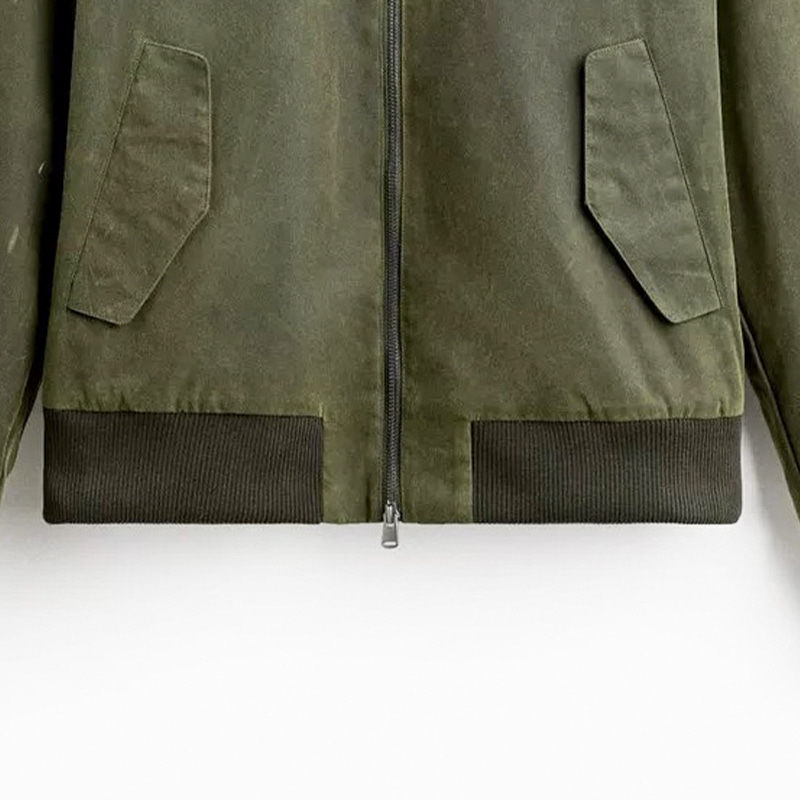
For long-sleeve tops and light jackets, a seamless stretch cuff gives you a smooth inside finish and removes the bulk of a sewn side seam. This type of trim relies on the same rib structure to control stretch and recovery.
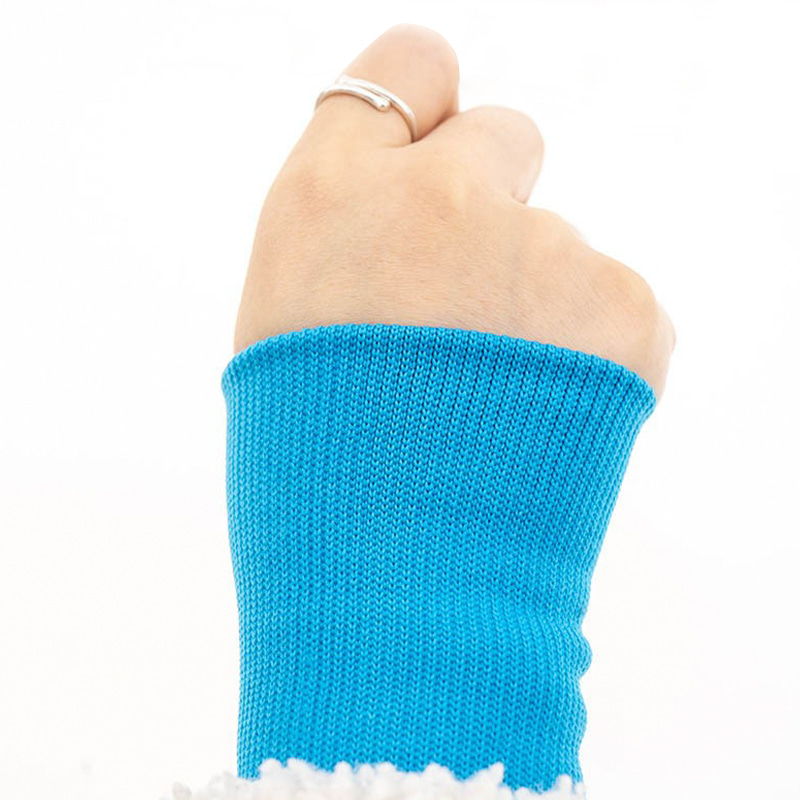 Seamless Knitted Ribbed Stretch CuffsThese 2x2 ribbed cuffs combine 90% acrylic and 10% spandex for a smooth, seamless inside finish that controls stretch and recovery without added bulk.View Product →
What to Specify When Buying Cuffs and Neckbands
Once you have decided on rib knit, define the conditions that will affect fit and durability.
- Choose the rib structure. 1x1 rib gives a finer, lighter elastic trim for t-shirts and polo shirts. 2x2 rib creates a denser, more substantial trim for knit jackets, sweaters, and outerwear.
- Confirm the yarn composition. Cotton gives a natural hand and moisture absorbency. Polyester adds strength and low shrinkage. Wool provides warmth, and spandex improves recovery. Most performance trims use a blend of these fibers.
- Set the finished width in a relaxed state. Neckband and cuff widths control the amount of tension around the body opening. A width that is only a few millimetres too wide can make a collar feel loose.
- Ask for recovery data after stretching and after washing. A simple in-house test at 20% and 30% elongation can show whether the trim will hold up over time.
- Check dye lot consistency and shrinkage. If a dark shade is required, confirm that the dyeing process has not made the trim stiff or reduced its elasticity.
For a broader view of how stitch structure changes hand feel and performance, you can read our article on the features and advantages of ribbed fabrics.
If you need a denser surface for a sweater or jacket cuff, a tubular 2x2 wool rib knit cuff is a proven option. It combines the thermal benefits of wool with the recovery of a heavier rib structure.
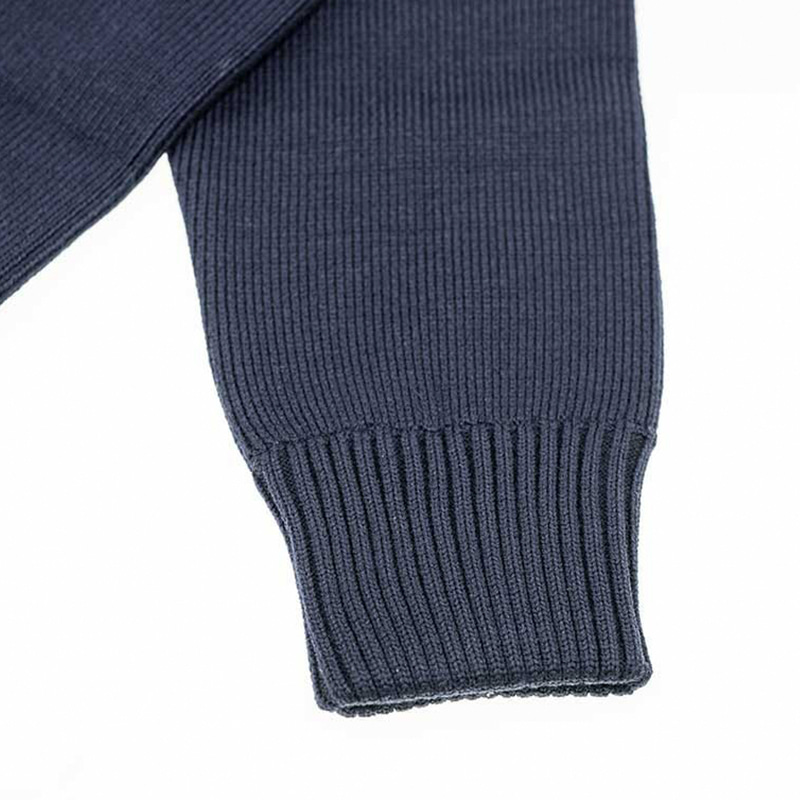 Tubular 2x2 Wool Rib Knit CuffsWith 95% wool and 5% spandex, these tubular cuffs extend from shoulder to cuff, providing warmth, controlled stretch, and a dense, non-curl knit suitable for sweaters and jackets.View Product →
Sourcing Durable Rib Knit Trim: A Practical Note
From a production point of view, pre-formed ribbed cuffs and collars reduce waste compared with cutting strips from single jersey. Because rib knit does not curl, operators can feed it through a coverstitch or flatlock machine without pressing every edge. This saves time and leads to a more consistent seam.
When you work with a supplier, ask about the finishing process as well as the knitting structure. A well-finished ribbed trim will have a stable width, even stitch density, and a soft enough hand to remain comfortable against the skin. Steaming and drying conditions also affect the final width, so a supplier that controls these steps is easier to rely on.
If you are producing mixed styles, keeping a small range of standard 1x1 and 2x2 rib trims can help you respond quickly to orders without losing fit quality.
The Bottom Line
Choose rib knit for neckbands and cuffs when the garment needs to keep its opening shape, survive repeated stretching, and look clean at the seam. Use single jersey only for non-structural bands where curl and shape loss are acceptable. For a garment that has to wash and wear well, the structural advantage of rib knit is not a matter of preference; it is the more dependable production decision.