 English
 Español
Content
- 1 Where Custom Knitted Rib Trims Orders Break Down
- 2 Rib Structure and Gauge: 1x1, 2x2 and Jacquard Compared
- 3 Seven Values to Fix in the Custom Knitted Rib Trims Specification
- 4 Tolerances Worth Putting on Paper
- 5 Collars, Cuffs and Hems Are Three Different Products
- 6 What the Trim Mill Needs From You Before Sampling
- 7 Questions Buyers Ask Before Placing a Trim Order
A rib trim that measures 68 mm flat on the sampling table can arrive from bulk at 72 mm, and those 4 mm are enough to fail the neck-opening fit test on the first wear trial. Width is only one of roughly a dozen values that apparel manufacturers leave undefined when they order custom knitted rib trims.
Most of those values cost nothing to write down and a great deal to correct later. What follows is the checklist we would put in front of any buyer, designer or production manager about to approve rib trims for collars, cuffs, hems or waistbands, written from how flat knitting machines actually behave rather than how a tech pack usually reads.
Where Custom Knitted Rib Trims Orders Break Down
Bulk failures on knitted rib trims almost never come from the knitting itself. They come from four under-specified variables: rib structure and machine gauge, elastane type and percentage, the method used to measure width, and shrinkage after the first wash.
A purchase line reading black rib, 68 mm wide, cut to 24 cm can be knitted in 1x1 or 2x2, on a 7-gauge or a 14-gauge machine, with 2 percent or 8 percent elastane. Every version looks acceptable on a swatch card, and each one behaves differently once it is sewn into a garment.
That gap is invisible at sampling and obvious at retail. It is why the written specification, not the approved sample, is the real control point on a trim order.
Rib Structure and Gauge: 1x1, 2x2 and Jacquard Compared
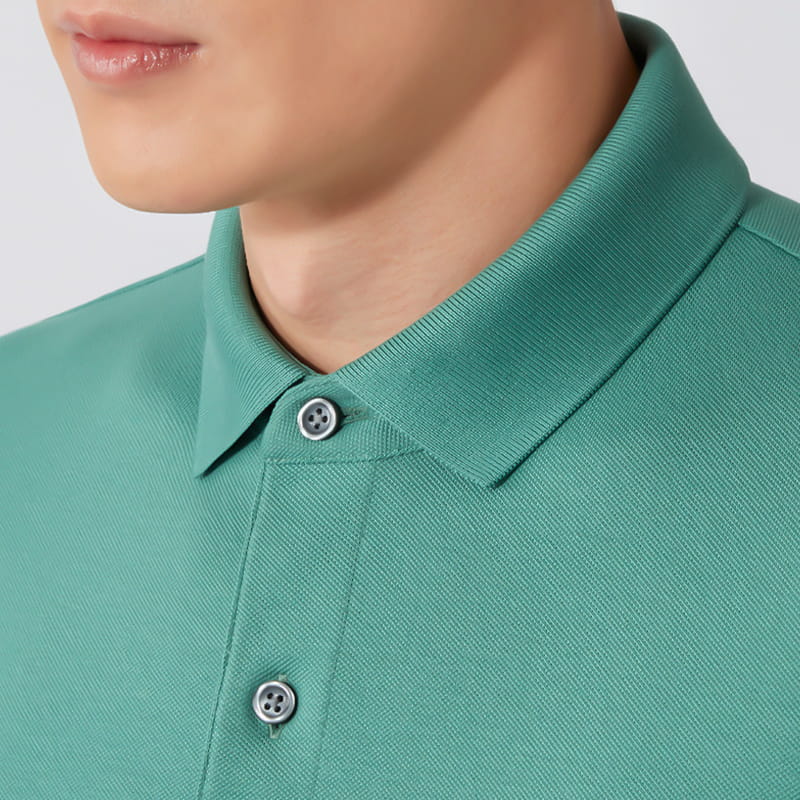
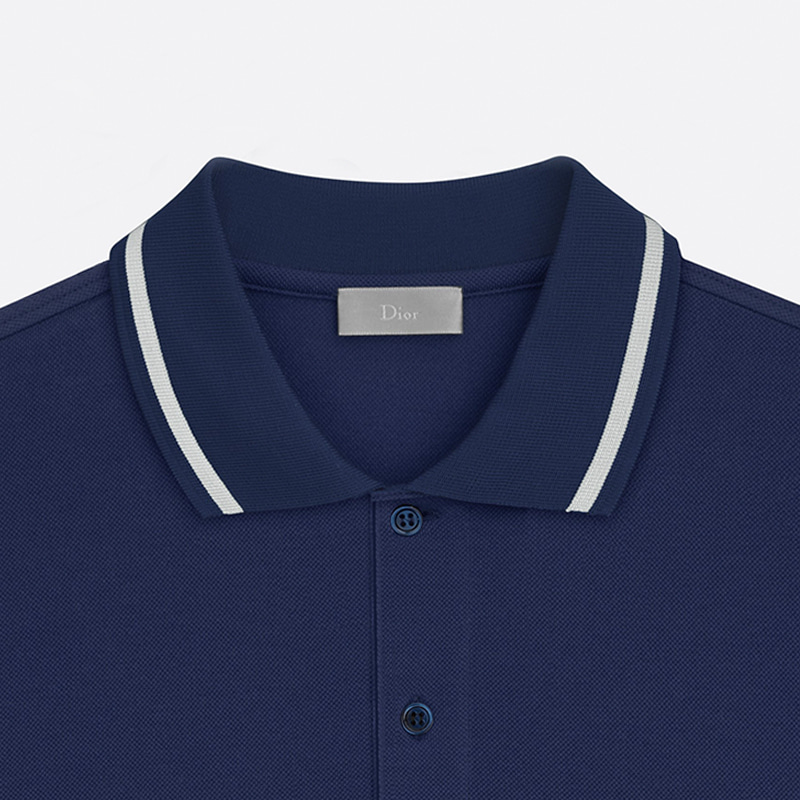
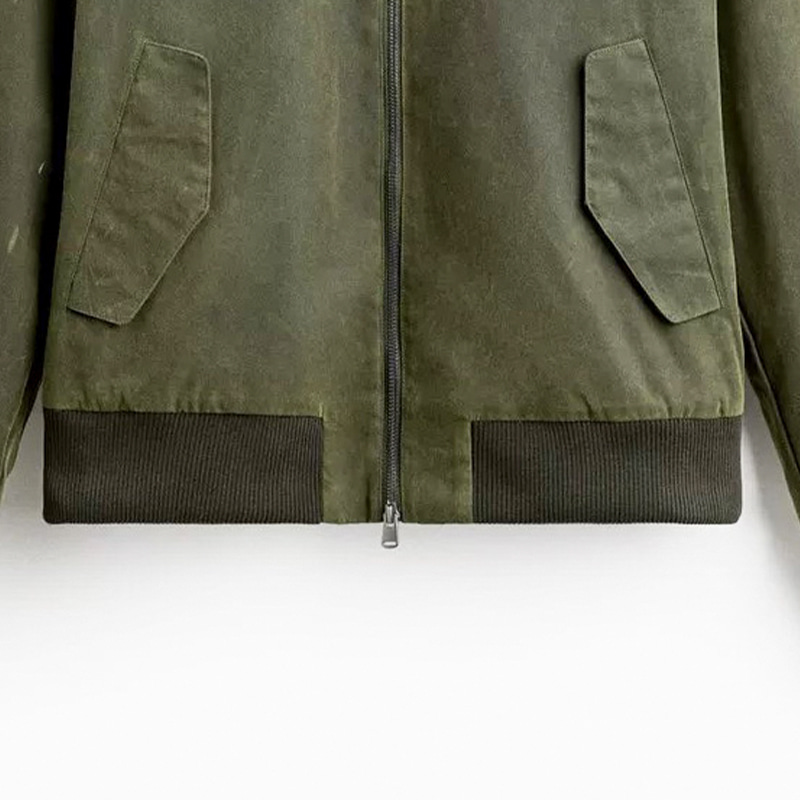
The rib structure should follow the garment's stretch demand and panel weight, not the trim that happens to be running on the machine this week. A 1x1 rib gives a flat, low-bulk surface with quick recovery and suits fine collars and neckbands; a 2x2 rib carries more bulk, holds a deeper shadow line and belongs on hems and chunky cuffs.
| Structure | Typical gauge | Stretch behaviour | Best fit |
| 1x1 rib | 12 to 14 gauge | Moderate stretch, firm recovery | Polo collars, neckbands, light cuffs |
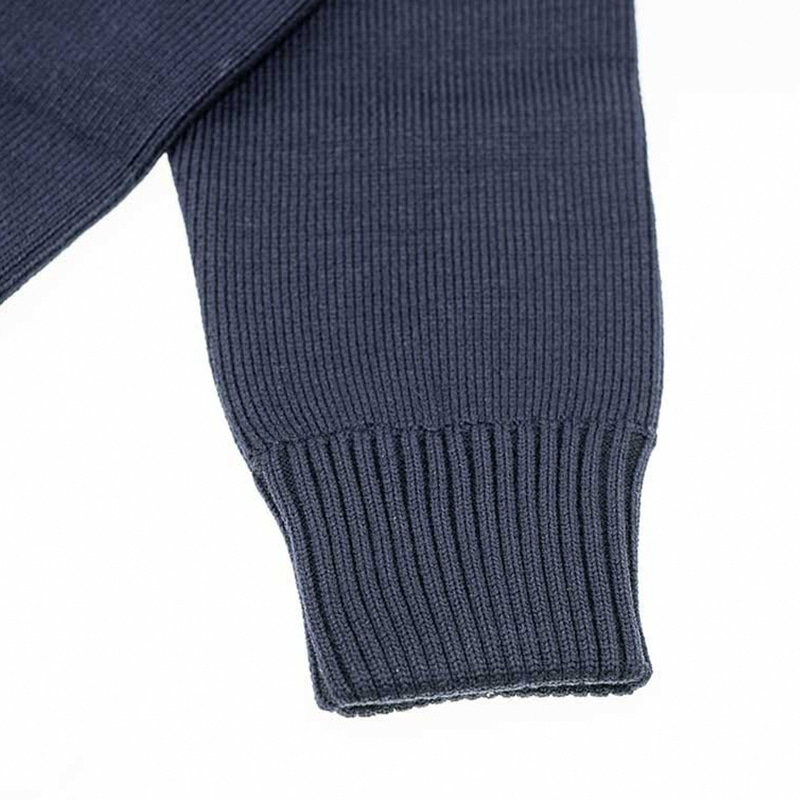
| 2x2 rib | 5 to 7 gauge | High bulk, strong cross-stretch | Jacket hems, sweater cuffs, waistbands |
| Tubular 2x2 wool | 5 to 7 gauge, circular | Heavy, low twist, warm hand | Sweater jacket cuffs, winter trims |
| Jacquard and hollow rib | 7 to 12 gauge | Engineered pattern, airy hand | Fashion panels, polo sleeves, statement trims |
Jacquard and hollow structures add pattern value, but they also shift the shrinkage baseline, because the float structure pulls differently from a plain 1x1. The behaviour of these constructions is covered in more detail in this overview of ribbed fabric features and advantages, and it is worth reading before you commit a decorative trim to a bulk programme.
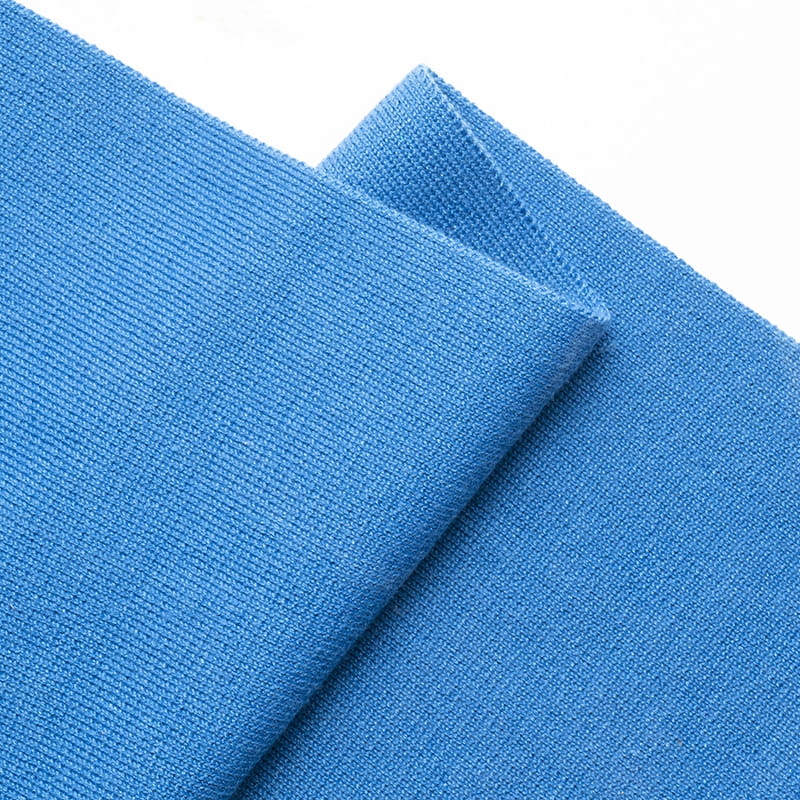
 1x1 Ribbed Knit Fabric for Garment SewingPolyester-spandex 1x1 rib with controlled stretch and recovery, suitable for garment sewing where a fine uniform rib baseline must be specified.View Product →
Seven Values to Fix in the Custom Knitted Rib Trims Specification
A specification is complete when it answers seven questions, and every one of those answers has a price consequence at the knitting machine. Missing values do not disappear; they get filled in by whoever sets up the machine.
- Structure and gauge. Name 1x1, 2x2, hollow or jacquard and state the needle gauge, for example 1x1 on 14 gauge.
- Yarn composition and count. Write 30s/1 combed cotton or 150D/48F polyester with blend percentages, not a trade name.
- Elastane type and percentage. Bare elastane is cheaper, covered elastane gives a smoother surface and slower growth; 2 to 5 percent is the usual working band for cuffs.
- Dimensions in three states. Flat width as knitted, stretched width at a defined load such as 2 kg, and finished cut length.
- Shrinkage protocol. State the wash standard, the number of cycles and the maximum percentage accepted.
- Colour and lot control. Set a target dE, the light source for approval such as D65, and whether lot-to-lot matching is required.
- Packing and cut tolerance. Pieces per bag, roll length, and the plus or minus range allowed on each cut.
Tolerances Worth Putting on Paper
Workable limits for most knit trims are plus or minus 3 mm on flat width, plus or minus 5 mm on cut length, plus or minus 5 percent on piece weight, and a colour difference of 1.0 dE or less against the approved standard under D65 lighting. Tighter than that raises the price faster than it raises the yield.
Flat width is the measured width of a rib trim lying unrestrained on a flat surface 30 minutes after knitting, with no tension applied and no steam relaxation.
Write that definition into the tech pack and half the disputes about trim width disappear before they start, because both the mill and the sewing room then measure the same thing in the same way.
Collars, Cuffs and Hems Are Three Different Products
A rib collar, a seamless cuff and a jacket hem are three different products, even when they are knitted from the same yarn on the same machine. Collars fail on shape, cuffs fail on recovery, and hems fail on cut length.
Rib collar
- Shape control matters more than stretch
- Double-peak or tubular form fixed in writing
- Needle line symmetric to the centre front
- Colour matched to body fabric at 1.0 dE
Cuff and hem
- Recovery after repeated stretch is the key number
- Seamless knitting avoids a ridge at the wrist
- Cut length tolerance drives sewing line speed
- Stitch density must sit close to body panel weight
For cuffs, seamless knitting removes the side seam that otherwise shows as a hard line under a close sleeve, and it removes one sewing operation at the same time.
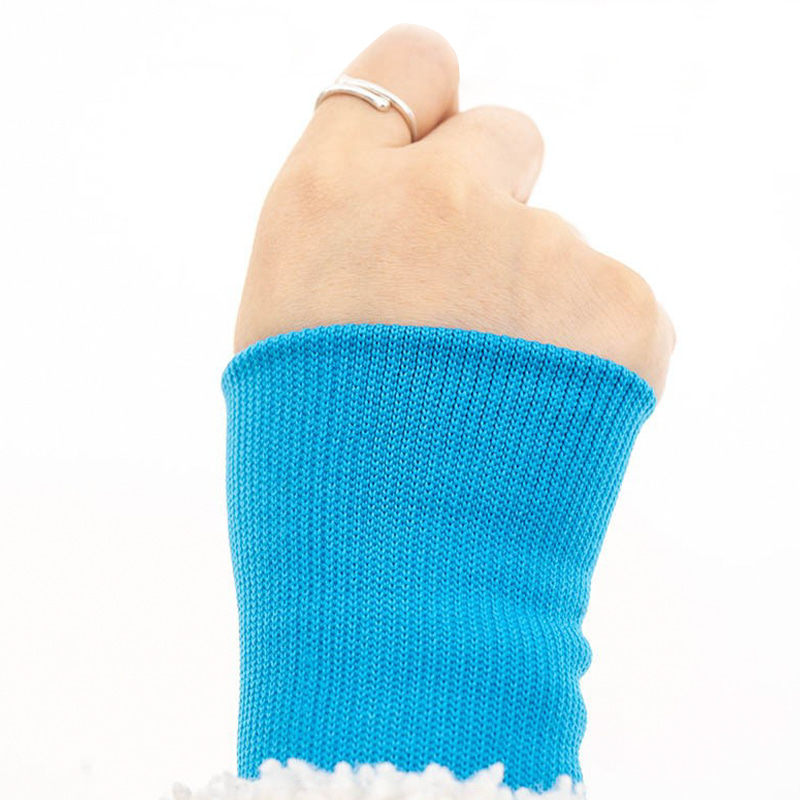 Seamless 2x2 Ribbed Stretch Cuffs for Garment FinishingAcrylic-spandex 2x2 rib cuffs with seamless construction reduce seam lines and support sampling when panel, yarn and wash details are supplied.View Product →
What the Trim Mill Needs From You Before Sampling
Sampling runs fastest when the first message carries a garment panel, a yarn reference and the wash standard. Anything less and the mill is guessing, and a guessed trim is a second sampling round at your cost.
- A physical reference panel with the seam allowance marked
- Yarn count, composition or a yarn hank for handle matching
- Target measurements in flat, stretched and finished states
- Colour standard with the approval light source and dE limit
Put those four items together and a knitting floor with 200 computer flat knitting machines can move from yarn to first sample in a single cycle, because gauge changes and yarn changes are scheduled rather than discovered. Our own floor in Jiaxing has run that route since 2002, across a 4000 square metre workshop and a 2000 square metre yarn warehouse, for export programmes that include international apparel brands.
A 2x2 polyester rib for jacket hems is a different machine setting from a 12-gauge polo collar, and the specification should say so on the first page rather than on the third revision.
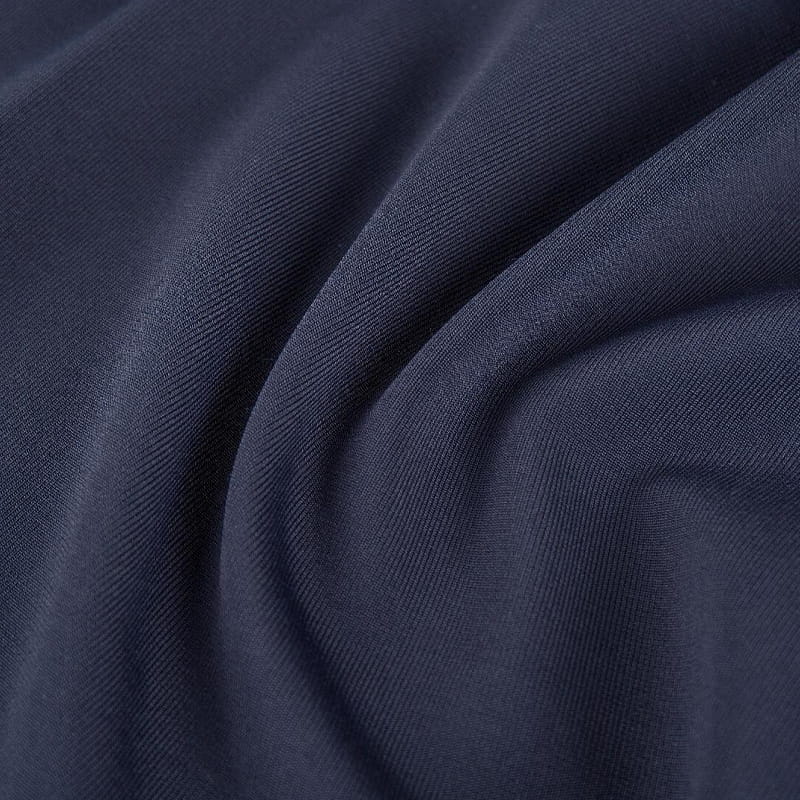
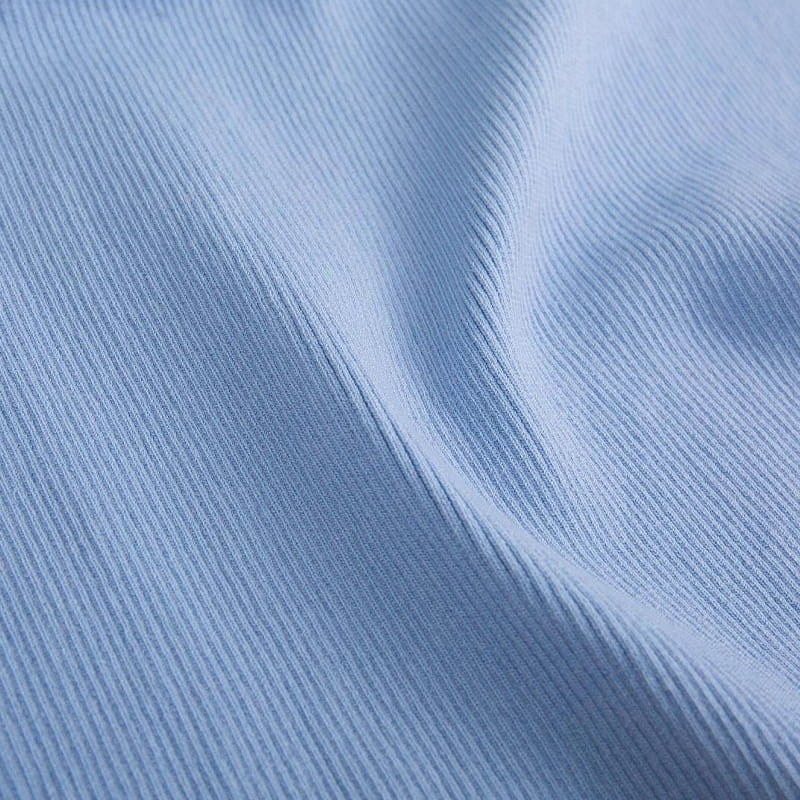 Stretch 2x2 Polyester Ribbed Knit Apparel FabricPolyester-spandex 2x2 rib with durable stretch and recovery, relevant when defining structure, elastane percentage and measurements for a jacket-hem or similar rib order.View Product →
Questions Buyers Ask Before Placing a Trim Order
What is the minimum information needed to quote custom knitted rib trims?
Structure, gauge, yarn composition, elastane percentage, the three measurements, target quantity and the wash standard. With those seven items a mill can quote a real price instead of a range.
Should rib trims be measured flat or stretched?
Both, plus the finished cut length. Flat width defines the visual dimension, stretched width at a fixed load defines fit, and cut length defines how the trim behaves at the sewing machine.
How much elastane should a knit rib trim contain?
Between 2 and 5 percent covers most collar and cuff applications. Go above 6 percent only when the garment needs very high stretch, because higher elastane content slows knitting and raises the cost per piece.
Why do rib cuffs shrink after the first wash?
Shrinkage comes from yarn twist and from the relaxation of the loop structure, not from the elastane alone. Specifying a pre-shrunk yarn or a relaxation wash at the mill keeps the cuff within 5 percent of its original length.