 English
 Español
Content
- 0.1 1. Introduction: The Critical Role of the Collar in Garment Quality
- 0.2 2. Defining the Knitted Ribbed Collar
- 0.3 3. Comparison One: 1x1 Rib Collar vs. 2x2 Rib Collar
- 0.4 4. Comparison Two: Knitted Rib Collar vs. Woven Collar
- 0.5 5. Material Composition and Fiber Blends for Knitted Ribbed Collars
- 0.6 6. Post-Processing Procedures for Knitted Ribbed Collars
- 0.7 7. Quality Inspection Standards for Knitted Ribbed Collars
- 0.8 8. Wrinkle Resistance and Durability
- 0.9 9. Applications Across Garment Categories
- 0.10 10. Quality Certifications and Standards
- 0.11 11. Common Collar Defects and Prevention
- 0.12 12. Conclusion: Matching the Collar to the Garment and the Brand
- 1 5 Frequently Asked Questions (FAQs)
- 2 References
1. Introduction: The Critical Role of the Collar in Garment Quality
The collar is the first thing a consumer notices when looking at a garment. On a polo shirt, the collar defines the casual yet refined aesthetic. On a down jacket, the collar frames the face and provides warmth. On a sweater, the collar adds structure and comfort. A poorly made collar that curls, stretches out, loses its shape, or develops pills will ruin the perception of the entire garment regardless of how expensive the main fabric is.
The knitted ribbed collar is the most common collar construction for casual and activewear. Its inherent elasticity allows it to hug the neck comfortably without being tight. Its ribbed texture provides visual interest and a tactile quality that consumers associate with quality. However, not all ribbed collars are the same. The knit structure, the fiber composition, the finishing method, and the quality inspection process all affect how the collar looks, feels, and performs over time.
This article provides a comprehensive technical comparison of the primary knitted ribbed collar constructions: 1x1 rib, 2x2 rib, and rolled rib. We will examine knitting patterns, elasticity, recovery, stability, material compositions, post-processing requirements, quality inspection standards, and application suitability. For garment manufacturers and procurement professionals, this guide serves as a reference for selecting the appropriate collar construction for different garment types, price points, and performance requirements.
2. Defining the Knitted Ribbed Collar
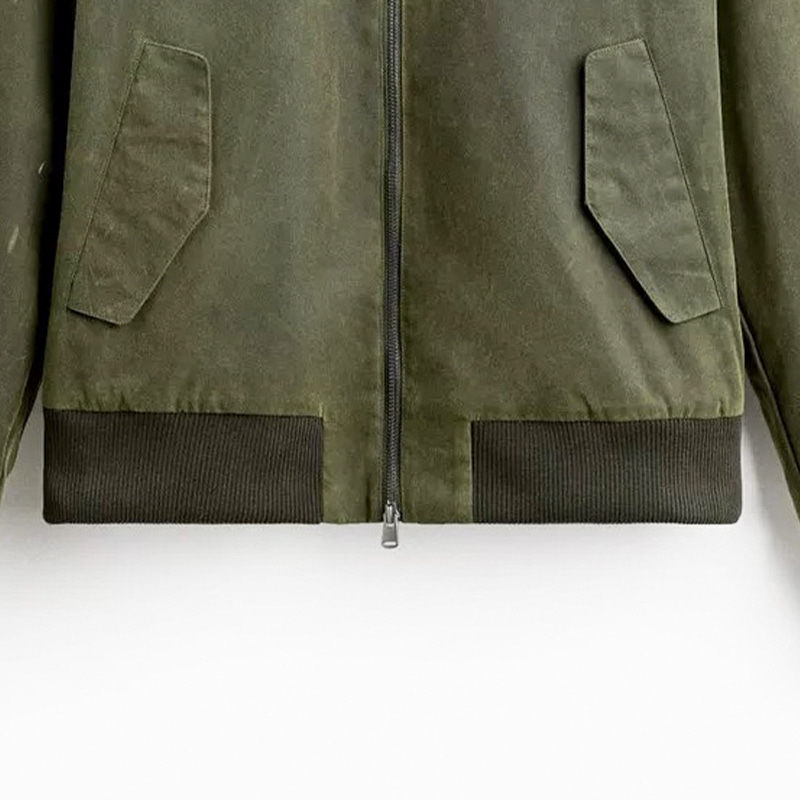
A knitted ribbed collar is a narrow width knit fabric component attached to the neckline of a garment. The collar provides structure, elasticity, and a finished appearance to the neck opening. Unlike woven collars found on dress shirts, ribbed collars are knitted, giving them natural stretch and recovery.
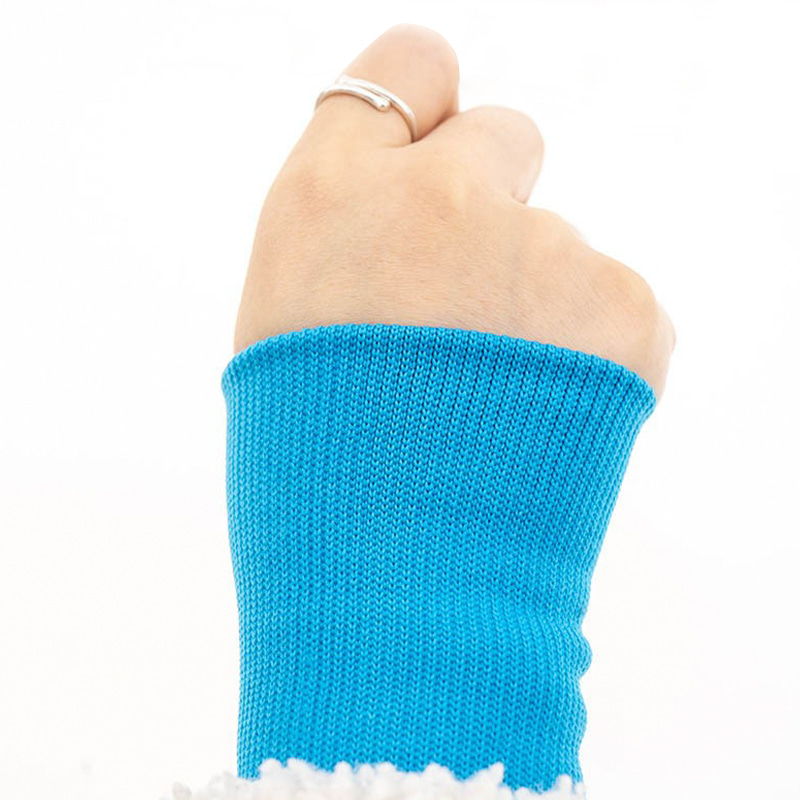
The defining feature of a ribbed collar is its vertical wale structure created by alternating knit and purl stitches. This structure produces a fabric that stretches significantly in the width direction and recovers when tension is released. This elasticity allows the collar to expand to pass over the head and then contract to fit snugly around the neck.
Ribbed collars are typically knit on small diameter circular knitting machines or flat knitting machines. The fabric is produced as a continuous tube or flat sheet, then cut to length and sewn into a closed loop that is attached to the garment neckline. The width of a ribbed collar varies by garment type. Polo shirt collars are typically 3 to 5 cm wide. Down jacket collars are often wider, 4 to 6 cm. Sweater collars may be 5 to 10 cm or more for turtleneck styles.
The materials used for knitted ribbed collars vary by application. Cotton offers natural softness, breathability, and comfort against the skin. Polyester offers durability, color retention, and moisture wicking. Acrylic offers wool-like warmth at lower cost. Spandex or elastane is often added to enhance elasticity and recovery. Blends such as cotton-polyester-spandex combine the advantages of multiple fibers.
When you select a Knitted Ribbed Collar, you are choosing a component that must meet demanding requirements: elasticity for head passage and neck fit, recovery for shape retention, wrinkle resistance for a crisp appearance, durability for long-term use, and color fastness for maintaining appearance through washing.
3. Comparison One: 1x1 Rib Collar vs. 2x2 Rib Collar
The fundamental difference between 1x1 rib and 2x2 rib collars lies in the knit stitch pattern. This difference affects elasticity, thickness, stability, and application.
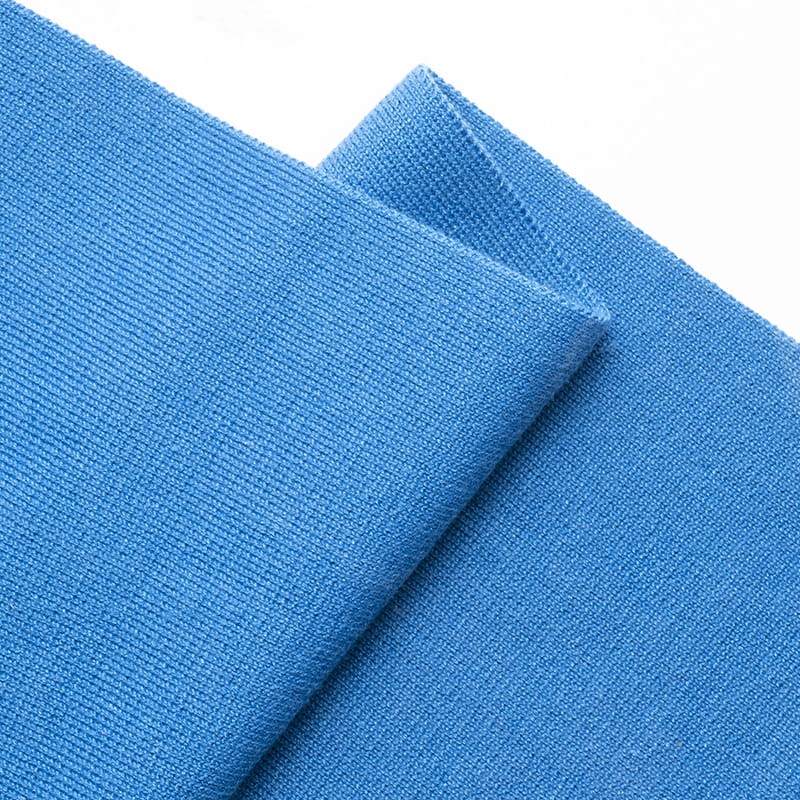
1x1 rib is created by alternating one knit stitch and one purl stitch across the width of the fabric. The resulting structure has fine, closely spaced vertical wales. The fabric is relatively thin and has very high elasticity. 1x1 rib collars lie flat against the skin, do not curl excessively, and provide excellent recovery. They are the standard for lightweight garments such as t-shirts, tank tops, and light sweaters. For polo shirts, 1x1 rib provides a smooth, flexible collar that lays flat.
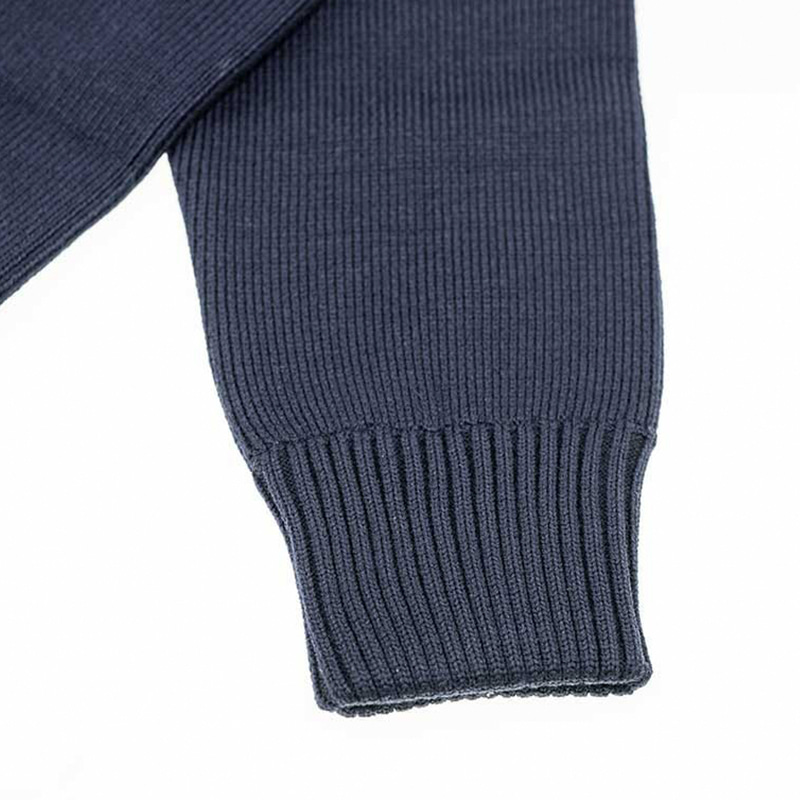
2x2 rib is created by alternating two knit stitches and two purl stitches across the width. The resulting structure has wider, more pronounced vertical wales. The fabric is thicker and heavier than 1x1 rib. Elasticity is good but slightly lower than 1x1 rib. The thicker structure is more stable and resists curling. 2x2 rib collars are preferred for heavier garments such as down jackets, heavy sweaters, and outerwear. The more substantial collar stands up better and maintains its shape under the weight of heavy fabrics.
The table below compares 1x1 rib and 2x2 rib collars across key parameters.
| Parameter | 1x1 Rib Collar | 2x2 Rib Collar |
|---|---|---|
| Knit Pattern | Alternating one knit, one purl | Alternating two knit, two purl |
| Appearance | Fine, closely spaced wales | Wider, more pronounced wales |
| Thickness | Thin, lightweight | Thicker, heavier |
| Elasticity | Very high | High |
| Recovery | Excellent | Very good |
| Curling Resistance | Good | Excellent |
| Stability | Moderate | Very good |
| Best Application | Polo shirts, lightweight garments | Down jackets, coats, heavy sweaters |
For a polo shirt where the collar needs to lay flat and be flexible, 1x1 rib is the appropriate choice. For a down jacket where the collar needs to stand up and maintain a crisp appearance under the weight of the jacket, 2x2 rib is preferred.
4. Comparison Two: Knitted Rib Collar vs. Woven Collar
Knitted rib collars and woven collars serve different market segments. Understanding the differences helps buyers select the right collar type for their garment.
Knitted rib collars are elastic, soft, and comfortable. They stretch to fit and recover their shape. They are ideal for casual wear, sportswear, and activewear where comfort and ease of movement are priorities. The knitting process allows for seamless construction and integrated textures.
Woven collars, such as those on dress shirts, are non-elastic, crisp, and structured. They are made from woven fabric that is cut and sewn with interfacing for stiffness. They are ideal for formal and business wear where a crisp, structured appearance is desired. Woven collars do not stretch, so they require precise fit and often have adjustable button closures.
The table below compares knitted rib collars and woven collars.
| Parameter | Knitted Rib Collar | Woven Collar |
|---|---|---|
| Elasticity | High, natural stretch | None, no stretch |
| Comfort | Soft, comfortable against skin | Can be stiff |
| Appearance | Casual, sporty | Formal, crisp |
| Wrinkle Resistance | Excellent, natural recovery | Requires interfacing and care |
| Manufacturing Cost | Lower | Higher |
| Best Application | Polo shirts, jackets, sweaters | Dress shirts, formal wear |
For polo shirts, down jackets, and sweaters, knitted rib collars are the standard. For dress shirts and formal wear, woven collars are appropriate.
5. Material Composition and Fiber Blends for Knitted Ribbed Collars
The performance of a knitted ribbed collar depends heavily on the fiber blend. Different applications require different combinations of elasticity, durability, softness, and moisture management.
100 percent cotton collars offer natural softness, breathability, and comfort. They are hypoallergenic and feel good against the skin. However, cotton has lower elasticity and recovery than synthetic fibers. Pure cotton collars may stretch out over time and lose their shape. They are best for lightweight garments where recovery is less critical. Cotton collars also have lower wrinkle resistance than synthetic blends.
100 percent polyester collars offer superior durability, color retention, and moisture wicking. Polyester does not absorb water, so it dries quickly and resists shrinking. Polyester collars maintain their elasticity and recovery through many wash cycles. The hand feel is less natural than cotton but can be engineered to be quite soft. Polyester is often used for activewear and performance garments. Polyester also offers excellent wrinkle resistance, maintaining a crisp appearance.
Cotton-polyester blends combine the advantages of both fibers. A typical blend is 65 percent cotton and 35 percent polyester. The cotton provides softness and breathability. The polyester provides durability, color retention, and wrinkle resistance. The blend also reduces shrinkage and improves recovery. This blend is widely used for polo shirt collars.
Spandex or elastane is added to collar knits to enhance elasticity and recovery. Spandex content typically ranges from 3 to 8 percent. Even a small percentage of spandex significantly improves the ability of the collar to stretch over the head and return to shape. For collars that will be stretched repeatedly, spandex is essential.
The table below summarizes material options for knitted ribbed collars.
| Material | Elasticity | Recovery | Durability | Wrinkle Resistance | Softness | Best Application |
|---|---|---|---|---|---|---|
| 100% Cotton | Moderate | Moderate | Good | Low | Excellent | Lightweight casual |
| 100% Polyester | Good | Good | Excellent | Excellent | Moderate | Activewear, performance |
| Cotton-Polyester | Moderate | Good | Very good | Good | Good | Polo shirts, balanced use |
| Cotton-Spandex | Very good | Excellent | Good | Moderate | Excellent | Premium polo shirts |
| Polyester-Spandex | Excellent | Excellent | Excellent | Excellent | Moderate | Down jackets, heavy use |
When selecting a collar material, consider the end use. A polo shirt collar that will be stretched each time the garment is put on benefits from spandex content. A down jacket collar where wrinkle resistance is important benefits from polyester content.
6. Post-Processing Procedures for Knitted Ribbed Collars
After the knitted ribbed collar is produced, several post-processing procedures are required to achieve the final properties. These procedures are essential for dimensional stability, appearance, and durability.
Washing and pre-shrinking treatment is the first step. The rib knit collar is pre-shrunk by controlling temperature and washing conditions. This reduces the shrinkage rate of the final product during consumer use. Advanced washing equipment ensures that the washing process is uniform and gentle, avoiding unnecessary damage to the fabric. Pre-shrinking is especially important for cotton and cotton-blend collars.
Drying and shaping follow washing. After washing, the rib collar needs to be dried to remove excess moisture. During the drying process, control of temperature and time is crucial. Too high a temperature or too long a time may cause the fabric to deform or fade. Precise drying equipment ensures the knitted collar reaches an ideal dry state while maintaining its original shape and color.
Shaping is a key step in post-processing that determines the final shape and dimensional stability of the rib collar. By using a professional shaping machine, the rib collar is fixed into the required shape under specific temperature and pressure. This ensures that it maintains good appearance and performance during wearing and use. The shaping process sets the elasticity and fixes the dimensions.
Finishing and packaging are the final steps. The rib collar is trimmed of thread ends and checked for surface defects to ensure a neat appearance. Finally, the knitted ribbed collar is folded or rolled according to customer requirements and placed in moisture-proof and dust-proof packaging bags, ready for shipment.
The table below summarizes post-processing procedures for knitted ribbed collars.
| Process | Purpose | Critical Parameters |
|---|---|---|
| Washing/Pre-Shrinking | Reduce shrinkage, stabilize dimensions | Temperature, washing conditions |
| Drying | Remove excess moisture | Temperature, time |
| Shaping | Fix shape and dimensional stability | Temperature, pressure, time |
| Finishing | Trim threads, inspect surface | Manual or automated inspection |
| Packaging | Protect during shipping | Moisture-proof, dust-proof materials |
Manufacturers with advanced shaping equipment and precise process control can ensure that collars maintain their dimensional stability and shape memory through the life of the garment.
7. Quality Inspection Standards for Knitted Ribbed Collars
Quality inspection is a key link to ensure that the quality of rib collars meets international standards and customer requirements. A complete laboratory equipped with high-precision instruments provides the hardware foundation for quality inspection.
Size inspection measures the basic parameters of rib collars, which directly affect fit and wearing effect. Precise measuring tools such as digital calipers and length gauges are used to measure key dimensions including length, width, and collar circumference. Each batch of products must meet the design specifications. Tolerances are typically plus or minus 0.5 cm for length and plus or minus 0.3 cm for width.
Elasticity testing evaluates one of the most important properties of a rib knit collar. The elasticity determines the fit and comfort of the collar. A tensile testing machine tests the elasticity of the rib collar, evaluating its recovery ability under different tensile forces. The test includes indicators such as fixed elongation force, fixed elongation rate, and elastic recovery rate. The collar must maintain good elasticity after multiple wear and wash cycles. For a quality collar, recovery of 90 percent or higher is desirable.
Appearance defect inspection ensures product appearance and customer satisfaction. Inspectors conduct a visual inspection of the rib collar to look for possible defects such as yarn breakage, weaving errors, color difference, stains, dropped stitches, holes, or uneven texture. Some manufacturers use high-definition image recognition systems to automatically detect rib collars, improving the accuracy and efficiency of defect detection. The acceptable defect rate is typically less than 2 percent.
Color fastness testing evaluates color durability. A color fastness tester simulates daily washing, sun exposure, and friction conditions to evaluate the degree of color change. Tests include washing color fastness, sunlight color fastness, and rubbing color fastness. The collar color must be stable and not easily fade during use. A rating of 4 to 5 out of 5 is considered excellent.
Anti-pilling testing addresses a common complaint with rib collars. Collars are prone to pilling due to friction during wearing, which affects appearance. An anti-pilling tester simulates the friction in actual wearing and evaluates the anti-pilling performance. A rating of 4 out of 5 or higher is desirable for premium garments.
The table below summarizes quality inspection standards for knitted ribbed collars.
| Inspection Item | Test Method | Acceptable Standard |
|---|---|---|
| Size | Digital calipers, length gauge | ±0.5 cm length, ±0.3 cm width |
| Elasticity Recovery | Tensile testing machine | 90 percent or higher recovery |
| Appearance Defects | Visual or image recognition | Less than 2 percent defect rate |
| Color Fastness to Washing | Color fastness tester | Rating 4-5 out of 5 |
| Color Fastness to Light | Xenon arc lamp | Rating 4-5 out of 5 |
| Anti-Pilling | Pilling tester | Rating 4 out of 5 or higher |
| pH Value | pH tester | 4.0 to 7.5 |
Suppliers with certifications such as OEKO-TEX, GRS, GOTS, and BCI provide additional assurance of quality and compliance.
8. Wrinkle Resistance and Durability
Knitted ribbed collars are known for their outstanding wrinkle resistance and durability compared to woven collars. This is one of the key reasons they are chosen for polo shirts, casual wear, and sportswear.
The ribbed knit structure naturally resists wrinkling because the interlocking loops allow the fabric to flex and recover. When a ribbed collar is folded or compressed, the knit structure springs back to its original shape. This is in contrast to woven fabrics, which form sharp creases that may become permanent.
Durability is enhanced by proper material selection and finishing. Polyester and polyester blends offer the highest durability. The fibers resist abrasion, maintain color, and retain elasticity through many wash cycles. Cotton blends offer good durability but may show wear sooner than polyester.
The shaping process also contributes to durability. When the collar is heat set during shaping, the fibers are locked into position. This prevents the collar from gradually deforming over time. Properly shaped collars maintain their dimensions and appearance through the life of the garment.
For down jackets and outerwear, where the collar may be subject to moisture and repeated folding, wrinkle resistance and durability are particularly important. A collar that becomes wrinkled or loses its shape detracts from the appearance of the entire jacket.
9. Applications Across Garment Categories
Knitted ribbed collars serve different garment categories, each with specific requirements.
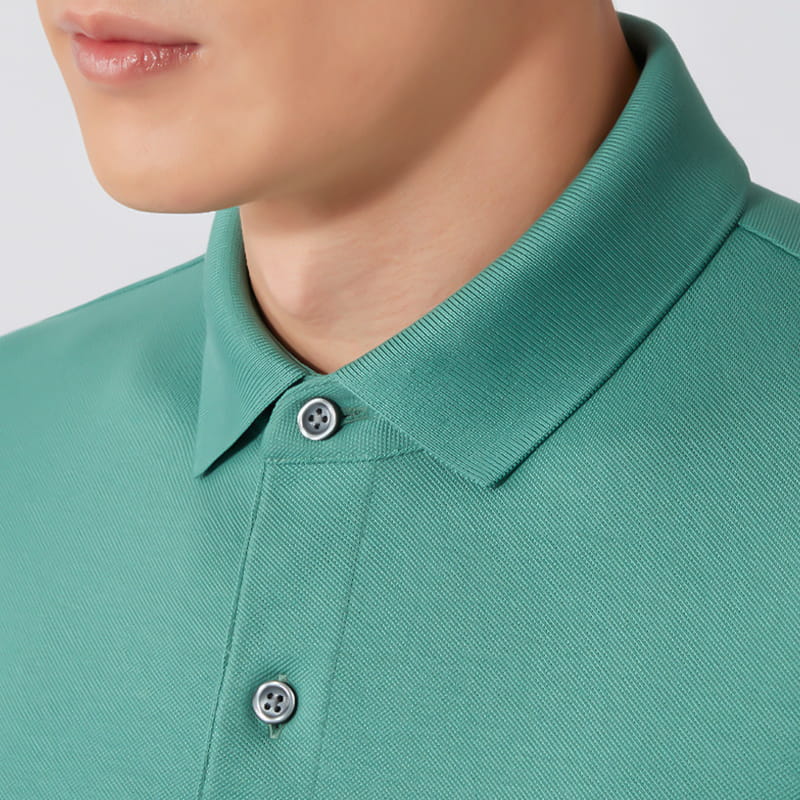
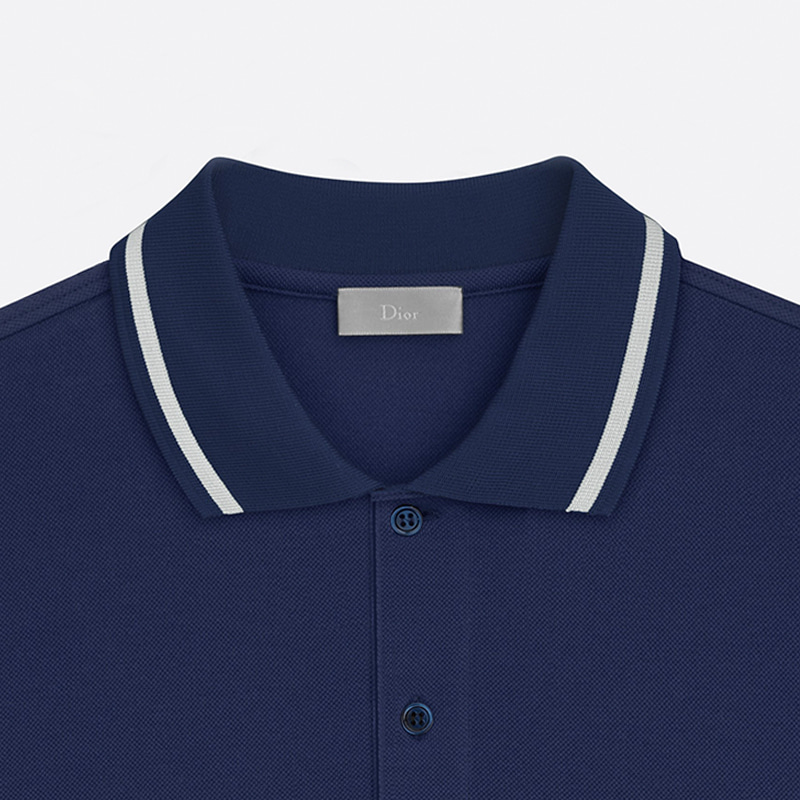
In polo shirts, the collar is a defining feature. It must be smooth, firm, and shaped. 1x1 ribbed fabric with cotton-polyester-spandex blend is standard. The collar should lay flat, resist curling, and maintain its shape through repeated washing. The collar also contributes to the premium appearance of the garment.
In down jackets, the collar must provide warmth and fit snugly around the neck to prevent heat loss. 2x2 ribbed fabric with polyester-spandex blend is common. The collar should be substantial enough to stand up under the weight of the jacket. Wrinkle resistance is important because down jackets are often packed into small spaces.
In jackets and coats, the collar may be wider and more substantial. 2x2 ribbed fabric with cotton-polyester or polyester-spandex is used. The collar should be durable to withstand daily wear and exposure to weather.
In sweaters, the collar can be 1x1 or 2x2 rib depending on the weight of the sweater. Acrylic or cotton-acrylic blends provide warmth and softness. The collar should have good recovery to maintain its shape after stretching.
10. Quality Certifications and Standards
For export to international markets, knitted ribbed collars should meet recognized quality and safety standards.
OEKO-TEX Standard 100 is the most important certification for textile components. It certifies that the product does not contain harmful substances above regulated limits. For collars that contact the neck and skin, OEKO-TEX certification is highly recommended and is often required by major brands such as A&F, H&M, and Uniqlo.
GRS (Global Recycled Standard) certifies products containing recycled materials. For brands with sustainability commitments, GRS certified collars provide assurance that recycled content claims are accurate.
GOTS (Global Organic Textile Standard) certifies products made from organic fibers. GOTS certified collars must contain at least 70 percent certified organic fibers and meet strict environmental and social criteria.
BCI (Better Cotton Initiative) certification indicates that the cotton used was sourced from farms practicing sustainable growing methods.
When sourcing knitted ribbed collars, request documentation of all relevant certifications. A reputable supplier will provide these certificates.
11. Common Collar Defects and Prevention
Understanding common collar defects helps buyers specify quality requirements and inspect incoming products.
Collar curling occurs when the collar does not lie flat against the neckline. The edges roll inward or outward. Curling is caused by incorrect stitch balance, improper finishing, or low spandex content. Prevention requires proper knit structure selection and finishing. Rolled collars are specifically designed to resist curling.
Collar gaping occurs when the collar pulls away from the neck, creating a visible gap. Gaping is caused by insufficient collar elasticity, incorrect collar length, or poor recovery. Prevention requires proper spandex content and accurate length calculation based on the garment neckline.
Collar twisting occurs when the collar seam does not align with the center front or center back of the garment. Twisting is caused by torsional stress in the knit structure. Prevention requires balanced knitting and proper handling during sewing.
Wavy collars occur when the collar fabric is stretched during sewing and then relaxes, creating a wavy, puckered appearance. Prevention requires proper tension control and feeding during attachment.
Pilling occurs when small balls of fiber form on the collar surface. Pilling is caused by fiber abrasion during wear. Prevention requires proper fiber selection and anti-pilling finishing treatments.
When inspecting knitted ribbed collars, lay the garment flat on a table. The collar should lie flat without gaps, waves, or twists. The edge should be straight and even.
12. Conclusion: Matching the Collar to the Garment and the Brand
The selection of the right knitted ribbed collar requires careful consideration of the garment type, the performance requirements, and the brand positioning.
For polo shirts where the collar is a defining feature, select 1x1 cotton-polyester-spandex rib collars. The smooth, firm, shaped collar provides a crisp appearance. Spandex content ensures the collar returns to shape after stretching. The collar should be wrinkle resistant and maintain its elasticity after multiple washes.
For down jackets and coats where warmth and durability are priorities, select 2x2 polyester-spandex rib collars. The thicker, more substantial collar stands up and maintains its shape. Spandex content ensures a snug fit around the neck. Wrinkle resistance and durability are essential for outerwear.
For sweaters and knitwear, select 2x2 cotton-acrylic or cotton-polyester rib collars. The wider collar provides structure and warmth. The material should be soft against the skin. Good recovery prevents the collar from stretching out.
For premium and fashion garments where quality is the primary selling point, invest in collars with proper post-processing including pre-shrinking, shaping, and finishing. Ensure the supplier has comprehensive quality inspection capabilities including size testing, elasticity testing, appearance inspection, color fastness testing, and anti-pilling testing.
By understanding the technical differences, post-processing requirements, and quality inspection standards presented in this article, garment manufacturers and procurement professionals can confidently select the right knitted ribbed collar for each product line, ensuring fit, durability, and consumer satisfaction.
5 Frequently Asked Questions (FAQs)
Q1: What is the difference between a 1x1 rib collar and a 2x2 rib collar?
A: A 1x1 rib collar alternates one knit stitch and one purl stitch, creating fine, closely spaced wales. It is thinner, more elastic, and suitable for lightweight garments such as polo shirts. A 2x2 rib collar alternates two knit stitches and two purl stitches, creating wider, more pronounced wales. It is thicker, heavier, and suitable for heavier garments such as down jackets and coats. The 2x2 collar provides more structure and is more stable.
Q2: Why are post-processing procedures important for knitted ribbed collars?
A: Post-processing procedures including washing, pre-shrinking, drying, and shaping are essential for dimensional stability and performance. Pre-shrinking reduces shrinkage during laundering. Shaping fixes the size, shape, and elasticity through controlled heat and pressure. Without proper finishing, collars may shrink, lose their shape, become wavy, or feel uncomfortable against the neck. Shaping also sets the wrinkle resistance and recovery properties.
Q3: How do I inspect the quality of knitted ribbed collars?
A: Quality inspection includes size measurement using digital calipers to verify length, width, and collar circumference within specified tolerances. Elasticity testing using a tensile testing machine measures recovery ability. Appearance inspection checks for yarn breakage, weaving errors, color difference, stains, and dropped stitches. Color fastness testing evaluates resistance to washing, light, and rubbing. Anti-pilling testing simulates wear to evaluate surface durability. Request test reports from your supplier.
Q4: What certifications should I look for in knitted ribbed collars for export?
A: For export to major brands such as A&F, H&M, and Uniqlo, OEKO-TEX Standard 100 is the most important certification, certifying that the product does not contain harmful substances. For products with recycled content, GRS certification is required. For organic cotton, GOTS certification is required. For sustainable cotton sourcing, BCI certification is relevant. Request documentation of all relevant certifications from your supplier.
Q5: What is the ideal material for a polo shirt collar?
A: For a polo shirt collar, a cotton-polyester-spandex blend is ideal. Cotton provides softness and breathability against the neck. Polyester provides durability, color retention, and wrinkle resistance. Spandex provides elasticity and recovery, ensuring the collar returns to shape after stretching. A typical blend is 65 percent cotton, 30 percent polyester, and 5 percent spandex. The collar should be 1x1 rib construction for flexibility and a smooth appearance.
References
- Jiaxing Zhapu Jilida Garment Accessories Co., Ltd. (2024). Knitted Ribbed Collar Technical Specifications.
- Jiaxing Zhapu Jilida Garment Accessories Co., Ltd. (2024). Ribbed Collars Industry Knowledge Post-Processing and Quality Inspection.
- ASTM International. (2019). ASTM D4964 Standard Test Method for Tension and Elongation of Elastic Fabrics.
- OEKO TEX Association. (2024). OEKO TEX Standard 100 Certified Product List.
- International Organization for Standardization. (2020). ISO 105 C10 Textiles Tests for color fastness Part C10.
- Global Recycled Standard. (2021). GRS Certification Requirements.
- Jiaxing Zhapu Jilida Garment Accessories Co., Ltd. (2024). Production Capacity and Quality Control Standards.
- American Association of Textile Chemists and Colorists. (2021). AATCC Test Method 124 Appearance of Fabrics after Repeated Home Laundering.
- Textile Exchange. (2023). Organic Cotton Market Report.
- Jiaxing Zhapu Jilida Garment Accessories Co., Ltd. (2024). Knitted Collar Manufacturing Process.