 English
 Español
Content
- 1 A New Chapter for Sustainable Fashion
- 2 01 | Recycled Fibers Are Growing, but Circularity Remains a Challenge
- 3 02 | Textile-to-Textile Recycling Moves Toward Commercial Scale
- 4 03 | EU Sustainability Rules Put Greater Focus on Product Information
- 5 04 | Why Sustainable Rib-Knit Components Matter
- 6 05 | Our Approach to Responsible Rib-Knit Manufacturing
- 7 Looking Ahead: Better Materials, Better Products
A New Chapter for Sustainable Fashion
Sustainability is no longer just about choosing recycled materials. Across the global textile industry, attention is increasingly shifting toward material traceability, product durability, responsible sourcing, and measurable environmental performance.
Recent industry reports and developments in October 2026 highlight an important message: the future of sustainable fashion depends not only on what materials are used, but also on how they are sourced, manufactured, tested, and incorporated into finished garments.
For apparel brands and manufacturers, even smaller garment components — such as rib-knit collars, cuffs, waistbands, and jacket trims — deserve greater attention.
01 | Recycled Fibers Are Growing, but Circularity Remains a Challenge
Industry Update | September–October 2026
According to Textile Exchange's Materials Market Report 2026, global fiber production reached approximately 139 million tonnes in 2025, up from 132 million tonnes in 2024.
Polyester remained the world's most widely produced fiber, accounting for approximately 59% of total production.
Recycled polyester production increased to approximately 9.7 million tonnes. However, around 97% of recycled polyester still originated from plastic bottles rather than discarded textiles.
Across all fiber types, textile-to-textile recycled fibers accounted for only approximately 0.76% of global production in 2025.
What does this mean for fashion brands?
Recycled content is an important step toward more responsible sourcing, but the origin of recycled materials also matters.
Brands should consider:
- The source and composition of recycled fibers.
- Material traceability and supporting documentation.
- Product performance and durability.
- Opportunities to increase the use of textile-derived recycled materials.
Our Perspective
For rib-knit garment components, sustainable material selection must be balanced with elasticity, recovery, color consistency, and dimensional stability. A recycled rib-knit cuff should not only meet material requirements — it should also maintain its shape and performance throughout normal garment use.
02 | Textile-to-Textile Recycling Moves Toward Commercial Scale
Industry Update | October 6–16, 2026
In October, Textile Exchange released new research examining the future availability of textile-to-textile recycled fibers.
The report estimates that approximately 3–5 million tonnes of recycled spinnable fiber from apparel and home textile sources could become available globally by 2030, compared with an estimated 1–1.5 million tonnes in 2025.
These figures represent projected availability rather than guaranteed production.
Collection systems, sorting efficiency, recycling technology, and commercial demand remain major challenges.
At the Textile Exchange Conference held in Vancouver on October 13–15, 2026, industry discussions emphasized the need to move from sustainability commitments toward practical implementation.
What does this mean for textile suppliers?
Material innovation alone is not enough.
Suppliers will increasingly benefit from developing reliable production processes, consistent quality control, and better material documentation.
For knitted rib fabrics, this means exploring recycled fiber options while maintaining the technical characteristics required by garment manufacturers.
Our Perspective
Circular fashion requires cooperation across the supply chain. From yarn selection and knitting to finishing and inspection, each production stage contributes to the quality and reliability of the finished component.
03 | EU Sustainability Rules Put Greater Focus on Product Information
Regulatory Outlook | 2026
The European Union's Ecodesign for Sustainable Products Regulation (ESPR) establishes a framework for improving product sustainability and circularity.
Textiles, particularly apparel, are among the priority product groups identified in the European Commission's 2025–2030 working plan.
The planned Digital Product Passport (DPP) framework is expected to support greater transparency by making relevant product information more accessible.
Depending on future product-specific requirements, this information may include fiber composition, product identification, traceability, and details relevant to product care or recycling.
The European Commission currently indicates that adoption of the textile-specific delegated act is planned for the fourth quarter of 2027.
| Information area | What it covers |
| Fiber composition | Material content and blend ratios |
| Product identification | Item-level reference data |
| Traceability | Supply chain and batch records |
| Care and recycling | End-of-life and maintenance details |
What does this mean for apparel supply chains?
The direction is clear: reliable product information will become increasingly valuable.
For fabric and garment component suppliers, good preparation includes:
- Maintaining accurate material composition records.
- Improving batch identification and traceability.
- Organizing relevant certification documentation.
- Strengthening production and quality inspection records.
Our Perspective
Responsible manufacturing begins with reliable information. Clear material specifications and consistent production records can help brands manage complex global supply chains more effectively.
04 | Why Sustainable Rib-Knit Components Matter
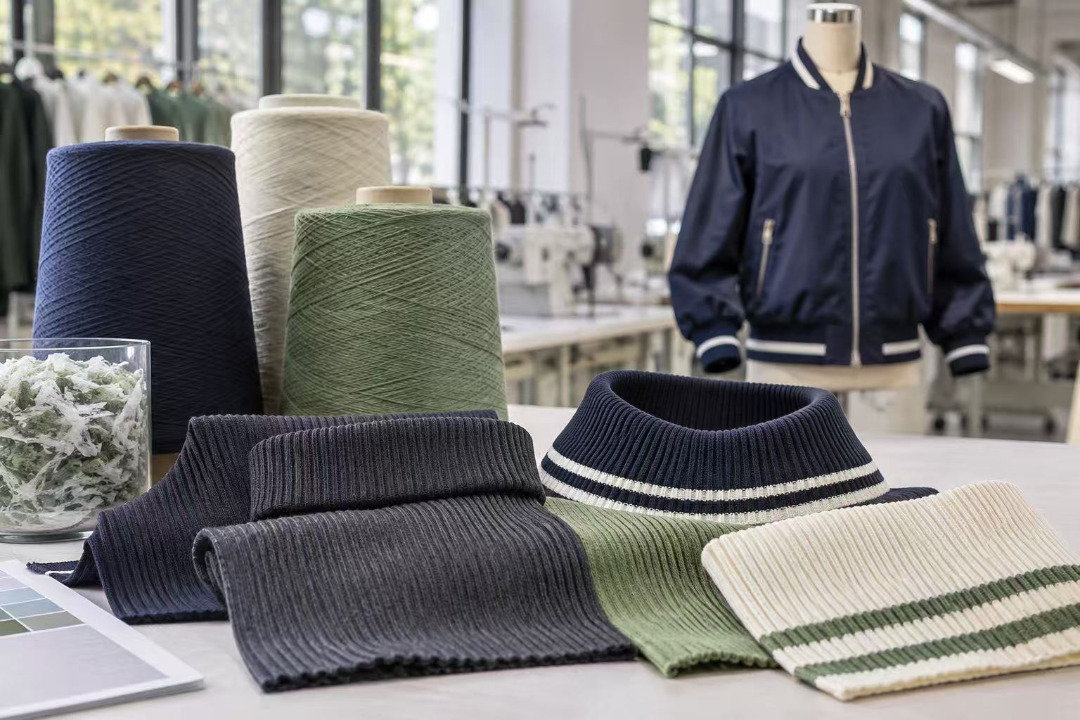
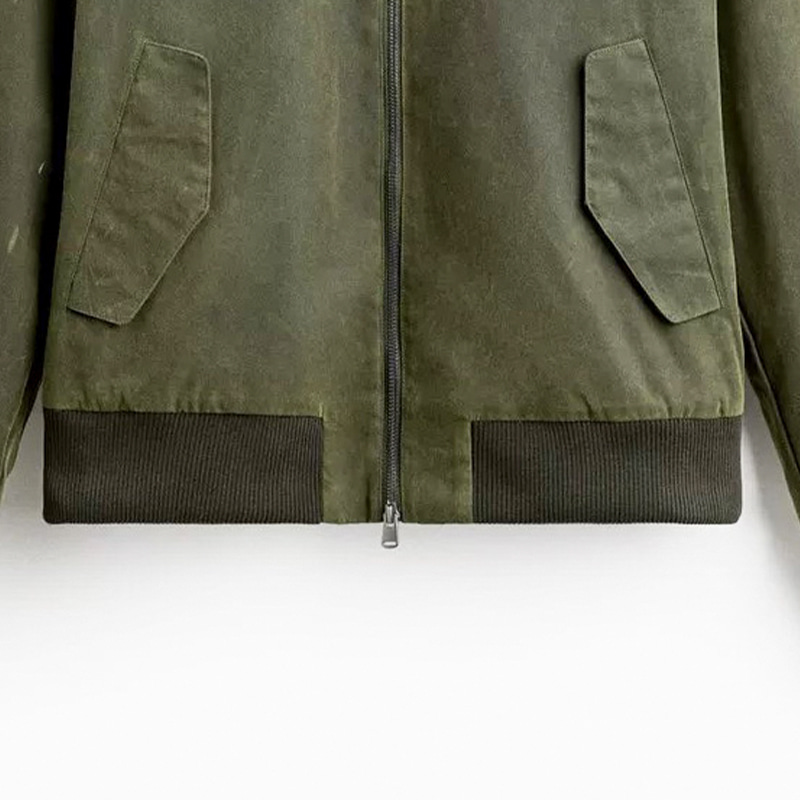
A jacket may contain several different materials, including shell fabric, lining, insulation, zippers, and knitted trims.
While the main fabric often receives the most attention, rib-knit components also contribute to the garment's comfort, appearance, fit, and service life.
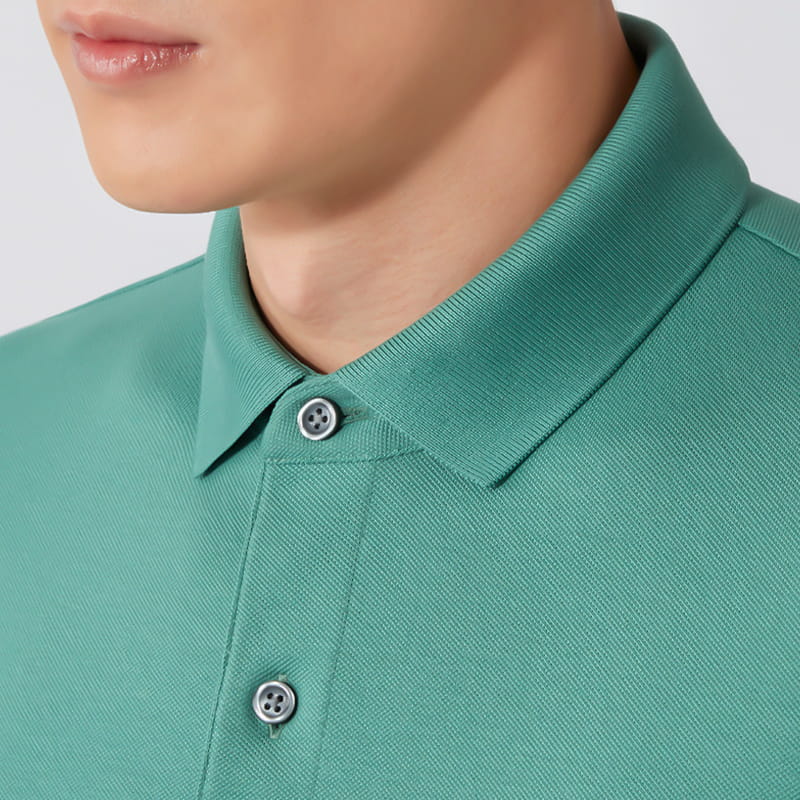
Rib-knit fabrics are widely used in:
Jackets & Outerwear
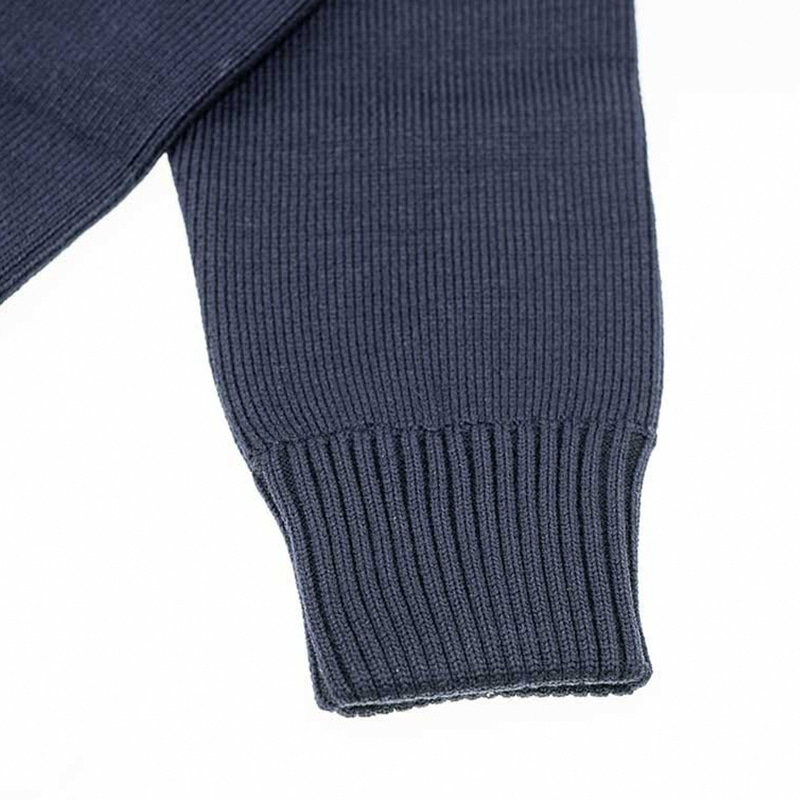
Collars, cuffs, and waistbands requiring structure, elasticity, and shape retention.
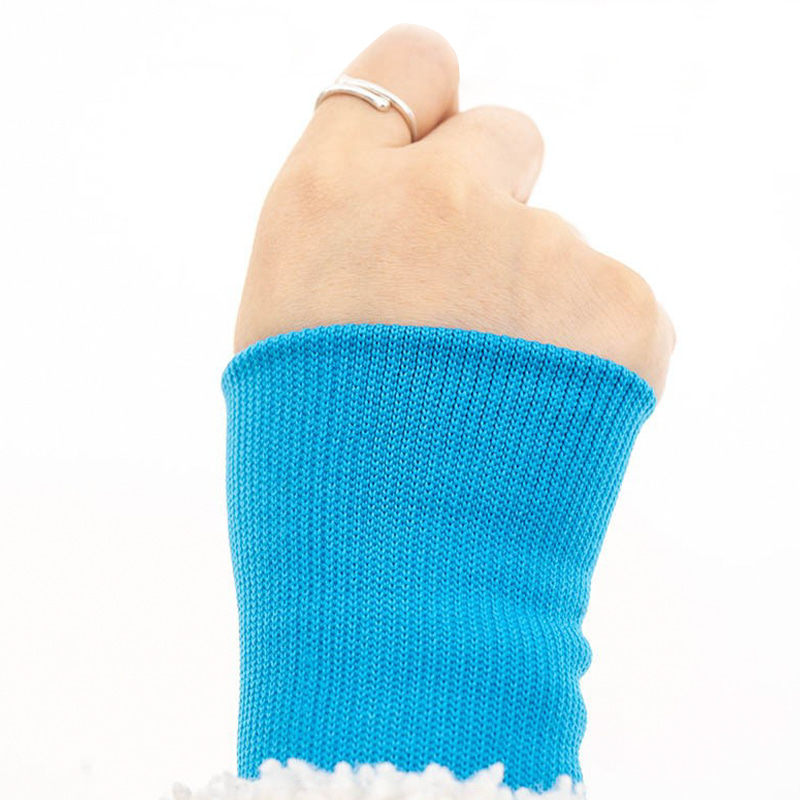
Down Jackets
Knitted cuffs and trims designed to provide comfort and a secure fit.
Sportswear & Casualwear
Flexible rib-knit components that support movement and repeated wear.
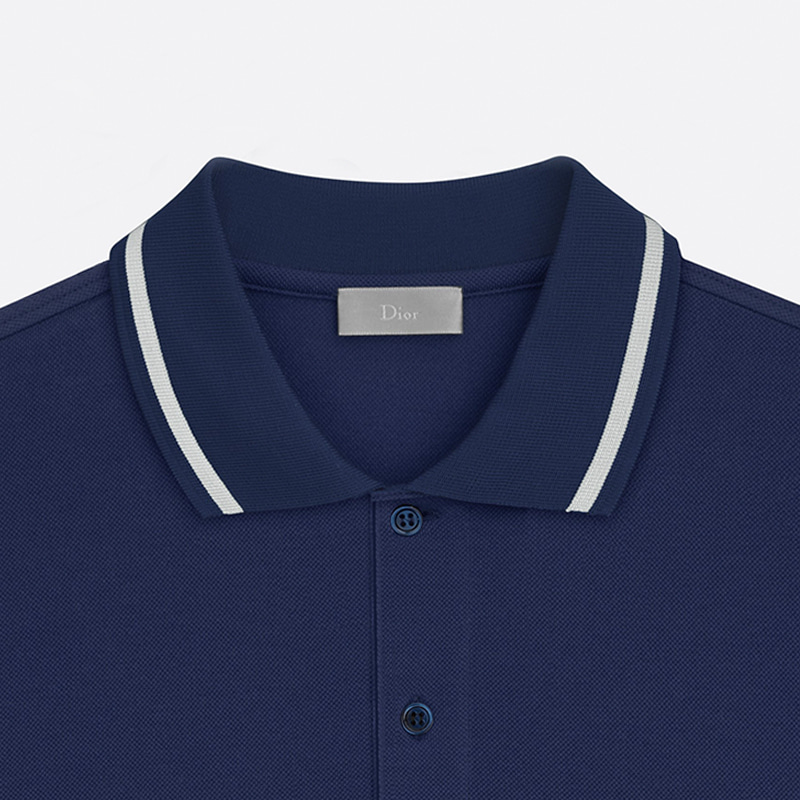
Fashion Collections
Customized rib structures, stripes, jacquard patterns, and decorative knitted details.
When developing sustainable rib-knit components, manufacturers should consider both material selection and functional performance.
Key considerations include fiber composition, stretch recovery, dimensional stability, colorfastness, and consistency between production batches.
Sustainability and quality should work together — not compete with each other.
05 | Our Approach to Responsible Rib-Knit Manufacturing
At Jiaxing Zhapu Jilida Garment Accessories Co., Ltd., we specialize in knitted rib fabrics and garment components for international apparel supply chains.
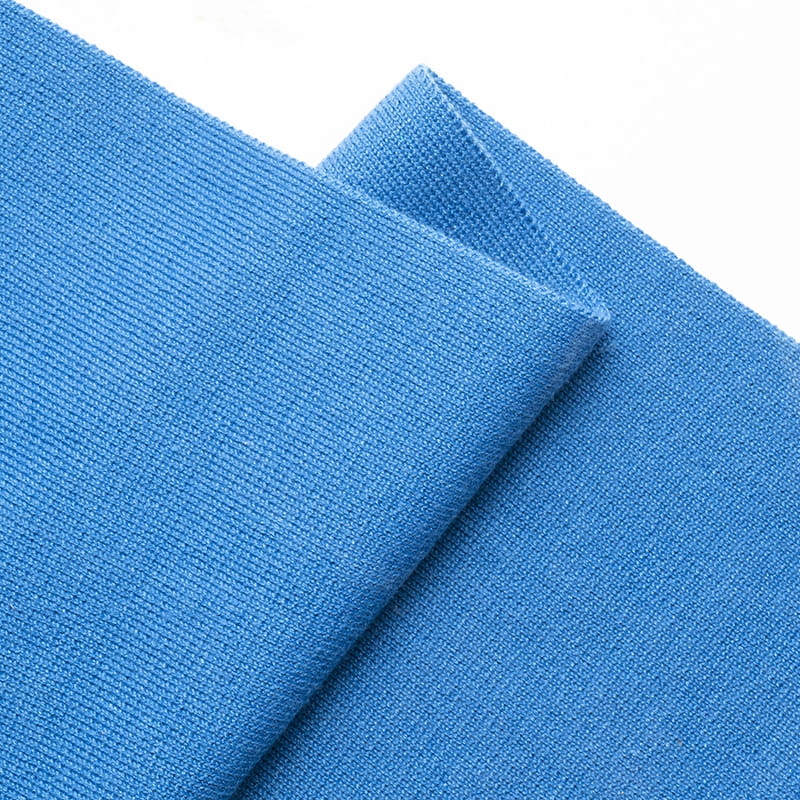
Our product range includes rib-knit collars, cuffs, waistbands, jacquard ribs, and customized knitted trims.
We support product development using conventional and selected recycled materials according to customer requirements.
Our manufacturing and quality management capabilities include:
Material Development
Customized rib-knit structures and recycled material options.
Color Management
In-house color measurement using a Datacolor Spectro 1000 spectrophotometer.
Quality Inspection
Inspection procedures covering product appearance, dimensions, and relevant performance requirements.
Production Consistency
Attention to knitting specifications, finishing processes, and batch-to-batch consistency.
Certification Support
Our company holds GRS, RCS, RWS, and OEKO-TEX STANDARD 100 certifications, subject to their respective scopes and validity.
We believe that responsible manufacturing should be supported by practical production capabilities, transparent communication, and continuous quality improvement.
Looking Ahead: Better Materials, Better Products
The sustainable textile industry is entering a period in which implementation matters as much as ambition.
Recycled fibers, circular material systems, traceability, and durable product design will continue to influence how fashion brands select their suppliers.
For knitted rib fabrics and garment accessories, the opportunity is to combine responsible material choices with dependable manufacturing performance.
At Jilida, we remain committed to exploring material innovation and improving the consistency and quality of our knitted components.
Because every detail matters in building better garments.